How to grow hydroponic plants? Keep this cultivation guide handy
Many friends are not particularly familiar with the methods for hydroponic plants, so today we will give a brief introduction to the hydroponic plant cultivation guide. Let's take a look together.
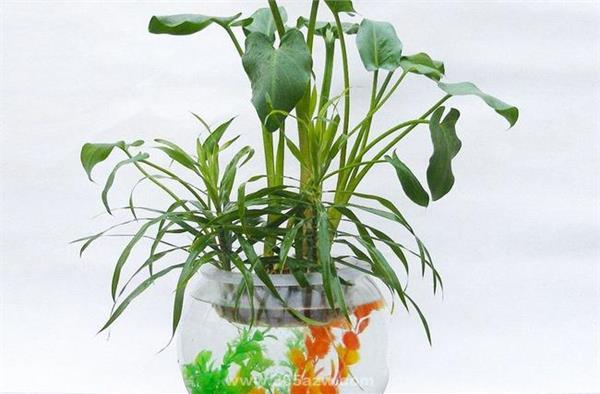
What hydroponic plants are there
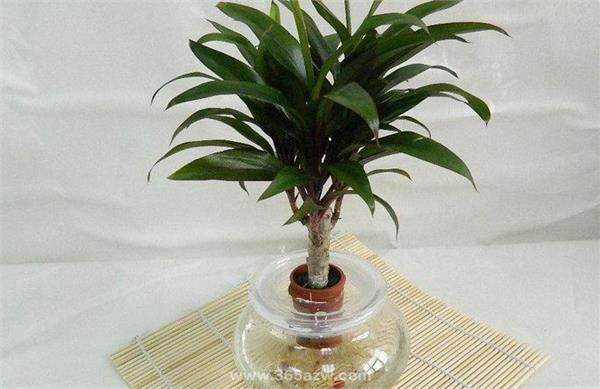
1. Lucky bamboo
An evergreen upright shrub of the genus Dracaena in the Asparagaceae family, very suitable for indoor hydroponic flowers. The leaves of lucky bamboo are emerald green, and the stems are straight and round like bamboo. The leaves are ovate with pointed tips, and the leaf stalk base clasps the stem. It is an extremely shade-tolerant plant and still grows well, upright and strong, under low-light conditions. It can be placed indoors for a long time to enjoy its foliage and does not need special care. As long as there is enough water, it can grow vigorously.
2. Spider plant
A perennial evergreen herbaceous flower of the Asparagaceae family, with clustered, linear leaves that have longitudinal yellow-white stripes along the edges or in the middle. In summer and autumn, slender, flexible, drooping stolons emerge from between the leaves, and tender leaves and aerial roots sprout at the tips or nodes, producing white flowers. Spider plants can be grown indoors in water. They not only purify the air, but are also attractive in appearance and easy to manage.
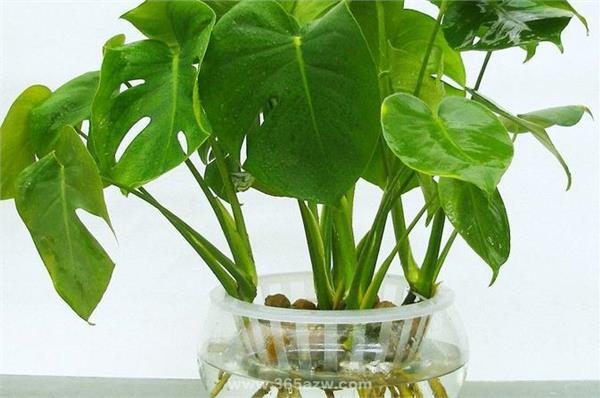
3. Pothos
A plant of the genus Philodendron in the Araceae family, belonging to climbing vine foliage flowers. It likes warm, humid environments. The vines can reach several meters long, with aerial roots at the nodes. The leaves grow larger and larger, are alternate, and evergreen. The vines are slender and soft, and the leaves are delicate and elegant. Growing it in water is very simple: make sure to change the water once every 2 to 3 days, with a simple nutrient solution.
Hydroponic plant cultivation guide
When preparing nutrient solution, if tap water is used, the tap water must be treated. Tap water mostly contains chlorides and sulfides, both of which are harmful to plants. Another point is that bicarbonates can also hinder the roots' absorption of iron. Therefore, when using tap water to prepare nutrient solution, a small amount of sodium edetate or humate compounds should be added to treat the chlorides and sulfides in the water. (The water should be placed in the sun for several days before preparation.) If the substrate used for hydroponic flowers is peat, the above disadvantages can be eliminated. If the quality of groundwater is poor, unpolluted river water or lake water can be used for preparation.
If no nutrient solution is used and only ordinary water culture is used, that is also fine, but the growth will be somewhat weaker and slower. Usually, the cultivation water in the pot should be replaced once every one or two months. Tap water can be used, but note that the tap water should be left to stand for a period before use. This is to keep the root zone temperature stable.
Hydroponic flowers are mostly shade-loving and neutral flowers suitable for indoor cultivation, and they each have their own requirements for light. Shade-loving flowers such as ferns, orchids, and Araceae plants should be moderately shaded. Medium-sized flowers such as Monstera deliciosa, Schefflera octophylla, and poinsettia are not strict about light intensity, usually prefer ample sunlight, and can also grow normally under shade. Ensuring the temperature for normal flower growth is very important. Flower roots grow better within the range of 15 to 30 degrees.
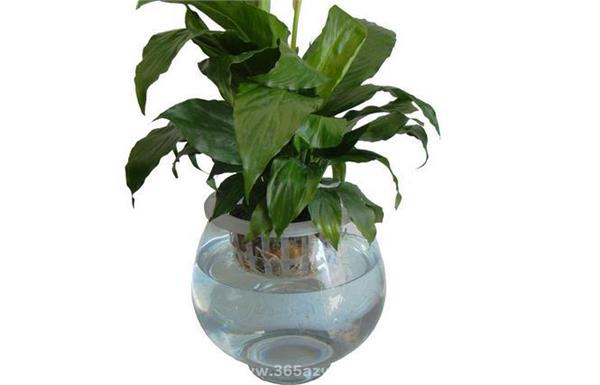
Attention should be paid to identifying the root color of the flowers to determine whether they are growing well. When light, temperature, and nutrient solution concentration are appropriate, the whole root or the root tip is white. Please note that excessive nutrient solution is strictly prohibited, and shortening the time interval between adding nutrient solution is strictly prohibited.
During the growth of hydroponic flowers, if water droplets are found seeping from the leaf tips, the water level should be appropriately lowered so that more roots are exposed to the air, reducing the proportion soaked in water, which helps oxygen absorption.