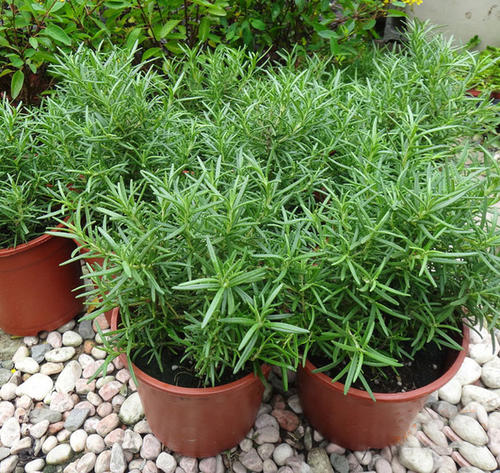
Conditions for Growing Rosemary Indoors and Pest and Disease Control Methods
Growing rosemary indoors can sometimes be a tricky business. Many excellent gardeners have tried, and despite their best efforts, they still end up finding a dry, brown rosemary plant. If you know the right care tips for rosemary plants grown inside, you can keep your rosemary plant growing happily indoors all winter long.
Tips for growing rosemary indoors Most of the time, there are four things on the list of what kills rosemary plants indoors. These are: lack of sunlight, poor watering practices, powdery mildew, pests. If you can avoid these problems, your rosemary plant will live happily inside. Let's take a look at how to avoid each one. Lack of sunlight Most people don't know that lack of sunlight is the most common reason rosemary plants die when grown indoors. Usually, rosemary plants are brought indoors without any acclimation. They go from six to eight hours of strong direct light to four to six hours of weak or indirect light. Rosemary plants cannot produce enough energy to sustain themselves on this weak light, and simply die.
The first step in preventing rosemary light starvation is to put the rosemary on a sunlight diet before bringing it indoors. Several weeks before you plan to bring the rosemary indoors, move the plant to a gradually darker area of your yard. This will force the rosemary plant to grow leaves that convert light into energy more efficiently, which will help it cope with the weaker indoor light when it is moved inside.
Once your rosemary is moved indoors, make sure to place it in the brightest window in your home, which is usually a south-facing window. If your rosemary plant does not get at least six to eight hours of light per day, place a lamp with a fluorescent bulb as close to the plant as possible to supplement the sunlight. Poor watering habits The second most common cause of indoor rosemary death is watering practices. Usually, indoor rosemary plants are watered too little or too much. Make sure there is good drainage on the rosemary container. Only water the soil when the top of the soil is dry to the touch. But, that said, never let the soil dry out completely. In winter, rosemary plants grow much more slowly and need much less water than in summer. Frequent watering can lead to root rot, which will kill the plant. On the other hand, if the rosemary plant's soil is allowed to dry out completely, the roots will die, and the plant will not have enough roots to support itself.
Powdery mildew Whether indoors or outdoors, rosemary plants are very susceptible to powdery mildew. Most homes do not have the same air circulation as the outdoors, which makes this even more serious for indoor plants. The best way to drive off powdery mildew on rosemary plants is to increase the air circulation around them. Letting a fan blow for a few hours a day or taking the plant out of higher-humidity rooms such as the bathroom or kitchen will help improve air circulation. You can also treat the plant with a fungicide to help prevent powdery mildew.
Pests To be honest, although pests can be the culprit in killing rosemary plants, most pests only infect plants that have already been weakened. Unfortunately, despite your best efforts, most rosemary grown indoors is gradually weakening. The stricter you are with yourself about making sure the rosemary plant is watered properly and gets enough light, the less pests will bother the plant. However, if your rosemary is infested with pests, use an indoor plant insecticide to get rid of them. Since rosemary is a herb, it is mainly grown to be eaten, so look for organic pesticides. Growing in popularity is neem oil, because it is very effective against pests but completely harmless to humans and pets.