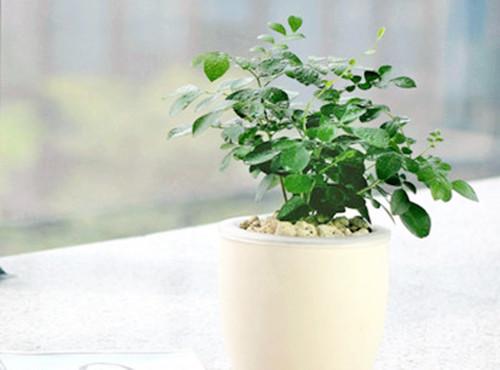
Home gardening tips: balcony gardening techniques and some precautions!
Urban areas are densely populated, and most residents live in apartment buildings. For high-rise residents who grow flowers, the only option is to use a balcony or windowsill. If there is no planting trough, set aside a dedicated area for growing flowers, or make a flower pot stand yourself, which can have several tiers, with light-loving plants on the upper tier and shade-tolerant flowers on the lower tier. You can also extend a board out from the balcony, securing it firmly with rebar or angle iron, and install baffles or railings around the board to prevent flower pots from falling. You can also set several iron hooks on the balcony and eaves, and place flower pots into baskets woven from rattan, bamboo or willow. This method makes use of space without occupying the usable area of the balcony, achieves the effect of three-dimensional greening, and is also very attractive. For these hanging balcony fixtures, be sure to check them regularly to ensure safety. Planting troughs can be made from wooden boards and the like, with flowers planted directly inside the trough. The trough can also be suspended outward. On the balcony, you can set up a small trellis and grow climbing plants such as cypress vine and morning glory, which can both block the summer sun and beautify and green the balcony. Growing flowers on a balcony differs in many ways from growing flowers in a ground-level courtyard. To grow them well, you must pay attention to the following points:
1、Light:What affects balcony light is the orientation of the balcony. Which flowers and plants are best to grow on a balcony should be decided according to the balcony's orientation, as well as the local climate conditions and the habits of the flower varieties. A south-facing balcony has strong light, plants absorb more heat, and transpiration is also greater, so it is suitable for growing sun-loving, drought-tolerant flowers. Such as succulents like cactus, ball cactus, and ghost plant. There are also petunia and nasturtium. Scutellaria barbata, night-blooming jasmine, Chinese rose, pomegranate, Serissa japonica, scarlet sage, sago palm, and so on. A north-facing balcony, including corridors, because it cannot get direct sunlight, is not suitable for growing sun-loving flowers, and can only grow shade-loving and neutral flowers. Such as wax begonia, asparagus fern, Asparagus cochinchinensis, Tradescantia zebrina. Commelina communis, turtle back, spider plant, English ivy, and so on.
2、Water and humidity:Because a balcony has good ventilation and the air is dry, watering is key. Pay attention to watering frequently and spraying water on the leaves and ground. Flower pots should be large, because with more soil they hold more water and do not dry out easily, or place the flower pot in a shallow basin of water, and the water can be supplied continuously to the flowers through capillary action. You can also place a basin of water around the potted flowers so it evaporates naturally and improves the local microclimate. For potted flowers placed on the balcony, pay attention to appropriate density, slightly denser is better, because more potted flowers evaporating water together can increase the surrounding air humidity.
3、Temperature:A balcony generally has a concrete floor and walls. When sunlight shines on them, the temperature rises due to the reflection from the concrete, especially on a west-facing balcony. In the afternoon when the sun slants, the balcony is full of sunlight and the temperature rises noticeably. This radiation is unfavorable for growth, so you can sprinkle water on the balcony; when the water evaporates it can take away some of the heat.
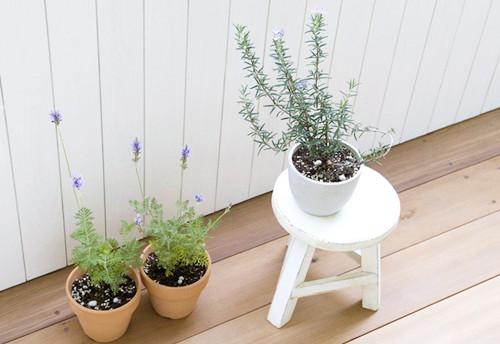
4、Wind:Wind is moving air, and plant growth needs this environment; however, excessively strong wind is harmful to plants and often causes damage. When the wind is too strong, you can appropriately install windbreak panels.
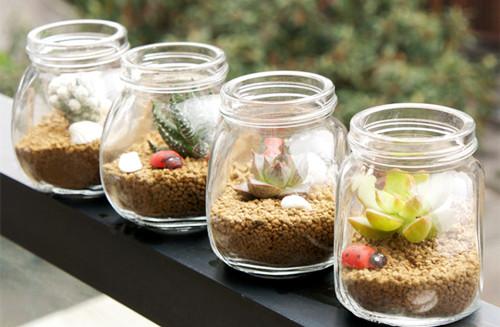
5、Other:When purchasing flowers and plants, pay attention to the balcony's capacity, and match the size of the plants well with the balcony's direction, color, and so on. I sincerely hope your balcony can bring you infinite delight.