How do you grow flowers indoors? The complete guide to flower-growing knowledge!
How do you grow flowers indoors? First you need a general understanding of flower-growing knowledge, and you need to know which flowers are suitable for growing indoors and which are not, and even more, you need to know how to water the flowers while growing them. Only once we have mastered this flower-growing knowledge can the flowers in our home grow more and more beautiful. Today, come along with the editor and take a look at the complete guide to flower-growing knowledge, for everyone's reference.
How do you grow flowers indoors? First you need a general understanding of flower-growing knowledge, and you need to know which flowers are suitable for growing indoors and which are not, and even more, you need to know how to water the flowers while growing them. Only once we have mastered this flower-growing knowledge can the flowers in our home grow more and more beautiful. Today, come along with the editor and take a look at the complete guide to flower-growing knowledge, for everyone's reference.
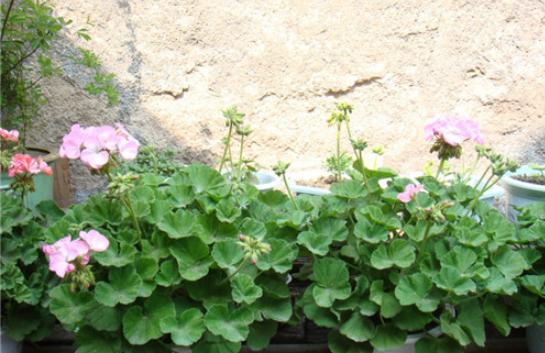
I. Flower-growing knowledge——flowers suitable for growing indoors
Placing some pollution-resistant flowers and plants in the living room can beautify the environment, cultivate the mind, and purify the air, while also eliminating or reducing chemical pollution and resisting the invasion of microorganisms.
★1. Monstera (Monstera deliciosa)
Monstera, also known as Penglai banana and wire grass, is an evergreen vine. As the flower saying goes, "Monstera has great power, it sweeps carbon dioxide clean away." At night it has a very strong ability to absorb carbon dioxide, more than 6 times that of other flowers.
★2. Canna (Canna indica)
Canna, also known as orchid canna, is 1-2 m tall, with hairless plants and stout rhizomes. As the flower saying goes, "Canna has strong resistance, it can bring sulfur dioxide down." It has a very strong ability to absorb sulfur dioxide.
★3. Pomegranate (Punica granatum)
Pomegranate, also known as An pomegranate, sea pomegranate and Danruo. As the flower saying goes, "Flowering pomegranate red as fire, you enjoy the flowers and the fruit, and airborne lead has nowhere to hide." Placing one or two pots of pomegranate indoors can reduce the lead content in the air.
★4. China pink (Dianthus chinensis)
China pink, also known as Luoyang flower and grass pink, is a perennial herbaceous plant. There are many kinds of China pink, and it blooms in summer and autumn. As the flower saying goes, "Grass pink has an iron stomach, it can sweep toxic gas clean away." It has the ability to absorb sulfur dioxide and chlorides, and China pink can be planted wherever there are similar gases.
★5. Pittosporum (Pittosporum tobira)
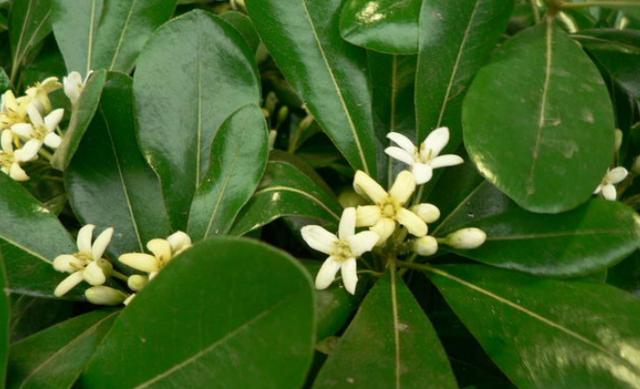
Pittosporum, also known as Baozhu xiang and qili xiang, is an evergreen shrub that blooms in summer, with tender green, glossy leaves that stay evergreen all year round. As the flower saying goes, "Qili xiang brings down smog, and it is also a good sound-insulating plant." It can absorb photochemical smog, and can also block dust and insulate sound.
★6. Chinese rose, rose (Rosa chinensis, Rosa multiflora)
As the flower saying goes, "Chinese rose and rose have big stomachs, they swallow toxic gas and can digest it." These two flowers absorb relatively more harmful gases such as hydrogen sulfide, hydrogen fluoride, phenol and ether, reducing the pollution from these gases.
★7. Daisy, lucky bamboo? no—lilyturf? no—evergreen (Bellis perennis, Rohdea japonica)
Daisy, also known as life-extending chrysanthemum and malantou flower. As the flower saying goes, "Daisy and evergreen are the vanguard in removing pollution." These two plants can effectively remove trifluoroethylene pollution.
★8. Chrysanthemum, sago palm, growing vine
As the flower saying goes, "Chrysanthemum, sago palm and growing vine can absorb benzene gas clean." These three flowers all have the ability to absorb benzene and can reduce benzene pollution.
★9. Spider plant, aloe
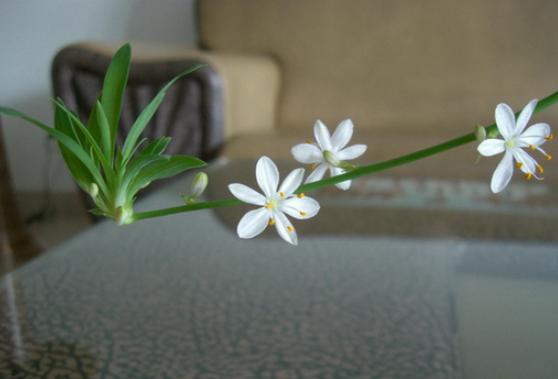
Spider plant was called zhehe lan in ancient times; the genus Aloe (scientific name: Aloe), commonly known as aloe, is a perennial herbaceous plant of the family Asphodelaceae. As the flower saying goes, "Spider plant and aloe are strong hands, formaldehyde is so scared it runs away." These two flowers can eliminate formaldehyde pollution and purify the air.
II. Flower-growing knowledge——flowers not suitable for growing indoors
★1. Lily
The fragrance of lily can over-excite a person's central nervous system and cause insomnia.
★2. Hydrangea (Hydrangea macrophylla)
The fine particles released by hydrangea can cause skin allergies in people and trigger itching.
★3. Chinese rose
The fragrance released by the Chinese rose can make some people suddenly feel chest tightness and discomfort, breathlessness and difficulty breathing after smelling it.
★4. Orchid
The fragrance given off by the orchid, smelled for a long time, can make a person overly excited and cause insomnia.
★5. Redbud (Cercis chinensis)
If the pollen released by redbud comes into contact with a person for too long, it can trigger asthma or worsen coughing symptoms.
★6. Night-blooming jasmine (Cestrum nocturnum)
At night, night-blooming jasmine releases a large amount of particles that strongly irritate the sense of smell. People with high blood pressure and heart disease easily feel dizzy, depressed and uncomfortable, and it can even worsen their condition.
★7. Tulip
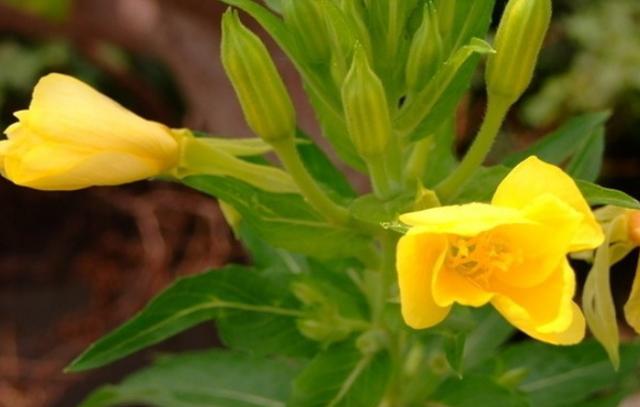
Tulip flowers contain an alkaloid. If people and animals stay among these flowers for 2~3 hours, they will feel dizzy and muddle-headed and show symptoms of poisoning, and in severe cases it will also speed up hair loss.
★8. Oleander (Nerium oleander)
The smell given off by oleander flowers, smelled for too long, can make a person drowsy and reduce intelligence; the milky white liquid it secretes, if contacted for too long, can also poison a person.
★9. Flowers of conifers and cypresses
The fragrant smell released by the flowers and trees of conifers and cypresses has an irritating effect on the human gastrointestinal tract. If smelled for too long, it will not only affect people's appetite, but also make pregnant women feel upset, nauseous and dizzy.
★10. Azalea (Rhododendron)
Yellow azalea flowers contain a toxin. Once accidentally eaten, mild cases will cause poisoning, and severe cases will cause shock.
★11. Sensitive plant (Mimosa pudica)
The sensitive plant contains mimosine in its body, which can cause hair loss.
III. Flower-growing knowledge——watering tips
★Watering tip one: watering flowers with rice-washing water
For people who do not grow flowers, rice-washing water is of no use at all and is simply poured down the drain, but they do not know the benefits of watering flowers with rice-washing water. Regularly watering flowers such as Milan with rice-washing water can make their branches and leaves lush and their flowers brightly colored. This flower-growing tip is also the simplest and easiest to do.
★Watering tip two: watering flowers with warm water
In winter, for some flowers with poor cold resistance, it is best to use warm water at 35°C to water them; secondly, in winter, use water kept at room temperature to water them, thus avoiding freezing the roots of these flowers.
★Watering tip three: watering flowers with cooled boiled water
This method is also a relatively commonly used flower-growing tip. In daily life we are always habitually pouring cooled boiled water into the flowerpot. This can make flowers and trees leafy and the flowers bright, and can promote early blooming. If used to water asparagus fern, it can make its branches and leaves grow horizontally, and become short and dense. Although doing this is good, it must not be done in excess.
★Watering tip four: watering flowers with spoiled milk
After milk spoils, add water and use it to water flowers; it is beneficial to the growth of the flowers. But use more water so that it is fairly diluted before use. Unfermented milk is not suitable for watering flowers, because when it ferments it produces a large amount of heat, which will "burn" the roots (root rot). This flower-growing tip is also a less commonly used watering method.
★Watering tip five: watering flowers with leftover tea
Tea contains a variety of chemical substances. Using leftover tea to water flowers can add nutrients such as nitrogen to the plants, and can also maintain the moisture of the soil. However, this flower-growing tip can only be done in appropriate amounts and at regular intervals, and cannot be done arbitrarily.
★Watering tip six: long-term watering method with a plastic bag
Everyone may find this name very strange. Indeed, not only is the name of this method strange, even the method itself is incredible. It is suitable for use when no one is at home for a long time, such as when on a business trip or visiting relatives, gone for ten days to half a month. In order not to let the flowers wither and die, this flower-growing tip method is shared with everyone here. Find a plastic bag, fill it with water and then tie the opening tightly to prevent water from spilling out, then use a fine needle to prick a small hole in the plastic bag, and place the pricked hole facing downward into the flowerpot, letting the water slowly seep into the soil through the small hole to keep the soil moist. Be sure not to make the hole too big, otherwise the consequences are self-evident.
That is all for the information related to flower-growing knowledge. I hope this article is helpful to everyone. If there is anything you still do not understand, you can leave a message for the editor below, and we will answer you as soon as possible.