Plant morphology and cultivation methods of the inverted golden hook
The inverted golden hook is a plant, and many people wonder whether the inverted golden hook grows hanging upside down. Below we will take a detailed look at the plant morphology and cultivation methods of the inverted golden hook.
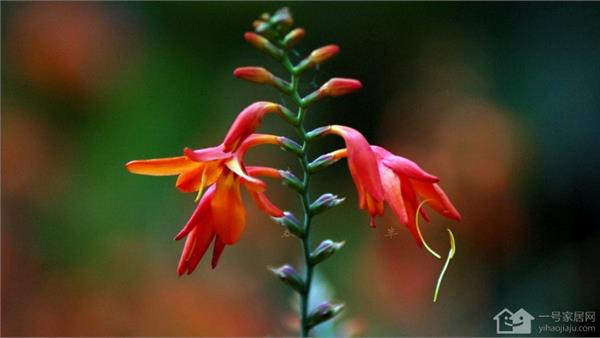
Plant morphology of the inverted golden hook
Large liana; young branches square-columnar or with 4 angles, hairless. Leaves thinly papery, long elliptic-lanceolate or ovate-lanceolate, 9-12 cm long, 3-6 cm wide, grayish brown beneath, apex shortly acute to acuminate, base obtuse to nearly cordate, both surfaces hairless, when dry purplish red above; lateral veins 5-8 pairs, vein axils with depressed mucilaginous hairs; petiole 3-5 mm long, hairless; stipules ovate, deeply 2-cleft to 1/3 to 1/2 of the total length, outside hairless, inside base with mucilaginous hairs, lobes narrowly ovate. Capitulum about 15 mm in diameter excluding the corolla, solitary in leaf axils, peduncle axillary, 4-7 cm long; bracteoles linear to linear-spatulate. Infructescence 20-35 mm in diameter; small capsules 9-12 mm long, pubescent, persistent calyx lobes spatulate, 2.5 mm long, stellate-radiating. Flowering and fruiting period June-December.
Efficacy and effects of the inverted golden hook
[Source]Rubiaceae inverted golden hook, the hooked vine is used as medicine.
[Nature and flavor]Sweet, slightly cold.
[Efficacy]Clears heat and calms the liver, invigorates blood and unblocks menstruation.
[Indications]Used for headache and dizziness, common cold with convulsions, convulsive epilepsy and twitching, eclampsia of pregnancy; hypertension.
[Usage and dosage]An appropriate amount is sufficient.
[Contraindications and cautions]Use an appropriate amount of the medicine.
Cultivation methods of the inverted golden hook
1. Soil: Fuchsia hybrida likes loose, breathable, fertile, well-drained slightly acidic soil;
2. Temperature: Fuchsia hybrida likes cool conditions and fears high-temperature environments. In summer, cooling must be done well, and in winter, heat preservation must be done well. Generally, the best growing temperature is 15-25°C. In addition, note that ventilation conditions should be good;
3. Water: Fuchsia hybrida likes a warm and humid environment. Follow the principle of watering when dry and watering thoroughly when watering, but avoid water accumulation in the pot. In summer, slightly dry conditions are better, and at the same time note to increase air humidity, and water may be sprayed on the leaf surface;
4. Fertilization: Follow the principle of light fertilizer applied frequently. Under normal circumstances, the frequency is once every 10 days, and once a month during the flowering period, while fertilization should be stopped in high-temperature seasons;
5. Repotting and soil changing: Under normal circumstances, repotting is needed once before sprouting in spring or autumn each year. Generally, leaf mold soil plus sandy loam plus decomposed organic fertilizer and phosphate fertilizer may be evenly mixed. Do not apply base fertilizer, so as to avoid causing root rot;
6. Placement: Fuchsia hybrida has strong phototropism, so the pot should be turned frequently to maintain a uniform appearance, but do not move it during the flowering period, so as to avoid causing bud and flower drop.
The above is the relevant introduction in this article. I believe that after reading it, you also have a simple understanding of this. If needed, you can continue to follow No. 1 Home Network to learn more information.