How to grow succulent plants? A full analysis of cultivation methods
Small succulent plants are adorable and many people like to grow them; just looking at them lifts your mood, but growing succulents is not a simple matter. Let's take a look below at the cultivation methods for succulent plants - how much do you know?
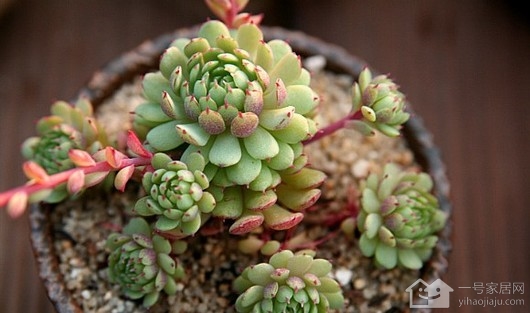
If small succulents are grown in greenhouse planting troughs, a layer of plastic film is often used to cover them, and it only needs to be opened for a while at noon. Plants grown this way are plump and have vivid colors. In addition, the nighttime temperature should not be lower than 5°C. If there is a cultivation site with heating conditions, that would be even better; without heating conditions, sudden temperature drops must be prevented, and insulation work can be done before the temperature plunges. As the temperature rises, the duration of light will also increase significantly. Most succulent plants cannot do without light during this period, especially varieties that bloom in spring.
If it is a Haworthia plant, it does not need long periods of strong light. In terms of water supply, the amount of watering should be gradually increased as the temperature rises. It is best not to water directly onto the plant, especially for some varieties with fuzzy hairs. Water as appropriate for those that have not entered the growing period, and keep sufficient moisture for those in the growing period. As for fertilizing, it is best to wait until the temperature is stable before applying fertilizer, and apply fertilizer around April.
When choosing a pot, it is best to make breathability and appearance the main selection factors, and a breathable flower pot helps small succulents breathe and prevents root rot.
In terms of propagation, leaf cuttings taken in late spring are mostly from Aeonium plants, and stem cuttings can also be used. If propagating by sowing, cactus family varieties can be sown at this time, while varieties with a high degree of succulence are not suitable, so as to avoid the high temperatures of summer.
The above is the relevant introduction in this article. I believe that after reading it, you also have a simple understanding of this. If needed, you can continue to follow No.1 Home Network to learn more information.