How to grow Indigofera amblyantha? Cultivation methods and disease control
Indigofera amblyantha can grow in relatively harsh environments and is not very demanding about soil, making it a very easy plant to grow. Below, let's look at how to grow and cultivate Indigofera amblyantha, and its disease control.
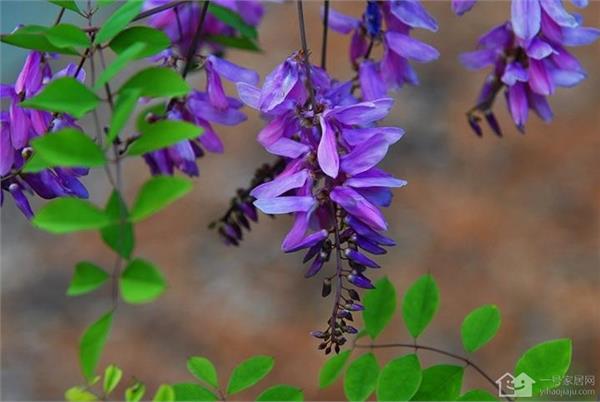
I. Cultivation techniques for Indigofera amblyantha
1. Fruit collection and seed extraction
From September to October, collect fully morphologically mature pods at any time, place them in a flat area to dry in the sun. After the pod walls dry, the seeds fall out naturally. Collect the Indigofera amblyantha seeds, remove debris, put them in woven bags and store them in a dry place.
2. Making the seedbed
Choose a relatively flat site with sandy loam to heavy loam soil to make a raised bed; the bed can be oriented north-south or east-west. On a gentler sunny slope, the bed can also be made crosswise. Bed width 1.2~1.0 m, bed height 0.15~0.2 m, bed length depending on the ground conditions, generally 20-50 m. Spread farmyard livestock and poultry manure on the bed surface, at 500 kg per 100 sq m. Turn the bed surface to a depth of 15~20 cm so that the soil and fertilizer are fully mixed.
3. Seed treatment
7~10 d before sowing, put the seeds at the bottom of a container, slowly pour in 70°C water equal to 10 times the seed volume until the container is full, and stir quickly until it reaches room temperature. The next day, pour off the water, mix the seeds evenly with 3 times their volume of sand, put them in woven bags, and place them in a 20~25% location to wait for germination. Alternatively, 20 d before sowing, soak the seeds in 25~30°C water for 24 h, then mix the seeds with sand, place them in a 5~10°C location, and wait for germination. You can also soak the seeds in about 30°C water for 24 h, pour off the water the next day, cover the seeds with gunny sacks or old cotton quilts, and keep the indoor temperature at 25-30°C. Afterwards, rinse the seeds once each morning with warm water until the seeds begin to germinate, then they are ready for sowing.
4. Sowing
From mid-April to early May, use a hoe to open furrows 4 cm deep along or across the bed, with a furrow spacing of 25 cm. Scatter the seeds into the furrows, with a seed spacing of about 3~4 cm. Cover with soil 2~3 cm thick, pat the covering soil firm; the sowing rate is about 7 kg/667 sq m. Broadcasting can also be used, that is, scatter the seeds evenly over the bed surface, then cover the whole area with 2 cm of soil.
II. Growing methods for Indigofera amblyantha
1. Site selection and ridging: choose flat land or gentle slope land with loamy soil, spread farmyard manure over the surface at about 4000 kg per hectare, turn the soil and form ridges 20 cm deep, and use a livestock plow or tractor to make ridges with a ridge spacing of 60 cm and a ridge height of 15-25 cm.
2. Planting seedlings: in early April, dig up seedlings sown the previous year, cut off overly long roots, generally leaving a length of 10~15 cm. Cut the stems back to a length of 15~20 cm, and plant 3~5 seedlings per hole. Hole spacing 30~45 cm, hole depth 10~15 cm; after planting the seedlings, firm the soil with your feet.
III. Disease control for Indigofera amblyantha
1. Post-sowing management: cover the bed surface with a 1 cm thick straw curtain or wormwood. Spray water onto the covering to wet the bed surface soil to a depth of 6~8 cm. After 3~5 d, when the bed surface is relatively dry, spray water a second time. When more than 70% of seedlings have emerged, remove the covering. In July to August, if aphids cause damage, spray omethoate-cypermethrin or dimethoate, deltamethrin, etc. From seedling emergence to the end of August, pull or hoe weeds at any time. In early July, spread urea evenly over the bed surface at 15~20 kg/667 sq m; if there is no rainfall after spreading, spray water to prevent seedling burn. At the end of October and beginning of November, give the bed surface one thorough watering to prevent the seedlings from drying out due to winter drought with no snow.
2. Post-planting management: after planting seedlings on flat land, irrigate immediately with a large, slow flow of water, and irrigate again a few days later. On slope land, when planting seedlings, leave a small basin on the ridge surface, pour enough water into the basin, water again on the third day, and seal the soil after the water infiltrates. During the growing season, weed and loosen the soil 3~4 times to ensure there are no pests and to keep the soil loose. From June to August, if aphids or other leaf-eating insects cause damage, spray deltamethrin or dimethoate-type pesticides.
Overall, as long as we care for this plant carefully and attentively, it will grow vigorously. When planting Indigofera amblyantha, be sure to pay attention to its pest and disease control. This plant's effects and functions are also extremely strong; if used externally, it can relieve the swelling and pain of some insect bites, and it can also treat some snake and insect bites. Indigofera amblyantha can also be steeped in water and drunk, and can treat conditions such as sore and swollen throat. However, everyone must pay attention to its dosage and usage to avoid some uncomfortable symptoms.
The above is the relevant introduction in this article. I believe that after reading it, you also have a simple understanding of it. If needed, you can continue to follow No.1 Home Network to learn more information.