Is the Bridal Veil Spider Plant easy to grow? A detailed guide to its care
Many people know the spider plant, but few have heard of the Bridal Veil Spider Plant. It blooms with clusters of small white flowers, just like a bride wearing a white wedding dress, which is how it got its name. Now that you know about it, don't you want to grow a pot too? Let's take a look below at whether the Bridal Veil Spider Plant is easy to grow and how to grow it.
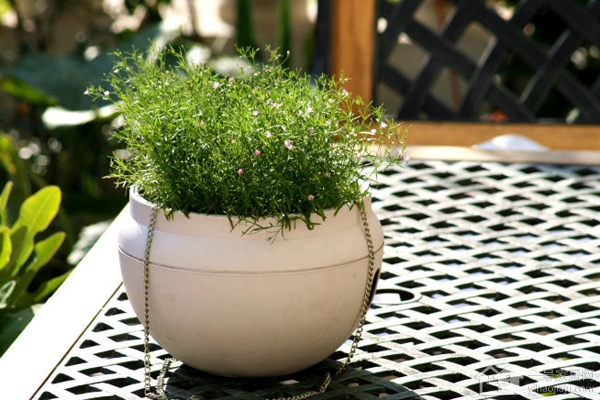
The Bridal Veil Spider Plant is said to come from Korea. Because it produces small white flowers that look like a bride in a white wedding dress, it is called the Bridal Veil Spider Plant. Of course, some flower enthusiasts say it is just like a weed; in fact, judging by its appearance, it is simply a grass in the Commelinaceae family.
The Bridal Veil Spider Plant is suited to being grown in a high-temperature, high-humidity environment with indirect light (anywhere on a balcony that direct sunlight does not reach will do). It dislikes direct blazing sun, is not shade-tolerant (it easily becomes leggy and fails to bloom), likes water and fertilizer, tolerates pruning, fears cold and fears drought. As for the flowering period of the Bridal Veil Spider Plant, generally speaking, the ones we grow need 7-8 months of cultivation before they bloom. Under normal circumstances, the flowering period of the Bridal Veil Spider Plant is from December to March of the following year.
In fact, the Bridal Veil Spider Plant is very easy to grow. Just be careful not to let water accumulate in the pot, not to expose it to blazing sun, and not to let it freeze, and you're all set. After all, it is just a "grass." The difficult part is getting it to bloom. If flower enthusiasts want it to bloom, it is best to control water appropriately and provide suitable light. When light is insufficient, the Bridal Veil Spider Plant grows well, but the chance of blooming is small, or it blooms only sparsely.
The above is the relevant introduction in this article. I believe that after reading it, you now have a basic understanding of this plant. If you need more, you can continue to follow No.1 Home Network to learn more information.