Growing Habits and Cultivation Methods of the Elephant Bush
The elephant bush (Portulacaria afra) is a very common succulent with small, glossy leaves. Many succulent enthusiasts love this plant. Below, let's look at the growing habits of the elephant bush and how to cultivate it.
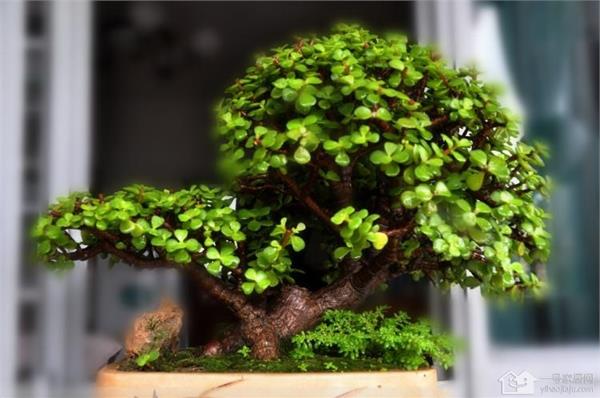
Growing Habits of the Elephant Bush.
The elephant bush is native to South Africa and prefers a sunny, warm, and dry environment. It is drought-tolerant and tolerant of partial shade, but not of waterlogging. Although the elephant bush can grow in shady spots, its leaves will become larger, thinner, and lose their gloss, and the distance between stem nodes will increase, which affects its ornamental value.
The elephant bush grows best in sandy soil of medium fertility with good drainage and aeration. During the growing season, water the elephant bush according to the rule of "don't water until dry, and water thoroughly when you do," avoiding water accumulation in the pot. In winter, the temperature is best kept above 10°C. At around 5°C, the plant will not die, but a large number of leaves will drop off.
Cultivation Methods for the Elephant Bush
Soil: The elephant bush likes loose, fertile, well-draining sandy soil. You can use a potting mix made of leaf mold and garden soil, then add an appropriate amount of river sand to improve soil aeration and help with drainage.
Temperature: The elephant bush likes a warm, dry, and sunny environment and is tolerant of partial shade. The most suitable growing temperature for the elephant bush is 15-25°C. It is not cold-hardy and must be protected from freezing in winter. The overwintering temperature should be above 10°C; below 5°C it is prone to frost damage. In summer, shade it to prevent scorching from the blazing sun.
Light: Although the elephant bush likes plenty of sunlight, it needs appropriate shading during the high temperatures of summer to prevent scorching from the blazing sun, and attention should be paid to ventilation. In winter, move the elephant bush to a sunny spot indoors to keep its leaves fresh and green. Long-term insufficient light will cause the distance between its stem nodes to increase, and its leaves to become larger, thinner, and lose their gloss.
Watering: From spring to autumn is the growing season for the elephant bush, and it can be watered moderately, but water must not accumulate in the pot. In the hot summer, you can spray water around the elephant bush to increase air humidity. In winter, watering should be controlled to keep the potting soil slightly dry. Note that watering the elephant bush should follow the rule of "don't water until dry, and water thoroughly when you do."
Fertilizing: During the growing season, the elephant bush needs a diluted, well-rotted cake liquid fertilizer once every half month, or a diluted fertilizer solution mainly based on nitrogen fertilizer. If the elephant bush is growing too weakly, add liquid fertilizer. Fertilizing the elephant bush should be light and diluted, never thick or concentrated. Stop fertilizing in winter.
Repotting: The elephant bush can be repotted once every two years in spring, trimming away part of the root system, removing 1/2 to 1/3 of the original soil, and replanting with fresh potting soil.
Pruning: The elephant bush has strong sprouting ability and should be pruned and its buds pinched frequently to maintain a beautiful tree shape. Also, when repotting the elephant bush, you can do a heavy pruning, cutting off weak branches and other branches that affect the tree shape, as well as part of the root system, and then replant.
Pests and Diseases: The elephant bush is prone to anthracnose damage; spray with a 50% thiophanate-methyl wettable powder at 1500 times dilution on the leaves. Pests include whiteflies and scale insects; spray with a 50% fenitrothion emulsifiable concentrate at 1000 times dilution to kill them.
That is the relevant introduction in this article. I believe after reading it you now have a basic understanding of this topic. If you need more, you can continue to follow No.1 Home Network for more information.