Food safety incidents highlight the problem of corporate integrity deficit
|
Swill oil, Sudan Red, melamine, clenbuterol - one food safety problem after another has been exposed frequently in recent years, and the degree of harm each poses to human health is frightening every time. It makes one wonder what food is still safe and reassuring to eat nowadays. The food itself is generally not the problem, but for the sake of their own interests and to cater to buyers' "preferences," humans have to sacrifice their own conscience and mix chemical substances such as melamine, Sudan Red, clenbuterol and formalin into food. When we consumers put these health-damaging foods on our dining tables, one has to ask: did those manufacturers ever feel any twinge of conscience? In the final analysis, on the surface these problems arise from merchants being blinded by greed for profit, but at a deeper level they stem from the lack of integrity of food enterprises. Confucius said, "If a person does not keep his word, I do not know what he can do." What it means is that if a person does not keep his word, he cannot establish himself in society. Honesty and trustworthiness have been the foundation of self-cultivation and governance of the Chinese nation since ancient times; as a virtue, it is deeply engraved in the history of Chinese civilization. Integrity is not only the foundation for operators to develop their brands and survive, but also contains rich cultural connotations. It is the process by which operators establish their brands, a law of economic development, and the inevitable result of operators' continuous self-improvement... Yet many enterprises tend to overlook it very easily. Although too many food enterprises have, through many shocking facts, shown us the bitter consequences of lacking integrity and the harm done to the enterprises themselves, some enterprises still choose to betray trust for the sake of a tiny bit of petty profit, ultimately losing their brand and reputation. Recently, Mr. Li, who founded a company in Japan, encountered just such a headache: Mr. Li had struggled in Japan for more than 20 years and built up his own business, mainly engaged in operating a chain of supermarkets. Because he is Chinese, the store also sells some products from China. In early March 2009, at the 34th FOODEX JAPAN international food exhibition, Mr. Li's Sunshine Group and Yue Ping, chairman of Sichuan Dandan Condiment Co., Ltd. (hereinafter referred to as Dandan Condiment), happened to meet. After communication, the two sides found many areas where they could cooperate, so they reached an oral cooperation agreement: Sunshine Group would be responsible for promoting and selling Dandan seasonings in Japan, and would produce and post Dandan Condiment advertising posters in the chain stores under Sunshine Group; Dandan Condiment would be responsible for providing advertising expenses, and entrusted Sunshine Group to place newspaper advertisements in Japan for three months [780,000 yen] and print 40,000 advertising plastic handbags [1,011,500 yen]. The amounts and the plate-making were also satisfactorily approved by Dandan Condiment (Dandan Condiment also received the newspapers and advertising plastic handbags). Sunshine Group also fully carried out all the matters entrusted by Dandan Condiment and helped sell out Dandan Condiment's entire container of seasonings in Japan. The matter seemed to develop to the satisfaction of both sides, but too much trust harbored many dangers, and this also made Mr. Li's Sunshine Group regret it deeply. 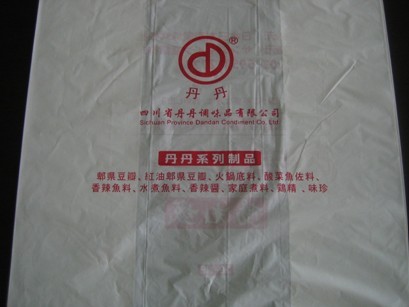 The development of the matter seems to be a joke we often hear, and it is also common in China's business history. Corporate integrity is an intangible asset for an enterprise, and corporate goodwill directly affects customers' purchasing behavior. It is difficult to build corporate reputation but easy to destroy it. When a dispute in business dealings can ignore some basic bottom line of corporate ethics and adopt despicable means of turning hostile and disowning people, then if it treats its own partners like this, even without this dispute, as the enterprise develops and grows in the future, lacking integrity and having lost morality, can it still develop healthily? |