How long does the sunflower blooming period last? Detailed flowering-period management tips
We grow sunflowers mainly for their blooming period, but not everyone understands the sunflower blooming period. So how long does the sunflower blooming period last? How should they be managed during the sunflower blooming period? Today, follow the editor to take a look at the duration of the sunflower blooming period and sunflower flowering-period management tips, for everyone's reference.
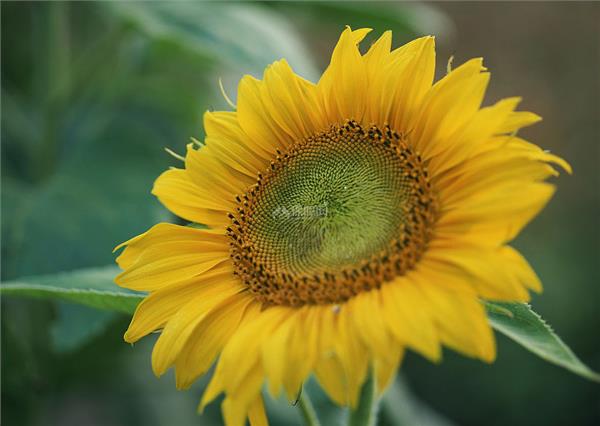
Sunflower blooming period - Duration
Sunflowers can be grown in all four seasons, mainly in summer and winter. The blooming period can last more than two weeks. Besides looking like the sun, sunflowers have bright, generous blooms that are suitable for ornamental display, and their seeds have even greater economic value: they can be made into the popular sunflower seeds, and can also be pressed into a low-cholesterol, premium edible sunflower oil. Sunflower varieties can be divided into "general ornamental" varieties or "edible" varieties. General ornamental varieties are characterized by being relatively short, usually no more than half a meter, so they are suitable for growing in pots; edible varieties are relatively tall, planted in ordinary open-field nursery soil, and can grow to more than 2 m. Sunflowers grow quite quickly, usually flowering about two months after planting. Their flower forms include single-petal, double-petal, single-flower or multi-flower types, and the blooming period is quite long, reaching more than two weeks.
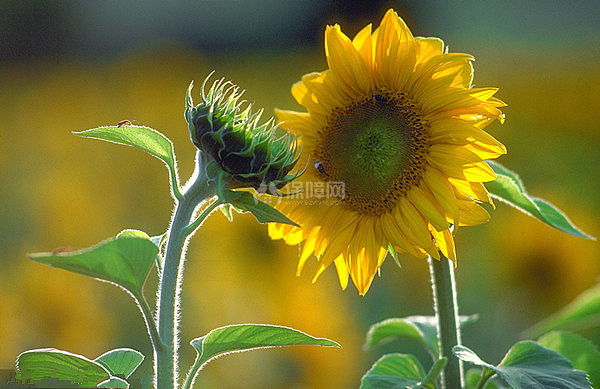
Sunflower blooming period - Management tips
1. Ensure an adequate supply of water and fertilizer
From bud formation to the basic end of flowering, the sunflower is in the key period for forming seeds and the flower disk. During this period, the plant's water requirement accounts for more than 60% of its lifetime water requirement. If the water supply is insufficient, it will cause poor seed development and increase the rate of empty shells. Therefore, during this period, an adequate water supply should be ensured, and appropriate topdressing can be applied together with watering, with 5-10 kg of urea and 10 kg of diammonium per mu.
2. Carry out artificial supplementary pollination
Sunflowers are insect-pollinated, cross-pollinated crops. Under natural conditions, they rely on bees and insects to carry pollen and complete pollination and seed set. When bee sources and insects are insufficient, artificial supplementary pollination can also be used to increase the pollination and seed-setting rate of sunflowers. For artificial pollination, a cardboard box board can be cut into a disk the same size as the flower disk, padded with cotton wool so that the central part is slightly convex, wrapped with flannel or gauze, and a handle tied on the back to make a pollination puff. When pollinating, hold the pollination puff with pollen in one hand and hold the flower disk with the other, press the pollination puff onto the flower disk with slight pressure and gently tap it a few times, so that the pollen falls onto the stigma. Artificial supplementary pollination should be carried out around 9 a.m., after the dew has dissipated and before 12 o'clock, when there are many pollen grains and their vitality is strong. Generally, it should be carried out two or three times in succession: the first time when half of the flowers on the flower disk have opened, and the second and third times when the flowers in the center of the flower disk have opened.
3. Carry out control of the sunflower moth
The sunflower moth, also called the sunflower borer, is an important pest on sunflowers. Its larvae mainly bore into and feed on sunflower seeds, causing damage and forming many crisscrossing tunnels; the bitten fragments and excrement fill the tunnels and cause serious contamination. After rain, the flower disk and seeds become moldy and rot, reducing marketability. From past experience, this is currently the active period of adult sunflower moths. They usually hide during the day and begin activity in the evening, feeding on nectar on the sunflower flower disk, mating and laying eggs. The egg stage is 3-4 days before hatching into larvae. For control of sunflower moth larvae, after 50% of sunflowers have bloomed, use 100 g of 8000 IU/mg bt wettable powder per mu, dilute it with talc powder into a dust formulation, and spray for control.
That is all for the information related to the sunflower blooming period. I hope this article is helpful to everyone.