Is Cuban oregano (Plectranthus amboinicus) toxic, and can it be kept indoors?
There are countless plants in the world, so have you ever heard of Cuban oregano? Today, the editor will give gardening friends who love Cuban oregano a brief introduction: is Cuban oregano toxic? Can Cuban oregano be kept indoors?

The answer is: Cuban oregano is non-toxic. Moreover, Cuban oregano has certain medicinal value.
Cuban oregano is not only harmless to the human body, but can also help detoxify the body, and it holds a high status in the field of pharmacy. If you have a mild sore throat, you can blend Cuban oregano into juice, add a little honey or sugar, and eat it raw to relieve the pain. If you are bitten by mosquitoes in summer, apply mashed Cuban oregano to the bitten area to reduce swelling and relieve pain. It can also be used to make tea, which helps with gastrointestinal bloating, and can also be used to care for the skin.
Medicinal effects: blended into juice with honey and eaten raw to relieve sore throat; brewed as tea to relieve gastrointestinal bloating; for colds, mashed and applied externally to reduce inflammation and swelling and to care for the skin.
Main uses: a small potted plant that is both ornamental and fragrant. The scent is like mint with a slight apple flavor. It refreshes the mind, clears heat and relieves summer heat, and repels mosquitoes.
Can Cuban oregano be kept indoors?
Cuban oregano is a small potted plant that is both ornamental and fragrant, with a scent like mint and a slight apple flavor. It refreshes the mind, clears heat and relieves summer heat, and repels mosquitoes. Cuban oregano can be placed indoors. Except for some friends who are allergic to fragrances, you can safely grow Cuban oregano at home; it can freshen the air and give off a light fragrance.
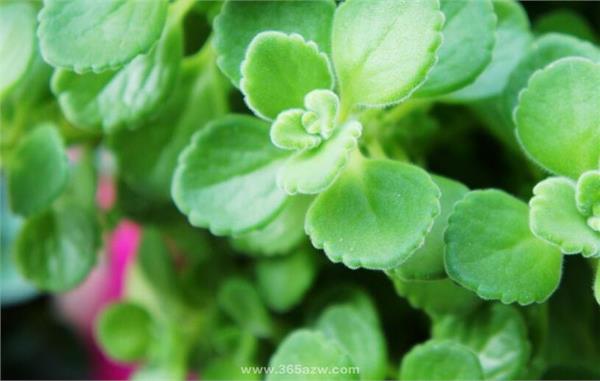
Can Cuban oregano be kept at home if there is a pregnant woman in the family?
Yes, it can be kept.
Generally speaking, it is not suitable to place flowers and plants in a pregnant woman's home, because floral fragrance can harm pregnant women. This is because a strong floral fragrance may stimulate a pregnant woman's nerves, causing headaches, nausea, and vomiting, and affecting their appetite; in severe cases, it may even cause fetal instability or even miscarriage. In addition, pollen generally contains certain chemical components. If it falls on the skin or is inhaled into the respiratory tract, it may trigger allergies, and a strong floral fragrance is even more likely to worsen allergy symptoms. Therefore, for pregnant women who are more sensitive in both skin and respiratory tract, calling a strong floral fragrance a kind of "disaster" is not much of an exaggeration. Moreover, some flowers and plants may also affect the diet, rest, and health of pregnant women and infants, so pregnant women should be careful when placing flowers and plants at home.
But Cuban oregano is a non-toxic plant that is beneficial to the human body, so even if there is a pregnant woman at home, it can still be planted. The fragrance of Cuban oregano is a green substance from plant cells, non-toxic and harmless, and it will not cause any bad effects on pregnant women or fetuses. Cuban oregano is non-toxic and has certain medicinal value. Medicinal effects: blended into juice with honey and eaten raw to relieve sore throat; brewed as tea to relieve gastrointestinal bloating; and for colds, mashed and applied externally to reduce inflammation and swelling and to care for the skin. However, it seems to have no insect-repellent effect, though it does have anti-inflammatory and swelling-reducing effects.
So you can plant some Cuban oregano at home; it can cultivate a pregnant woman's temperament and is good for both the pregnant woman and the fetus.

How to grow Cuban oregano
1. Light and temperature: Cuban oregano likes sunlight, but it is also fairly shade-tolerant. It fears cold and needs to be cultivated in a greenhouse. It is not tolerant of waterlogging. It likes warmth and is not cold-tolerant. In winter it needs a temperature of 5°C-10°C. Cuban oregano likes a sunny, well-lit environment; only under strong light will its fleshy leaves be thick. With insufficient light, the leaves will become flat and thin.
2. Soil: Cuban oregano likes loose, well-drained soil. Ventilation: because Cuban oregano is often cultivated in a greenhouse year-round, it requires air circulation and fresh air; otherwise, it is prone to scale insect damage.
3. Watering: Cuban oregano is not tolerant of moisture; if it is too wet, the roots rot easily and the plant dies. The soil should be allowed to dry and then be watered wet; on cloudy days, watering and fertilizing should be reduced or stopped. After summer, be sure to water less, and in winter control watering even more. Generally, water only when the leaves have wilted; otherwise, it tends to grow leggy.
4. Pruning: because Cuban oregano branches very easily and grows along a horizontal plane, the spacing between plants and rows should be wide when planting so that the branches and leaves can spread out. Moderate pruning can promote branching and make growth robust.