Intercropping bamboo fungus in sorghum fields yields an extra 300,000 yuan in benefits
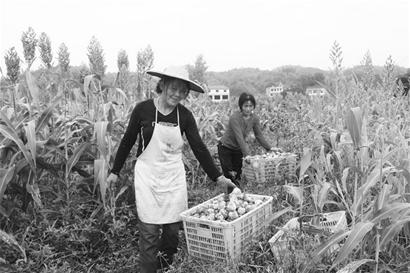
On August 2, a reporter saw in Group 3 of the Hongse Village community, Guhe Town, Changning County that under blue skies and white clouds, the red sorghum ears were especially beautiful, and more than 10 female workers were busy picking bamboo fungus eggs intercropped in the sorghum field. "It is now the peak period for picking bamboo fungus eggs, and we pick more than 5,000 jin every day." Wang Xingyi, the owner who was cooking congee for the workers in a temporary shed at the edge of the field, was also covered in sweat. Looking at baskets of plump bamboo fungus eggs and the continuous, heavy ears of sorghum, the joy of harvest was written all over Wang Xingyi's face.
Wang Xingyi mainly processes bamboo fungus and bamboo fungus eggs. For bamboo fungus series processing, one must have one's own base, which increases output value and also drives farmers along. Because bamboo fungus requires crop rotation, Wang Xingyi changed to a different township each year starting in 2009 to grow bamboo fungus, but in the past he never did intercropping.
In the second half of 2010, Wang Xingyi selected Group 3 of the Hongse community in Guhe Town to grow bamboo fungus, and he rented 120 mu of land from farmers. The Guhe Town Party committee and government paid close attention to Wang Xingyi growing bamboo fungus in the town. After learning about the varieties of bamboo fungus he was growing, they suggested he intercrop sorghum with bamboo fungus; sorghum and bamboo fungus, one tall and one short, do not affect each other, saving costs and also increasing income.
After listening to the explanations of the technicians, Wang Xingyi decided to intercrop all 120 mu of land. This intercropping earned him an extra 300,000 yuan in income. Wang Xingyi counted on his fingers: "All 120 mu of land is planted with hybrid sorghum, harvested for two seasons. The first season harvested more than 60,000 jin of sorghum, at 1.8 yuan per jin, with an output value of about 100,000 yuan. The ratoon sorghum can sell for about 40,000 yuan. Because of intercropping, the sorghum just happens to shade the bamboo fungus, saving more than 100,000 yuan in shade-net costs. In addition, I also intercropped green beans, cowpeas, winter melon and other vegetables at the edge of the field, which can bring in tens of thousands of yuan more." This intercropping produced nearly 300,000 yuan in extra benefits. In addition, the 120 mu of land harvested more than 600,000 jin of bamboo fungus eggs, with an output value of more than 3 million yuan after processing.
Wang Xingyi himself benefited well from intercropping, and the villagers of Hongse Village also benefited. There are 20 workers working in the field year-round; for example, the pay for picking bamboo fungus eggs is 0.2 yuan per jin, and 500 jin are picked in a day. The processing factory has more than 80 workers, most of them villagers from Hongse Village who took up their posts after training, with an average monthly wage of 2,400 yuan. "As long as the right intercropping varieties are chosen, intercropping brings better benefits than no intercropping. In the future I will also intercrop more varieties." Wang Xingyi has already begun planning next year's intercropping model.