Appreciation of the Sichuan-style bonsai art of the Buddhist Pine
Podocarpus macrophyllus, also known as the Buddhist pine, belongs to the family Podocarpaceae and the genus Podocarpus; it is an evergreen coniferous tree reaching up to 20 m in height and 60 cm in diameter at breast height. It is often used as bonsai material and for courtyard landscaping.
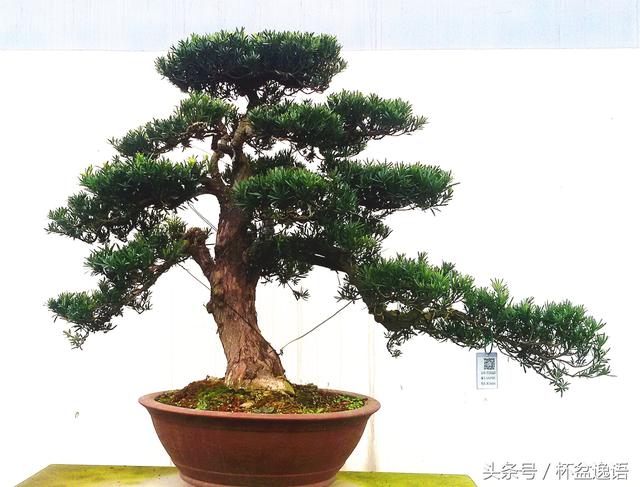
Vigorous and upright, with luxuriant branches and leaves, evergreen through all four seasons, lush and verdant
With a Buddhist pine at home,
you'll never be poor in this life;
Plant a Buddhist pine,
and generations will become wealthy.
This is a proverb passed down for many years in Guangdong, Hainan, Fujian, Taiwan, China and other regions of our country. It is said that since ancient times the Buddhist pine has been a Buddhist tree, with the divine power to ward off evil, block misfortune and avert disaster. In some famous scenic spots and ancient temples, solemn and secluded thousand-year-old Buddhist pines still grow to this day; they were planted by the monks of those temples with their own hands, to avoid misfortune and turn it into good fortune amid troubled times. People today generally believe that planting a few Buddhist pines in front of or behind the house can not only prosper the home and benefit its owner, bringing peace and good luck to the family, but also symbolize attracting wealth and opening up fortune, with everything going smoothly. Therefore the Buddhist pine is widely recognized as a treasure for guarding the home.
It is precisely because the Buddhist pine carries so many auspicious and prosperity-related meanings in China that it is also called "a thousand-year Buddhist pine, the root of happiness for ten thousand generations."
The Buddhist pine has an elegant and upright charm, with a vigorous and powerful, proud momentum of its own; combined with meanings that fit Chinese culture such as "longevity" and "keeping wealth and good fortune," owners who pursue high-grade courtyard beautification often like to plant one or two Buddhist pines, adding a stroke of genius to building their own "garden story." When potting, use humic acid soil, and never use alkaline soil. It prefers loose, fertile, slightly acidic soil with good drainage, and is not tolerant of saline-alkaline or barren conditions.
In the history of Sichuan-style bonsai making, the Buddhist pine is often given the meaning of "wealth and longevity," so the production process is relatively complex and the price of the finished product is also very considerable.
"Vigorous and upright, with luxuriant branches and leaves, evergreen through all four seasons," the Buddhist pine possesses all the characteristics of a pine tree, and is easy to cultivate, not as difficult to keep alive as a pine.
Because in Sichuan-style bonsai the Buddhist pine often represents "longevity," using the Buddhist pine to create the character "longevity" naturally follows.
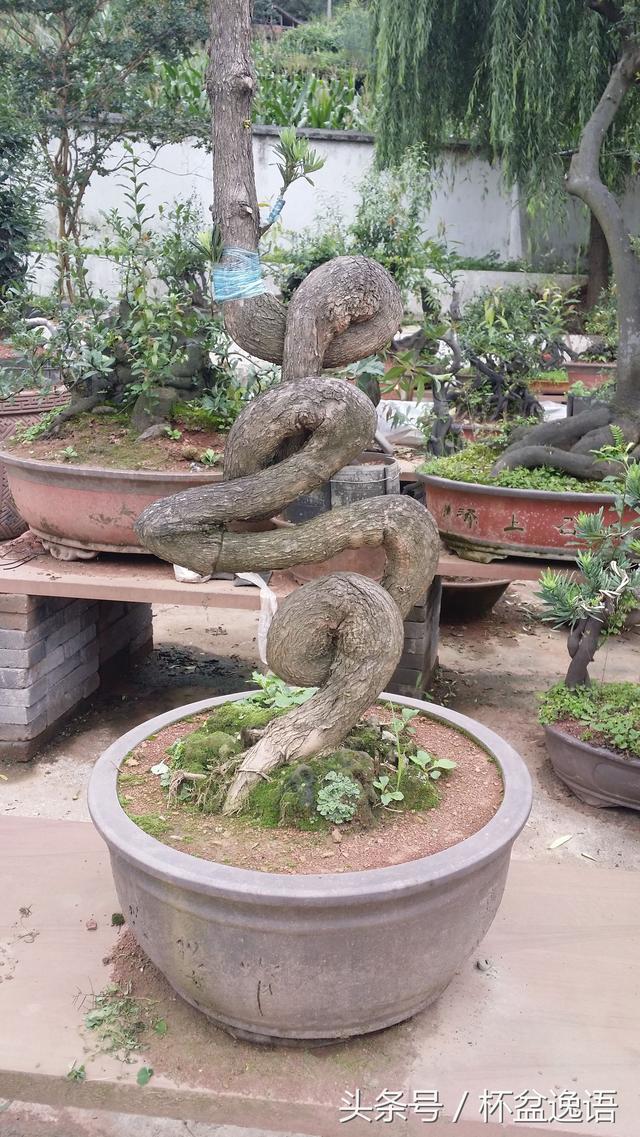
The character "longevity" made with the Buddhist pine symbolizes longevity, and its price is also very high
In addition to making the character "longevity," the bent tree unique to Sichuan-style bonsai is simply "everyday fare" in the making of Buddhist pine bonsai......
First, let me present a very exquisite "continuous straight bends"........
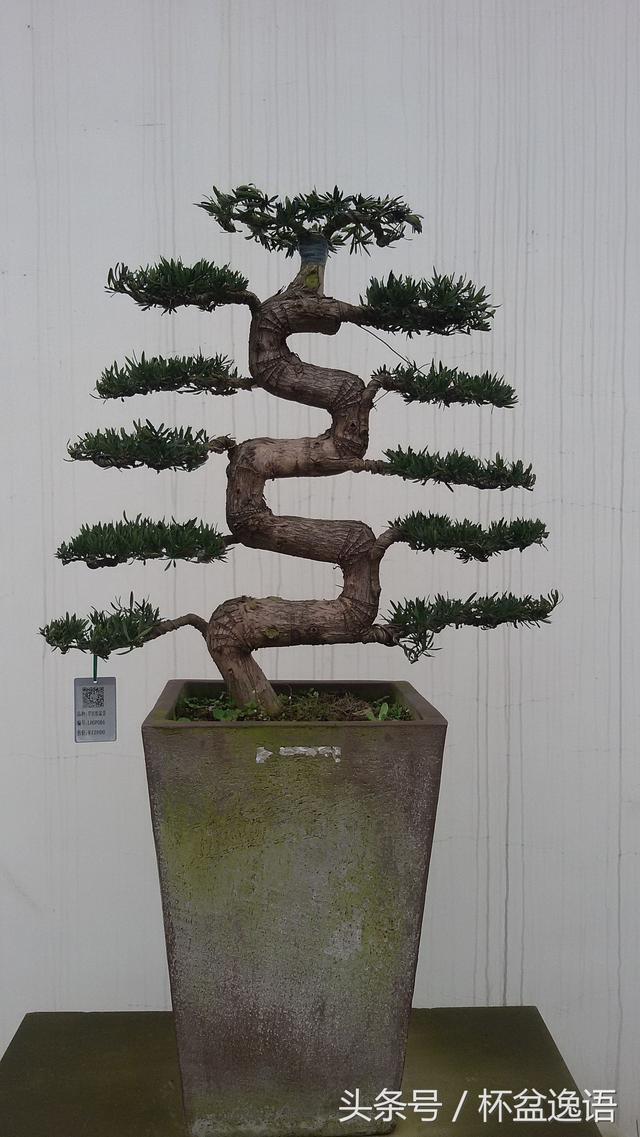
Continuous straight bends, symmetrical beauty
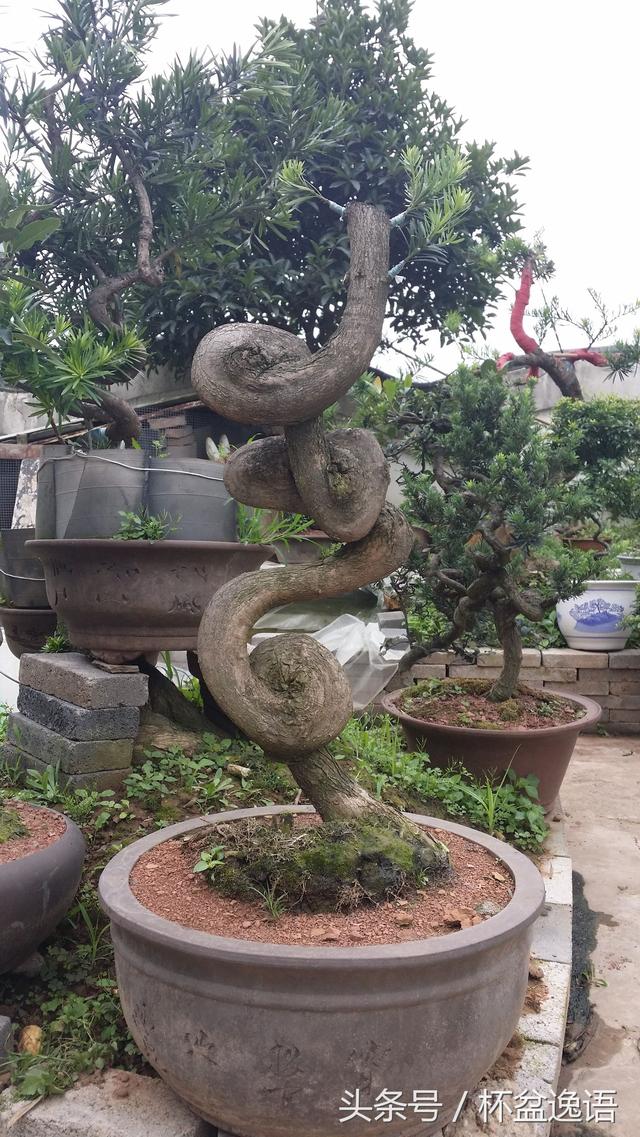
Continuous twisted bends and circles, embodying the essence of the Sichuan style in a single tree
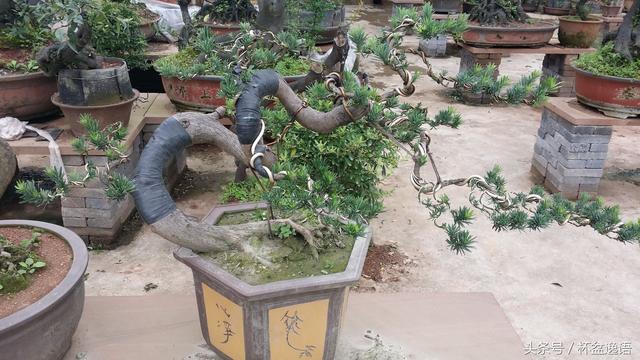
Coiled dragon, reclining branches, vigorous and powerful
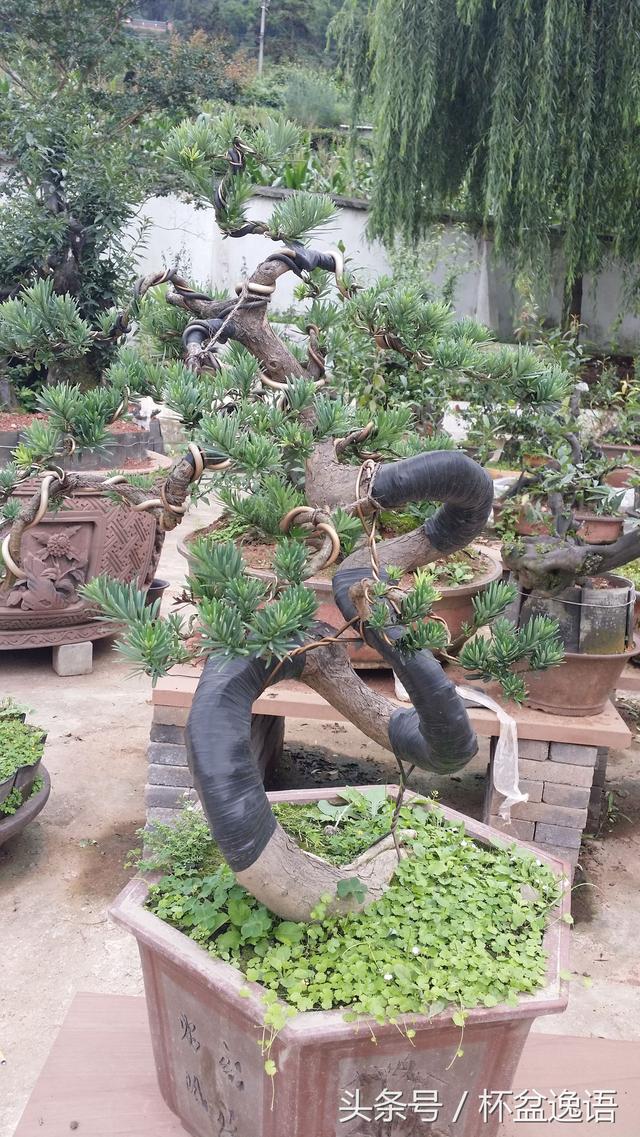
The colorful bending techniques
In addition to characters and bending, the common making techniques for the Buddhist pine often give people a sense of ancient vigor and upright nobility in the case of forest Buddhist pines......
Buddhist pine forest, with a vigorous and noble beauty
Finally, let me present a tree-form Buddhist pine, with many branches and many bends, a vigorous tree form, ancient and vigorous......
Many bends and many branches, with luxuriant branches and leaves
This account specializes in exploring and promoting Chinese bonsai culture and cup culture. Friends who like bonsai are welcome to interact.
This article was published by "Beipen Yiyu" on April 25, 2017.