How to grow Ixora? Master these cultivation techniques
In big cities, land is at a premium and buildings are everywhere. To balance and beautify the environment, plants are often planted along many roadsides, and Durio ying is spotted in many places. Durio ying is an evergreen tree with a straight trunk; some leaves turn red in autumn. It has good landscaping performance and also has a certain ornamental value. Next, the editor will introduce in detail the growth habits and cultivation methods of Durio ying.
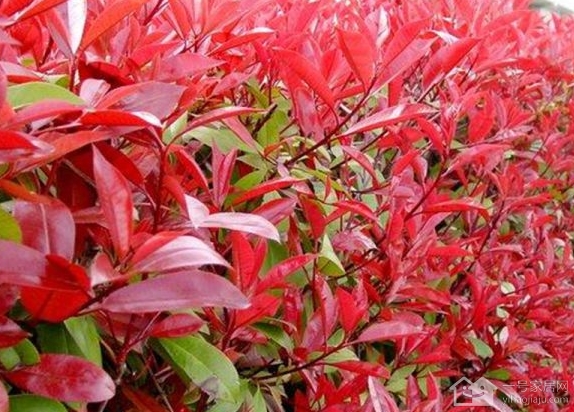
Durio ying was originally named Durio ying (Elaeocarpus sylvestris). Its bark is dark brown and smooth, its twigs are reddish-brown, its crown is compact and nearly conical, and its branches and leaves are dense. Its leaves are leathery and lanceolate; from autumn and winter to early spring, some leaves turn crimson red, with red and green intermingled, bright and pleasing to the eye. Durio ying has a well-developed root system and prefers warm, humid, acidic soil. It is easy to transplant and tolerant of pruning, making it an excellent street tree species. In garden green spaces, Elaeocarpus sylvestris is suitable for clump planting, group planting or opposite planting, and can also be planted at the edge of lawns or used as a background for flowers and trees. Because it has strong resistance to sulfur dioxide, it is also suitable as a greening tree species for factory and mining areas. The leaves are alternate, long elliptic-lanceolate in shape, with blunt serrated margins, smooth and hairless surfaces, and pinnate veins; the raceme is light green and axillary, about 5 to 10 cm long, with 5 petals whose front ends are torn, and numerous stamens; the fruit is an oval brown drupe with pointed ends, and the seeds are very hard. The most obvious feature of Durio ying is that before the leaves fall, the red leaves hang high on the treetops and sway slowly in the wind, with a dynamic like a school of small fish darting about. It is a plant worth stopping to admire when viewing foliage and trees. Its wood can be used for general vessels and floral utensils, the seed oil can be used as a lubricant, and the bark can also be used as a dye. It is very suitable as a landscaping, greening or ornamental tree species for home gardens. It prefers a warm and humid environment, has a well-developed root system, a solid and straight trunk, and strong wind resistance. It grows very rapidly in well-drained acidic yellow soil, with few pests and diseases. After being cut down, the stumps have extremely strong sprouting and regeneration ability, and after two or three years they can become trees again, so the ecological benefits are very significant.
II. Cultivation methods of Durio yingDurio ying is mainly propagated by seeding. Its flowering period is from June to August, and its fruiting period is from October to November. The drupe is conical and dark purple. Generally, seeds are sown immediately after collection, or the seeds can be stratified with wet sand until spring sowing the following year. During the seedling stage, thin fertilizer can be applied several times in summer, and the seedlings are transplanted separately in the second spring. When transplanting small seedlings, they should be kept with native soil; when transplanting large seedlings, they need to be kept with a soil ball, and some branches and leaves should be properly thinned. After planting, the survival rate is extremely high.
Cultivation tips
1. Made with lime mixed with sulfur, salt, etc., coating the trunk helps prevent freezing and pests. Greening departments mainly use the method of brushing white paint on street trees to "keep trees warm."
2. In winter, wrap with straw rope or plastic cloth to protect against cold by "dressing" the tree.
3. Tying rope on trees can prevent some moth larvae from climbing up the tree. Sometimes poison rope sprayed with pesticide is added in the middle of the rope. Another method is tying straw on trees, mainly to lure moths to lay eggs on it, so as to eliminate the eggs.
The above is the relevant information introduction on the growth habits and cultivation methods of Durio ying. Through the content above, we can understand that because Durio ying is easy to survive and is a type of evergreen tree, it is relatively convenient to manage, so it is widely used by greening departments. If you have a courtyard at home, you can also choose to plant Durio ying!