How to grow azaleas? Detailed guide to cultivation methods and precautions
It is hard to say when azaleas began to grow more and more popular and beloved. If you love azaleas, do you know what the cultivation methods and precautions for azaleas are?
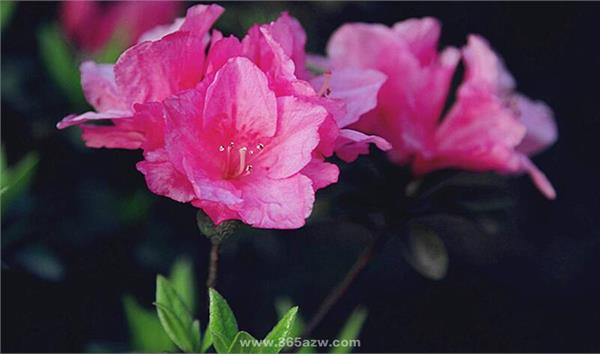
1. Environmental conditions: It is best to have both indoor and outdoor environments for cultivating azaleas. The indoor environment is used in winter. The outdoor site is used in summer and autumn, and muddy ground is best; cement ground should be avoided. The site should be spacious, ventilated and shaded. A shade shed should be built above, covered with reed curtains or using natural forest shade as protection. A light transmittance of about 30% is appropriate, and exposure to the evening sun must be strictly avoided.
2. Potting soil requirements: Azaleas like loose, highly permeable, well-drained acidic soil rich in humus, with a pH value of 5.0-6.0. If clay or alkaline soil is used, hardly one in a hundred will survive. This is especially true for summer azaleas and Western azaleas, which must have mountain soil. Mountain soil also needs to be improved. At present, 3 commonly used prepared culture soils are generally adopted.
3. Flower pot selection: For cultivating azaleas, generally two kinds of pots are chosen: clay pots and purple sand pots. Clay pots have good air permeability and water permeability, and production units all use this kind of pot for cultivation. For formed azaleas, especially azaleas that have already been shaped, in order to be displayed indoors and outdoors, they are generally planted in beautiful and elegant purple sand pots. Purple sand pots have a fine texture, rich colors and beautiful shapes, which can double their ornamental value.
4. Improving water quality: For watering azaleas, rainwater is best, followed by river water and pond water. If tap water is used, it is best to store the water for 1-2 days to let the chlorine volatilize before use. When using it, add 0.2% ferrous sulfate, and water once every 7-10 days during the growing season. Use it regularly to ensure the soil is acidic.
5. Fertilizer and water management: Azaleas like shade and moisture, and should not be too dry. During the flowering period, even more water is needed. In winter, azaleas have entered the dormant period and do not need much water. Generally, water once every 4-5 days, preferably around noon on clear and warm days;
6. Outdoor shading: Before being moved outside and before flowering, it is best to expose them to more sunlight; during the flowering period, short-term shading should be carried out at noon, with a light transmittance of 60%;
7. Shaping and pruning: Azaleas grow relatively slowly, so generally let them grow naturally, and only shape them after flowering by cutting off leggy branches, diseased and weak branches, deformed branches and damaged branches.
8. Disease and pest prevention: During the damage period of the azalea lace bug (also known as the crowned lace bug), spray 40% dimethoate 1500 times dilution, once every 7 days, for 3 consecutive times.
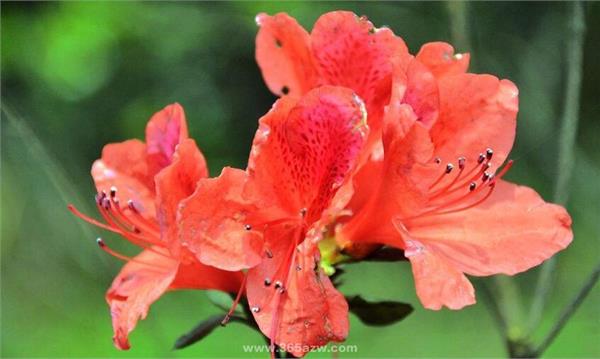
Precautions for growing azaleas
?
(1) Azaleas are typical acid-soil flowers. To prevent chlorosis, apply 0.2% ferrous sulfate once about every 20 days. If the leaves are found to be yellowing, spray 0.2% ferrous sulfate solution directly on the leaf surface, and the leaves can turn from yellow to green.
(2) For home flower growing, if you want azaleas to bloom during the Spring Festival, you can use the method of breaking their dormant period. That is, move spring azaleas that have already formed buds indoors to a sunny place in mid-December, keep the room temperature above 5°C, apply a light fertilizer once every 10-15 days, water when the potting soil is dry, and frequently spray water on the leaf surface to increase humidity. In this way, they can bloom before the Spring Festival.
(3) Azaleas grow relatively slowly, and generally the pot can be changed once every two years. Repotting should be done after the flowers fade. When repotting, fill in new culture soil. Generally, use a culture soil mixed with 8 parts leaf mold (peat soil), 1 part garden soil and 1 part river sand, and add a small amount (about 50 grams per pot) of decomposed oil residue or chicken manure as base fertilizer.
(4) During the growth period of azaleas, adventitious buds often easily sprout on the stems and branches, and they should be removed in time to avoid disrupting the plant shape. After bud formation, if too many flower buds are found, the excess flower buds should be removed, leaving only one flower bud per flowering branch, so as to concentrate nutrients and promote larger flowers and brighter colors. After azaleas bloom, the faded flowers do not fall off easily. To reduce nutrient consumption, the faded flowers should be removed in time to encourage new buds to sprout.
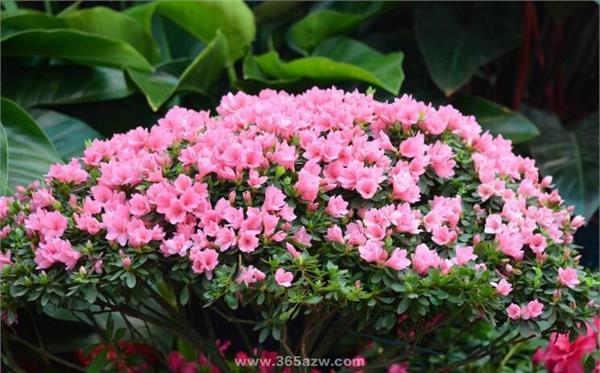
What month do azaleas bloom?
1. In fact, azaleas in different regions and of different types have different flowering times. If azaleas are cultivated in greenhouses in the north, they can bloom in January-February, while field-grown azaleas bloom in March-May, and azaleas in high-altitude environments bloom in July-August.
2. Azaleas generally have three flowering periods. The flowering period of spring azaleas is generally between April and May, and they first bloom and then produce new leaves. The flowering period of summer azaleas is in May and June, and they first produce new leaves and then bloom. The flowering period of spring-summer azaleas falls between the two, with flowers and leaves sprouting almost at the same time. However, in some places, azaleas that bloom in all four seasons have now been cultivated.