What to Do When a Money Tree's Leaves Turn Yellow? Teach You the Correct Care Methods
The money tree (Pachira aquatica) not only has very high ornamental value, but also carries a lovely meaning, making it deeply loved by flower lovers. So, do you know what to do when a money tree's leaves turn yellow? And how to grow a money tree?
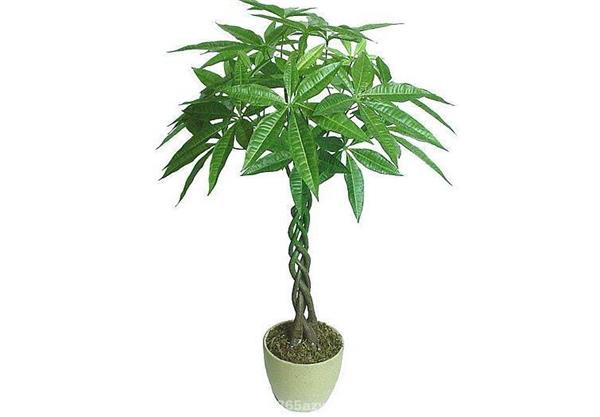
Problem 1: In winter, when the temperature is too low, the money tree freezes and the leaf tips turn yellow. The money tree likes high temperatures and grows between 25-30°C. Before the weather turns from warm to cold, the lower temperature injures the leaf tissue, the leaf tips turn yellow, and eventually they drop off.
Solution: In winter, when temperatures are low, reduce watering. If you are in the south, there will be no problem; water less, and water only after the soil in the pot has dried out.
Problem 2: Too much water causes the roots to rot, and yellow leaf tips are the best reflection of this. Although the main trunk does not yet show signs of rot, the leaves will reveal it, just like when a person gets sick, it first shows on the face. The principle is the same.
Solution: At this point, stop watering immediately, cut off the plant's rotten roots, then spray with a fungicide, and water again only after the potting soil has dried.
Problem 3: Over-fertilizing will cause the leaf edges and the entire leaf tips to look scorched or whitish. In this season, do not disturb the soil in the pot; disturbing the soil in the pot may damage the roots, and in this season they do not heal easily.
Solution: Only remove the topsoil and the visible fertilizer. And water to dilute it. Water several times; after the water drains out, wait a few days, and then water once the soil has dried.
Problem 4: Yellow leaf tips should also be related to the potting soil being too dry, especially when the growing environment's humidity is too low and not enough water is sprayed on the leaves. The money tree is a plant that likes high temperatures and humidity; insufficient air humidity or potting soil moisture will both cause yellow leaf tips.
Solution: While watering, do not forget to spray water on the leaf surfaces; maintaining air humidity is also very important.
Problem 5: Long-term lack of sunlight prevents chlorophyll from being synthesized, which first shows as yellow leaf tips, then slowly develops into the whole leaf turning yellow and eventually dying.
Solution: The money tree is a light-loving plant. When growing it indoors, be sure to regularly let it bask in the sun and get some light. Note that in summer, when the sunlight is intense, provide shade and do not let direct sunlight hit it.
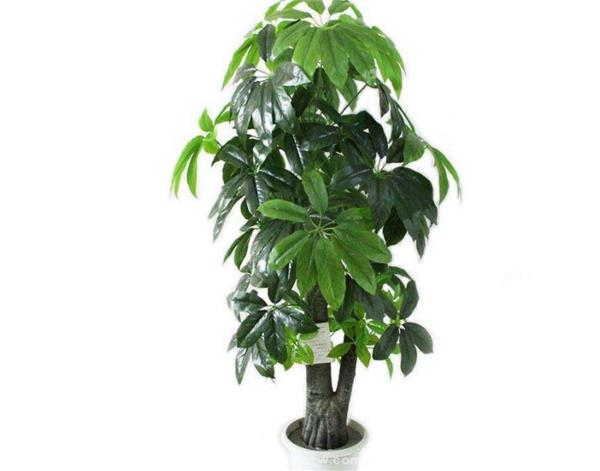
How to Grow a Money Tree
1. Appropriate lighting. Sufficient light is an essential condition for the money tree to carry out photosynthesis, so the money tree at home must be placed in a sunny spot, with its leaf surface facing the sunlight, so that the branches and leaves will grow more beautifully.
2. Reasonable fertilizing. The money tree's demand for fertilizer is greater than that of other flowers and trees, so the soil in the pot must be fertile. Fertilize it once every 15 days, mainly with decomposed liquid fertilizer or flower-growing fertilizer.
3. Regulate temperature and humidity. The money tree also has high requirements for temperature and humidity. If the temperature and humidity are insufficient, the leaves tend to drop, which detracts from its ornamental value, so the indoor temperature should be kept above 15°C, while also keeping the soil at a certain humidity.
4. Pay attention to repotting. The suitable season for repotting a money tree is spring; July-August is also OK. Try to repot when the money tree is in a semi-dormant state during the high-temperature period, so that it can grow more healthily.

What to Do When a Money Tree's Roots Rot
Root rot means it has contracted root rot disease. The symptoms may appear because it was watered too much, or because the soil contains bacteria.
If the roots have not completely rotted, use a tool to cut off the rotten parts, transplant the remaining money tree into new fertile soil, and keep the soil moist; it may recover its vitality.
Of course, directly spraying the plant with liquids such as Previcur, thiophanate-methyl, Ridomil, or ethylicin can also cure root rot. If the roots have completely rotted, then just throw it away.