How do you care for a Phalaenopsis orchid? Learn to grow the queen of flowers well
The Phalaenopsis orchid gets its name because its flowers look like dancing butterflies. More than 70 native species of Phalaenopsis have been discovered so far. Phalaenopsis has short stems and large flowers, graceful flower forms, and gorgeous, delicate colors, winning the affection of many people. Many orchid enthusiasts grow Phalaenopsis at home, so how do you care for a Phalaenopsis orchid? Follow along with the editor to learn more!
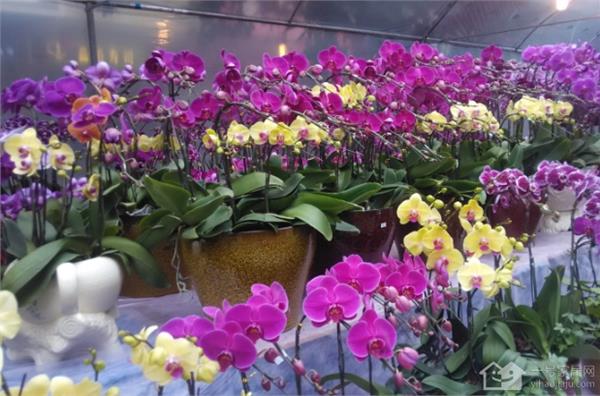
Phalaenopsis orchid growing methods:
1. The ecological habits of Phalaenopsis
If you want to know how to grow Phalaenopsis, of course you first need to understand its ecological habits! Phalaenopsis likes high temperatures, high humidity, and a ventilated, airy environment; it is not tolerant of waterlogging,
tolerates semi-shade, and is intolerant of direct scorching sun and water accumulation, and fears cold. The optimum growing temperature is 22-28°C, and the overwintering temperature should not be lower than 15°C.
2. How to cultivate Phalaenopsis
For cultivating Phalaenopsis, sphagnum moss and tree bark are generally used as the growing medium. The principle for fertilizing is to fertilize less and apply dilute fertilizer, and do not fertilize during the flowering period; once a week. Applying nutrient solution is also fine, but it is best to use a nutrient solution specially made for Phalaenopsis. After the flowers have bloomed, the stem should be cut off as early as possible. Cut between the first and second nodes from the base.
Cultivation and care temperature: the daytime temperature is 25-28°C, and the nighttime temperature is 18-20°C. Temperatures above 35°C or below 10°C will cause it to go dormant and stop growing.
Humidity: the humidity should be maintained at around 70% throughout the year. When the temperature is too low, the humidity needs to be reduced, otherwise it can easily lead to disease.
Water: the principle for watering is to water only when the medium is dry. Generally, watering is best done in the morning, once every 5-10 days, but when the indoor air is dry, you can use a sprayer to mist the leaf surfaces directly, but note that when misting during the flowering period, do not spray water mist onto the flowers. Also note that water should not accumulate around the roots.
Light: generally it should be placed in an indoor environment without strong light exposure, and do not let direct sunlight shine on it around noon.
Air: Phalaenopsis prefers a fresh, circulating air environment, and dislikes stuffy heat and poor ventilation. Smoke or polluted air will cause the flowers to wither early.
The above is an introduction to related content on how to care for a Phalaenopsis orchid. From the above, we can see that growing Phalaenopsis still takes quite a bit of thought. Phalaenopsis has certain requirements for temperature, humidity, and water. I hope everyone will pay attention to the various factors that can affect the growth of Phalaenopsis when growing it!