Flowers Suitable for Northern Households to Keep the Home Spring-like All Year Round
In the north, once autumn and winter arrive, it becomes hard to see green plants or flowers, with white and gray everywhere around, which feels monotonous and bleak after a while. Some people grow flowers indoors to improve their home environment, so what flowers are suitable for northern households?
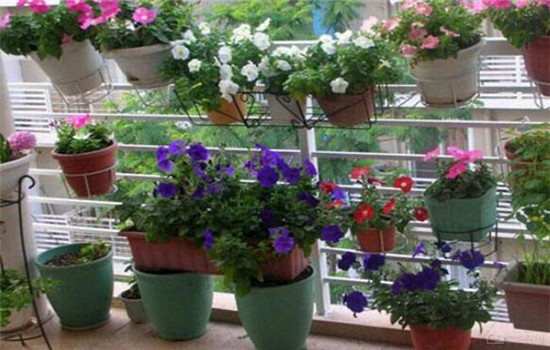
Flowers Suitable for Northern Households
First category: Flowers for indoor planting in the north
1. Foliage plants: Monstera deliciosa, Philodendron bipinnatifidum, Aspidistra elatior, spider plant, Asparagus setaceus, Syngonium podophyllum, etc. They are easy to manage, grow vigorously, and stay evergreen all year round, making them very suitable for indoor cultivation in the north.
2. Flowering plants: Clivia miniata, Cyclamen persicum, Euphorbia pulcherrima, Jasminum sambac, Aglaia odorata, etc. These are all flowers that northern households have grown for many years with lasting popularity. Some have brilliant colors, and some bloom fragrant flowers continuously, mellow and lovely.
3. Cacti and succulents: pads, globes, fingers, and columns, with strange shapes and a dazzling variety.
Second category: Flowers for open-field planting in the north
Iris, Echinacea purpurea, Sedum telephium, Hylotelephium erythrostictum, Sedum aizoon, Hemerocallis middendorffii, Hemerocallis 'Golden Doll', Solidago canadensis, Aster novi-belgii, ground-cover chrysanthemum, Rudbeckia laciniata, Gaillardia aristata, Rudbeckia hirta, Dicentra spectabilis, Paeonia lactiflora, Aquilegia vulgaris, Delphinium grandiflorum, Tradescantia virginiana, Gypsophila, Phlox drummondii, Dianthus chinensis, Dahlia pinnata, Canna indica, Kalimeris indica, Paeonia suffruticosa, rose, Rosa chinensis, early small chrysanthemum, and so on.
Top recommendations for indoor plants:
Cactus
Cactus has a strong anti-inflammatory and sterilizing effect. At night it absorbs carbon dioxide and releases oxygen, which can supplement oxygen and help with sleep. Cactus is drought-tolerant and afraid of waterlogging, so on one hand attention should be paid to loose soil with good air permeability, and on the other hand, when watering, water thoroughly (so it seeps into the soil) rather than causing waterlogging. Cactus has strong adaptability to soil and can be grown in black soil, red loam, loess, and so on.
Spider plant
Function: Spider plant can absorb toxic and harmful gases in the air. For example, its absorption capacity for carbon monoxide and formaldehyde can reach 95% and 85% respectively, making it equivalent to an air purifier. In addition, spider plant can decompose benzene and absorb harmful substances such as nicotine in cigarette smoke. Growing method: Usually just keep the potting soil moist. It should not be too dry or too wet, and strong direct sunlight should be avoided. Spider plant has strong sprouting ability and grows quickly, easily filling the pot, so it should be repotted once every two years.
Aloe
Function: Aloe can absorb harmful substances such as formaldehyde, carbon dioxide, sulfur dioxide, and carbon monoxide, with especially strong absorption of formaldehyde. It can also kill harmful microorganisms in the air and adsorb dust, playing a major role in purifying the indoor environment. Growing method: Aloe is most afraid of waterlogging and likes to grow in loose soil with good drainage that does not easily compact. Newly planted aloe should not be exposed to the sun; let it see sunlight only in the morning, and after ten days to half a month it can be exposed to normal sunlight.
Spathiphyllum (also known as peace lily)
Function: It can suppress waste gases exhaled by the human body, such as ammonia and acetone. It can also filter benzene, trichloroethylene, and formaldehyde in the air. In addition, its high evaporation rate can prevent nasal mucous membranes from drying out and greatly reduce the likelihood of illness. Growing method: Spathiphyllum is fairly shade-tolerant. As long as there is about 60% scattered light, it can meet its growth needs, and it can be kept indoors year-round in a spot with bright scattered light. The potting soil should be kept moist, but excessive watering should be avoided; long-term soggy potting soil can easily cause root rot and yellowing and withering of the plant.
There are still many flowers suitable for northern households, and due to space limitations this article has not introduced them one by one. Because northern households have heating in winter, flowers may not adapt to this warm environment, so methods to deal with it should be considered in advance.