A Detailed Guide to the Benefits, Effects and Cultivation Methods of Chicory
Chicory is a plant used both as food and medicine, with high nutritional and medicinal value. If you have a large balcony or a courtyard at home, you might consider growing some chicory: not only can it be eaten, but its small blue flowers are also quite attractive. Today let us learn about the cultivation methods and precautions for growing chicory.
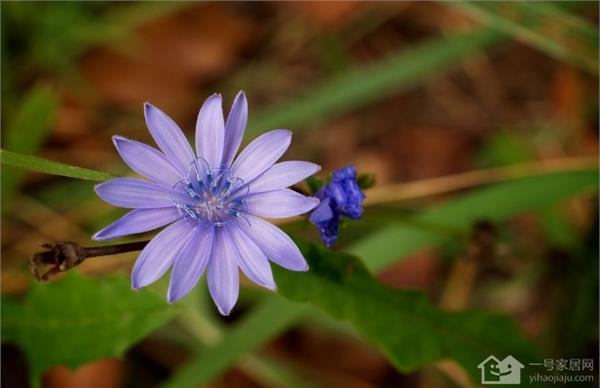
I. The Benefits and Effects of Chicory
1. Chicory is eaten as a vegetable for its tender leaves, leaf heads and leaf buds. It is a variety domesticated and selected from wild chicory, native to the Mediterranean and central and northern Asia. Chicory contains some components not found in ordinary vegetables, such as aesculetin, esculin, lactucin, lactucopicrin and other bitter substances, and has the effect of clearing the liver and promoting bile flow.
2. An infusion of wild chicory flowers, when injected into animals, can excite the central nervous system and strengthen cardiac activity (increased amplitude with slower frequency); the decoction has antibacterial and astringent effects. The root can improve appetite and digestive function; a highly concentrated infusion can increase gastric secretion but does not increase smooth muscle tone. The ethanol or ether extract of the root has antibacterial effects, and its active ingredient may be a sesquiterpene. The root also has a mild laxative effect. The seeds contain a non-specific plant hemagglutinin. Some have also reported that chicory contains carcinogenic hydrocarbons, at levels higher than in other coffee-type beverages.
3. The main functions and indications of chicory: clearing heat and detoxifying; promoting diuresis and reducing swelling. It is mainly used for damp-heat jaundice; nephritic edema; distending pain in the stomach; and loss of appetite.
4. Chicory is rich in potassium, which can effectively increase oxygen supply to the brain and regulate heart rhythm.
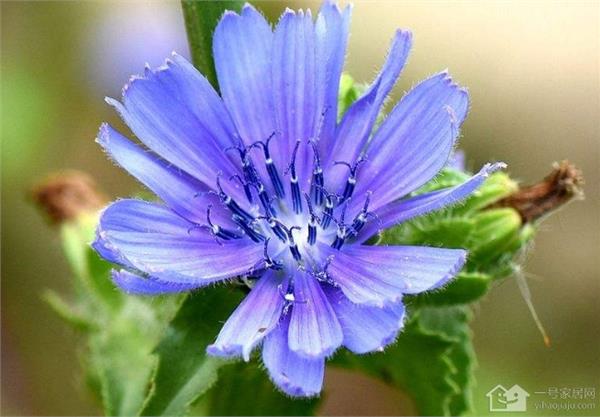
II. Cultivation Methods of Chicory
1. Soil cultivation method for chicory
Site selection: choose a sandy loam with deep, fertile, loose soil, fine soil particles and good air permeability, and the planting area should have convenient drainage and irrigation.
Temperature: Chicory is a semi-hardy plant, and its taproot has strong cold resistance. The optimum temperature for plant growth is 17-20°C; above 20°C, its assimilation capacity weakens. However, plants at the seedling stage have a relatively strong tolerance to high temperatures, with an optimum growth temperature of 20-25°C. During the period of forced cultivation for blanching chicory, 18°C is best. If the temperature is too high, the formed chicons are loose and not compact; if the temperature is too low, chicons will not form for a long time.
Water: Chicory needs a moist environment throughout its growth and development. If soil moisture is insufficient after sowing, the time for germination and emergence will be delayed. However, at the seedling stage, in order to promote root development, water should be properly controlled, keeping the soil alternately moist and dry. After the plant has grown out, the taproot begins to swell, and the water supply should be ensured.
Light: During the vegetative growth period, the plant needs sufficient light so that the fleshy root can grow plump. During forced cultivation, dark conditions are required.
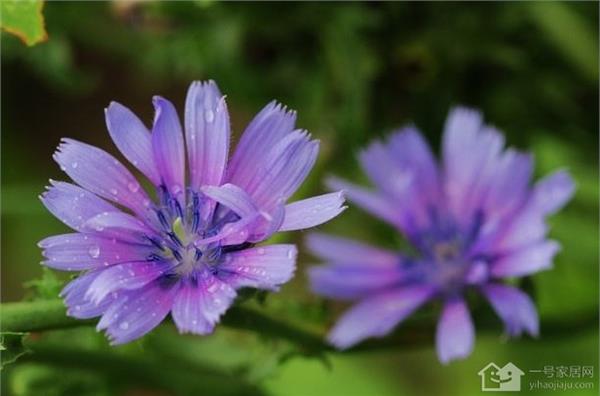
2. Hydroponic method for chicory
The principle is basically the same as soil cultivation, and it allows three-dimensional production and mechanized operation, with higher production efficiency.
With the hydroponic method, the root plants must be washed clean, and a small part of the root tip of the fleshy root should be removed, which helps promote the growth of chicons and makes the chicons more compact and thicker, giving better market quality; the water quality must be clean to prevent soft rot of the roots during hydroponics. Flowing water is best, or change the water frequently. The water level should preferably be below 1/2 and above 1/3 of the fleshy root. Temperature, humidity and shading must be strictly controlled, especially the temperature, which must not be higher than 20°C. If it is higher than 20°C, as the temperature rises, the weight of the chicons decreases and the rate of opening and loosening increases sharply. The relative air humidity in the cultivation bed should be kept above 95%. Under low humidity, the formed chicons are loose, light in weight and high in fiber, with a poor taste when eaten. At the same time, because the upper part of the fleshy root is not covered, under weak natural light or dim lamplight, greening of the chicons will occur within 1-2 hours; after more than 5 hours, the outer leaves and the tips of the inner leaves of the chicons will noticeably turn green and the quality will decline. Therefore, operations should be done quickly to reduce as much as possible the time the plants are exposed to light in the forcing room.