Shark farming failure: 500,000 yuan investment down the drain
Several-ton adult sharks occasionally pass by Qingdao, but few can be caught and brought ashore. This kind of shark, caught in the south, was in fact once farmed in Qingdao too. In 2004, Liu Chuanwu of Anzi Wharf in the Development Zone invested 500,000 yuan to artificially farm tiger sharks and bred 5,000 shark fry. But the next year, he switched to another trade. Shark farming is difficult - where exactly does the difficulty lie? On September 19, 2011, a reporter interviewed Liu Chuanwu.
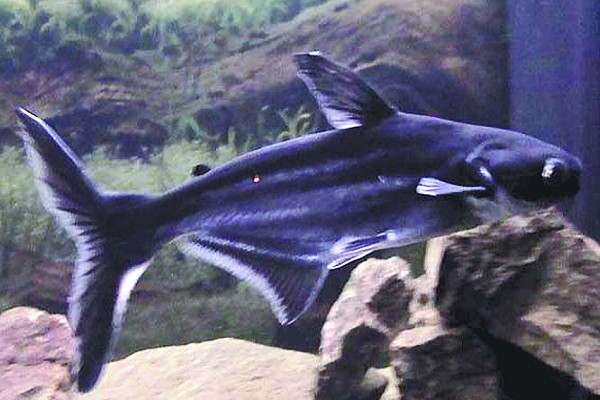
File photo of tiger shark fry
500,000 yuan invested in shark farming went down the drain
In 2004, Liu Chuanwu was deeply interested in aquaculture. Learning that the south already had successful precedents in shark farming, he made a special trip to the south to inspect the "cage-culture shark farming" project. After returning to Qingdao, he invested 500,000 yuan and trial-farmed a total of 5,000 natural tiger shark fry. Starting in May, "large numbers of shark fry were caught from southern waters, and after more than 6 months of indoor induced domestication, they were put into sea cages for farming," Old Liu said.
After half a year of growth, the shark fry had grown from 50 grams to over a jin each, growing well, with a survival rate as high as 93%. According to marine experts at the time: shark fry were worth large-scale farming and promotion. But the next year, he stopped the project, and the 500,000 yuan investment went down the drain.
Only small sharks 60 to 70 cm long can be farmed
Once fully grown, a single shark weighs at least several thousand jin and likes to live in waters 200 m deep. Once farming begins, how can these conditions be met?
Tian Jingbo, associate researcher at the Yellow Sea Fisheries Research Institute, once did fisheries planning for "Shark Village," Puqi Town in Zhejiang, and proposed the "cage-culture shark farming" project. Professor Tian explained, "Farming sharks in cages is very difficult, and the success rate of artificial breeding is very low. This is the technical difficulty; only after breaking through it can it become an industry." Adult sharks caught at sea can weigh over ten tons each, but once shark farming is achieved, where can you find a place that big?
"The sharks that can be farmed now are all small ones, generally 60 cm to 70 cm in length, the largest being 3 to 5 m. This kind of small shark can be eaten entirely." Professor Tian Jingbo explained, "In fact, only the whale shark and the bamboo shark are protected animals, but these two kinds of sharks rarely appear in Qingdao waters, and other sharks can be bought and sold."
Water temperature too low for tropical sharks to survive
Besides the unsolved technical difficulty of artificial breeding, the excessively low water temperature in the north is also an important reason tropical sharks struggle to survive.
"Too hard to farm. After just one winter, more than half the shark fry were killed by the cold." Farmer Liu Chuanwu explained. Sharks have weak tolerance for low temperatures; the suitable water temperature for growth is 20°C to 30°C. When the water temperature drops to 14°C to 18°C, their activity decreases and they may even stop breathing; at 12°C to 13°C they may go into shock or even die.
"Seawater brought in from the sea had to be heated by burning coal before it could be put in; if the temperature was too low the sharks would die. Also, someone needed to look after the warm shed long-term." Just to solve the problem of excessively low temperature, Old Liu invested several hundred thousand yuan.
Shark meat tastes mediocre and is hard to sell
"Because the taste was mediocre, we ate half of the sharks that survived at the time and released the other half back into the sea." Old Liu explained, "It tasted nothing special, not even as good as ordinary fish. Restaurants didn't sell it well, and Qingdao people don't really accept shark meat." Seeing that the market sales were mediocre, Liu Chuanwu completely gave up the idea of farming them again and switched to scallop farming the next year.
It is understood that shark meat is not plentiful on the Qingdao market, with prices between 10 yuan and 20 yuan per jin. Although the price is not high, few people in the Qingdao market buy it.
Reporter Li Min, Source: Peninsula Network - City News