How to Grow Tillandsia: A Detailed Guide to Care Methods and Precautions
Tillandsia, also known as the purple-flowered bromeliad, is an ornamental plant in the genus Tillandsia of the Bromeliaceae family. Because it has a long blooming period, tolerates shade, has an elegant appearance, and is also highly effective at purifying the air, it is an excellent choice for beautifying indoor home spaces. So how do you grow Tillandsia? Next, the editor will introduce the care methods and care precautions for Tillandsia.
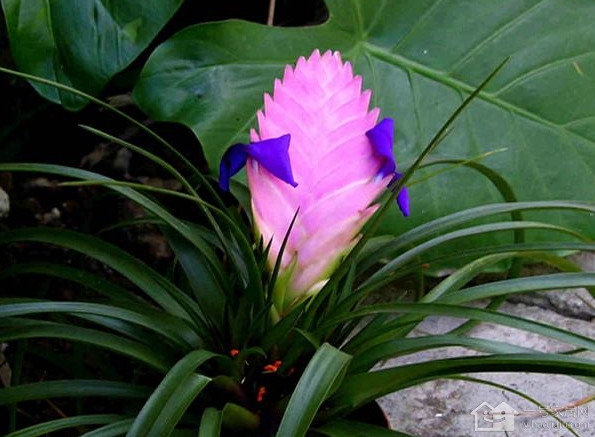
Tillandsia likes a high-temperature, high-humidity growing environment and does not tolerate low temperatures or dryness. Tillandsia likes ample sunlight but dislikes direct sunlight. The suitable growing temperature for Tillandsia is 20-30°C, and the minimum wintering temperature is 10°C. The soil suitable for growing Tillandsia is loose, well-drained leaf mold or peat soil. Tillandsia, a bromeliad, mainly relies on the absorbing scales on its leaves to take in the water and nutrients needed for growth, so spraying the leaves with liquid fertilizer gives the best results.
During the growing period, Tillandsia needs to be kept at moderate soil moisture in the pot. In hot summer, Tillandsia needs to be sprayed with water twice a day, while in winter when temperatures are lower, watering should be controlled. During the growing period, Tillandsia needs sufficient diffused light, and in the intense heat of summer it should be appropriately shaded. About every 2 weeks, liquid fertilizer can be sprayed on the leaves once; in other seasons, fertilizing is not necessary. After the flowers fade, the spent flowers should be removed promptly.
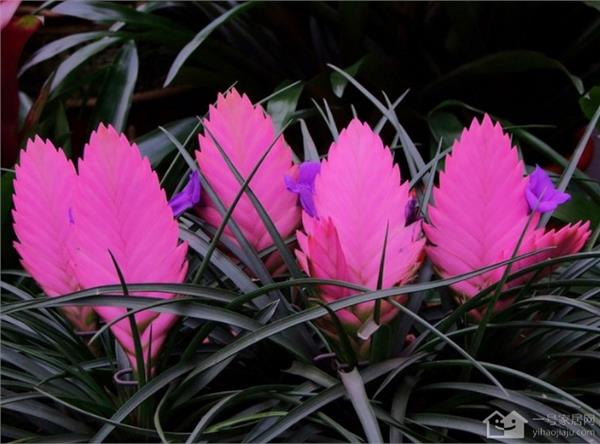
1. Placement: Tillandsia likes a bright, semi-shaded, warm, and relatively humid environment. Generally, we place it in a spot with bright light but no direct sunlight. Moreover, Tillandsia is not suited to growing in low-temperature environments. In winter, the temperature must not be lower than 10 degrees, and in other seasons it can survive as long as the temperature is above 16 degrees.
2. Temperature: Tillandsia likes bright light and a high-temperature, high-humidity environment, and dislikes direct sunlight. In its place of origin, it grows on large trees in tropical forests, and it is relatively tolerant of dryness and cold. The suitable growing temperature is 20-30°C, and the minimum wintering temperature is 10°C. It is propagated by dividing basal offsets, and can also be propagated by sowing. The temperature must not be lower than 10°C. It grows year-round in an environment above 16°C. In winter, it should be moved into a greenhouse, and the nighttime minimum temperature should not be lower than 10°C.
3. Watering: During the growing period, Tillandsia should be given plenty of water. In hot summer, the plant can be sprayed with water twice a day, while in winter it is enough to keep the potting soil moist.
4. Topdressing: Apply a half-strength standard liquid fertilizer once a month. Some varieties of Tillandsia do not need fertilizing.
5. Cultivation and repotting: It is suitable to grow it in loam soil with good drainage, and generally no repotting is needed.
6. Propagation: For home growing, it can be propagated by dividing basal offsets. When the basal offsets grow to 8 cm long, separate them and plant them.
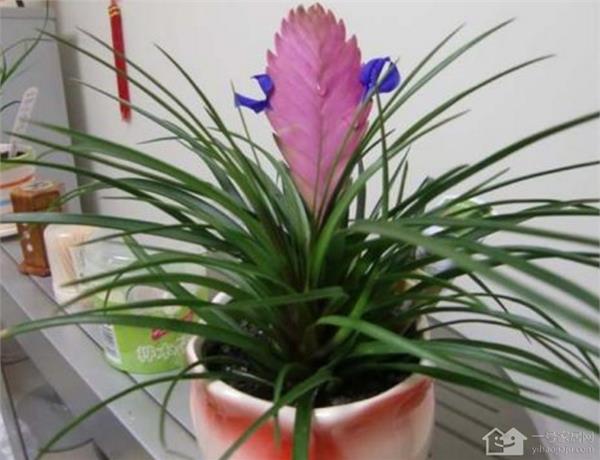
1. In the hot season, it should be shaded and watered thoroughly; in winter, it should be placed indoors in a spot with ample sunlight, with water controlled, and the temperature must not be lower than 10°C.
2. Spray the leaves with liquid fertilizer once every 2 weeks.
3. Always keep the potting soil at moderate moisture and provide sufficient diffused light.
4. After the flowers fade, remove the spent flowers immediately.