How to grow Begonia maculata (spotted begonia)? Planting methods and precautions
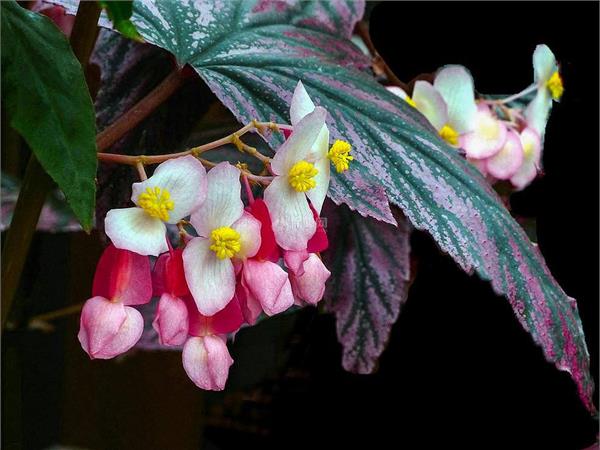
Many people like growing begonias. Today we are introducing Begonia maculata. Begonia maculata has delicate flower shapes and leaf colors, and is often used to decorate living rooms, display windows, or to adorn home windowsills, balconies, coffee tables, and other places. So what precautions are there for growing Begonia maculata? Let's take a look together.
Planting methods for Begonia maculata
(1) Cuttings
Do this in May to June along with repotting and pruning. Cut healthy, vigorous branches 10 to 15 cm long with 2 to 3 nodes as cuttings, keeping 2 to 3 leaves on top; because the leaves are large, you may cut off 1/2 to 1/3 of the leaf blade. After the wound dries in the shade, insert into the growing medium. At a temperature of 20 to 24°C and under semi-shaded conditions, roots can form in 25 to 30 days. Single-bud cuttings can also be used: cut a stem section with a single bud, remove 2/3 of the leaf blade, and after inserting, shade 50% to 70% of the light and keep the cutting medium moist. Spray water frequently, but prevent the cutting medium from becoming too wet, which can cause the cutting buds to rot. Roots can form in about 20 days, and plants can be produced in 1.5 to 2 months, with a survival rate of about 90%. Water cuttings can also be used: cut sturdy branches and insert them in water, provide semi-shaded conditions, and change the water once every 1 to 2 days; roots can form in about 20 days.
(2) Division
Do this in spring along with repotting. Cut a large clustered plant into several plants from the junction of the rhizome, then pot them separately.
Precautions for growing Begonia maculata
(1) Temperature: It likes warmth, and the most suitable temperature for growth is 18 to 20°C. It is one of the more cold-tolerant types of begonias, but it still needs a temperature above 5°C to overwinter. Below 5°C, it drops leaves; at 2°C, a large number of leaves fall, and the branch tips turn yellow and die, but the plant can still sprout and send out shoots the following spring from the remaining parts that were killed by cold. It fears severe heat; when the temperature reaches above 30°C, the plant grows slowly and enters a semi-dormant state. Improper care can easily cause leaf drop, so measures such as shading, spraying water on the leaves, and strengthening ventilation should be taken to lower the temperature and form a relatively cool micro-environment.
(2) Light: It likes sufficient scattered light. When the light is suitable, the stems are sturdy, the internodes are short, there are many side branches, the leaf color is vivid, and there are many brightly colored flowers. It avoids intense direct sunlight; when the sunlight is too strong, the leaves easily turn yellow, develop scorched edges, or even drop. It should also not be too shady, otherwise the plant will grow leggy and become thin and tall, bloom sparsely or not bloom at all, and in severe cases it will also cause leaf drop. From May to September, shade should be provided, blocking 50% to 60% of the light, or the plant should be placed in a place with sufficient scattered light. At other times, it needs sufficient sunlight; when the light is sufficient in spring and autumn, flower buds are easily formed.
(3) Watering: It fears drought and likes a moist soil environment. During the growing period, it should be watered thoroughly to keep the potting soil moist, not too dry or too wet. Both too dry and too wet will affect root absorption and cause leaf drop, bud drop, and flower drop. It avoids excessive moisture and waterlogging, otherwise the roots will rot and the plant will die. In summer when temperatures are high, although the plant is in a semi-dormant state, because the air temperature is high and the leaf area is large, watering still needs to follow the principle of "do not water until dry, and when watering, water thoroughly," but waterlogging must be prevented. In winter, watering should be controlled to keep the potting soil slightly dry. Too much watering easily causes root rot and leaf drop.
(4) Environmental humidity: Its native habitat is under forests or beside ditches with relatively high humidity, so it likes a humid environment. The relative air humidity should be no lower than 50%, and preferably maintained at 65% to 70%. When it is too dry, the leaf edges curl up, turn yellow-brown, and even fall off. During the growing season, water should often be sprayed on the branches, leaves, and surroundings to increase relative air humidity. In summer, spraying water on the leaf surface can also lower the temperature, which is beneficial to the plant's growth and flowering.
(5) Fertilization: From April to June, apply fertilizer once every 10 to 15 days. In early to mid-April, fertilization should mainly be nitrogen to promote the growth of branches and leaves. During the bud stage, increase the application of phosphorus and potassium fertilizers to promote budding and flowering. Stop fertilizing during the flowering period. Because the root system is numerous and fine, it is relatively sensitive to fertilizer concentration, so fertilization should follow "apply thin fertilizer frequently" and avoid fertilizer solution that is too concentrated. When fertilizing, do not let the fertilizer solution contaminate the leaves, otherwise it will scorch the leaves. Stop fertilizing during the summer semi-dormant period. In autumn, which is another vigorous growth period, apply a nitrogen-based fertilizer once every 10 to 15 days, but after October stop applying nitrogen fertilizer and apply phosphorus and potassium fertilizers twice to improve the plant's cold resistance. In winter, stop fertilizing when the temperature is below 10°C.
(6) Pruning: During the seedling stage, pinching should be done to promote branching and form a full plant shape. In spring, prune the plant along with repotting. If the plant is too tall and affects the beauty of the plant shape, the overly tall branches can be cut back hard to encourage new shoots and control plant height. Its sprouting ability is strong; because the inflorescences grow on new branches, when the new branches grow to an appropriate height, cut off the old and weak branches to encourage the plant to renew itself and benefit future flowering. If the plant is tall and has many inflorescences, supports should be set up to prevent the branches from bending under heavy weight. After the flowers fade, immediately cut off the spent flowers and the branches that have already bloomed, to encourage new branches so that the plant produces more buds and blooms frequently.
(7) Repotting: Repot once every year, preferably after the weather warms in spring or in September. It likes slightly acidic sandy loam rich in organic matter, loose, and well-drained. The growing medium can be prepared from materials such as leaf mold, peat soil, garden soil, rice husk ash, or perlite.
(8) Pest and disease control: It is harmed by pests and diseases such as powdery mildew, damping-off, thrips, and red spider mites.
The above are the planting methods and precautions for Begonia maculata. Different plants and flowers have different growth habits. When growing your favorite plants, be sure to first understand the habits and characteristics of these plants. We hope the above information is helpful to you as a plant lover.