Bergamot planting yields ten thousand jin per mu, netting 40,000 yuan
On the 6th, a reporter saw in Xiabai'an Village, Lianshan Zhuang and Yao Autonomous County, that in the verdant fruit groves, one large golden bergamot fruit after another stood out prominently, and grower Huang Yugui was busy picking them. With a yield of more than 10,000 jin per mu and a net profit of more than 40,000 yuan, this old farmer, relying on growing bergamot, has gone from a poor household to a skilled wealth-maker earning 100,000 yuan a year.
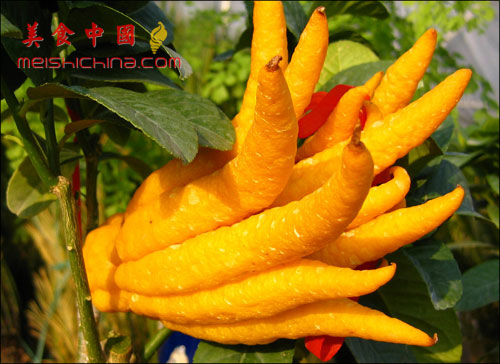
Bergamot image
Bergamot cultivation in Lianshan County is concentrated in Xiaoshanjiang Town. In recent years, by hiring agricultural technicians and establishing cooperatives and other measures to connect with the market, it has changed the previous situation of low prices and unsold goods, driving more than 300 farmers to grow more than 3,000 mu of bergamot, with per capita income increasing by nearly 20,000 yuan.
Still unsold at 5 fen per jin
In recent years, Lianshan has vigorously supported the development of specialty agriculture, and organic rice, Shatian pomelo, and large-fleshed ginger enjoy fame within the province. As a “rising star,” bergamot fruit was only developed in recent years.
Xiaoshanjiang Town has many mountains and fertile soil, with an excellent ecology, suitable for developing planting industries. The earliest bergamot growers were villagers from Dengyang and Liulian. Since the 1990s, several villagers planted more than 10 mu of bergamot. However, due to blocked market information, when the bergamot was opened up it sold for only 5 fen per jin, and it was still difficult to open up sales channels.
Later, the price of bergamot slowly rose, and more villagers grew bergamot. After large-scale expansion of planting, many villagers encountered technical difficulties again. In 2005, villager Li Ming planted nearly 20 mu. Because no cold protection measures were taken, after a frost, more than half of the bergamot died, leaving him with nothing.
Some other villagers, due to poor management, had planted bergamot that either suffered pests and diseases or bloomed without bearing fruit, and the harvests were all poor, causing the villagers' newly raised confidence to fade again. For example, Xiabai'an villager Huang Yugui did not dare try again after planting for one year, and returned to planting traditional crops, earning several thousand yuan a year and hovering around the poverty line.
Two mu of bergamot earned 80,000 yuan
“As long as quality is guaranteed and the market is connected, the profit from growing bergamot is very high.” Dengyang village official Li Jingrui told the reporter that in order to ensure villagers could become wealthy by growing bergamot, the village committee decided to establish the Dengyang Village Committee Bergamot Planting Professional Cooperative, responsible for a complete set of services including seedlings, fertilizer, pesticides, technical guidance, publicity and sales for bergamot planting, so as to guide and serve bergamot planting throughout the village.
To drive villagers to plant, Li Jingrui planted 27 mu in 2006, and now has a net worth of nearly one million yuan; his role as an example strengthened the villagers' confidence. To solve technical problems, the cooperative hired municipal and county agricultural technicians as bergamot planting technical advisers. To connect with the market and smooth sales channels, cooperative personnel actively went to the Guangxi Yulin medicinal materials market and major pharmaceutical enterprises in the Pearl River Delta to promote sales and negotiate.
With these multiple measures working together, plus the increased demand for bergamot in the traditional Chinese medicine market in recent years, Lianshan's bergamot industry turned things around, and growing bergamot has become an important channel for villagers to become wealthy.
At last year's Canton Fair, Lianshan's bergamot sold for 11 yuan per jin, allowing a large number of growers to make a full profit. Huang Yugui, 47, planted 10 mu of bergamot in 2007, and last year two mu bore fruit, with an output of more than 20,000 jin and a net profit of more than 200,000 yuan. This year the price fell compared with last year, but the purchase price still exceeded 5 yuan. “After deducting costs, I can earn more than 80,000 yuan this year,” Huang Yugui admitted frankly that the amount he earned from growing bergamot in the past two years was something he had never imagined.
Today, bergamot planting in Lianshan has grown from the original few households to more than 60 households, and the area has grown from less than 100 mu to more than 3,000 mu, driving more than 300 farmers to increase per capita income by nearly 20,000 yuan.
Bergamot introduction:
Bergamot nature and flavor: pungent, warm.
Components: contains volatile oil and hesperidin, etc.
Bergamot effects: aromatic and regulating qi, strengthening the stomach and stopping vomiting, resolving phlegm and relieving cough. Used for indigestion, thick greasy tongue coating, chest tightness and abdominal distension, vomiting and cough, and nervous stomach pain, etc.
Liver-stomach qi pain (including chronic gastritis, gastric neuralgia, etc.)
Fresh bergamot 12—15 grams (6 grams dried), brewed with boiling water, drunk as tea. Or decoct bergamot and corydalis rhizome 6 grams each in water and take, effective for treating stomach qi pain.
[Phlegm-damp cough (including chronic bronchitis)]
Bergamot and ginger pinellia 6 grams each, decoct in water, remove the residue, add granulated sugar and take warm.
[Infectious hepatitis]
Bergamot is also known as nine-claw wood, five-finger tangerine, and bergamot orange. It is an evergreen small tree of the Rutaceae family. Bergamot is mainly produced in Fujian, Guangdong, Sichuan, Jiangsu, Zhejiang and other provinces, among which Zhejiang Jinhua bergamot is the most famous, called “the immortal fruit among fruits, the rare flower of the world,” elegantly known as “golden bergamot.”