A detailed guide to jade plant care methods, and it has many advantages too
Home gardening enthusiasts who love growing plants will always plant some flowers and greenery at home. The jade plant (Crassula ovata) has small, bright, and gorgeous blooms, and is a plant that many plant lovers favor. Grown indoors, it not only decorates the home, but its faint fresh fragrance also improves the indoor air environment. So, what advantages does the jade plant have? How do you care for a jade plant?
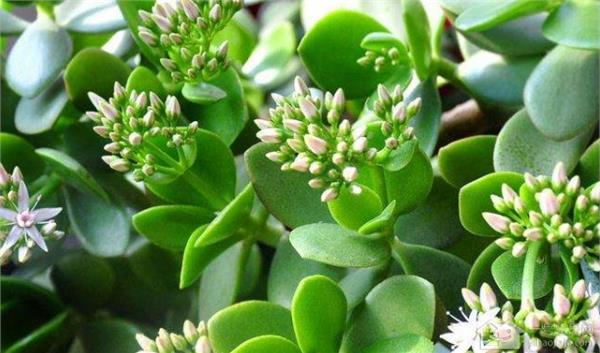
[Advantages of the jade plant]
1. Fast growth
Cut off a branch as thick as a little finger, let it dry for several days so the wound dries out, then plant it. Water and care for the jade plant by keeping the soil alternately dry and moist, and it can take root within a month. In one year it doubles in thickness, and in three years it can be cultivated into a small tree with a trunk about 4 cm thick. If you prune and shape it with wire during the cultivation process, it can generally be potted and made into a bonsai-like display.
2. Drought tolerant
The leaves and branches of Crassulaceae plants are succulent and full of water, like a camel in the desert: after drinking its fill once, it can go a long time without thirst. Water once a week, water thoroughly when watering, and let it dry out completely when dry. It is very labor-saving to manage.
3. Tolerant of heavy pruning
Generally, pruning should be done in planned, step-by-step batches to facilitate continuous growth and rapid shaping. When especially necessary, even heavy pruning in the form of cutting the plant back hard will not kill it. If the main root is long, it can also be coiled and spread flat, and excess parts can also be cut off. Likewise, pruning in stages is beneficial for growth.
[Jade plant care methods]
1. Watering
During the growing period, keep the potting soil moderately moist at all times. If the potting soil drains poorly and is watered too much, the roots will rot due to waterlogging. If the potting soil is too dry, the weather is stuffy and hot, and the air is not circulating, leaf drop is easily caused. Water volume should be controlled according to temperature. In summer, watering can be appropriately increased, and at the same time pay attention to indoor ventilation and cooling to promote growth. In winter, watering should be controlled; generally watering once every 7 days to 10 days is enough.
2. Temperature
The suitable temperature for jade plant growth is 20°C to 30°C. Spring and autumn are the suitable growing periods. During high summer temperatures, shade it or place it under tree shade to avoid direct strong sunlight. When the temperature exceeds 38°C, growth slows or the plant enters a brief dormancy. In winter, it should be moved into a greenhouse or placed in a sunny spot indoors, with room temperature kept at 7°C to 10°C, and never lower than 5°C.
3. Cultivation
Repot every spring and add fertile soil. The jade plant grows relatively fast. To keep the plant shape full, fertilizer and water should not be excessive. During the growing period, water 2 times to times a week, and strictly control watering during the hot, humid July to August. In midsummer, if ventilation is poor or there is excessive water shortage, it can also cause leaves to turn yellow and fall off, so it should be kept in a semi-shaded place for care.
4. Potting
Plant the jade plant or change the soil in the pot before it starts growing in early spring. The potting soil should be loose, fertile, and well-draining. Generally choose 2 parts leaf mold or peat soil, 2 parts garden soil, 3 parts coarse sand, and 1 part limestone gravel, or a culture soil thoroughly mixed from 3 parts each of leaf mold, garden soil, and coarse sand, plus 1 part each of bone meal and plant ash as the potting soil. The potting soil should be disinfected before use.
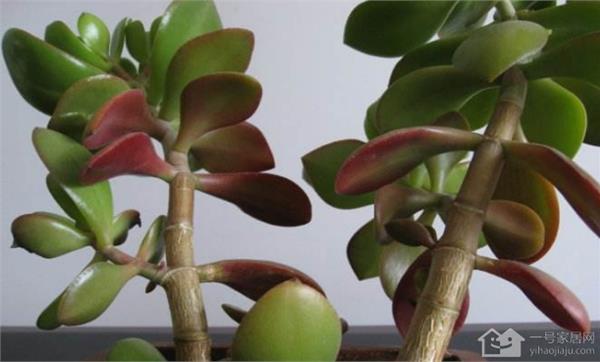
[Precautions for jade plant care]
1. In summer, appropriate shading can prevent heat and lower temperature; in other seasons, it should receive full light. The potting soil should preferably be dry rather than wet, and attention should be paid to rain protection. In winter, the potting soil should be relatively dry, and attention should be paid to ventilation to prevent leaf loss.
2. Move it indoors in mid-October and place it in a warm spot with ample light. The overwintering temperature must not be lower than 5°C. Strictly control watering, and just keep the potting soil from drying out completely. Turn the pot once every half month to avoid leaning branches and leaves that affect appearance. If light is insufficient, pay even more attention to preventing root rot and leaf loss from damp heat.
3. The jade plant likes loose sandy culture soil and avoids overly wet soil. For small seedlings propagated by cuttings, transplant when the temperature is relatively high. The best time for potting is early summer. After the seedlings recover, do not water too much, and do not place them in a shady spot.