A Detailed Guide to Growing the Stapelia gigantea Succulent
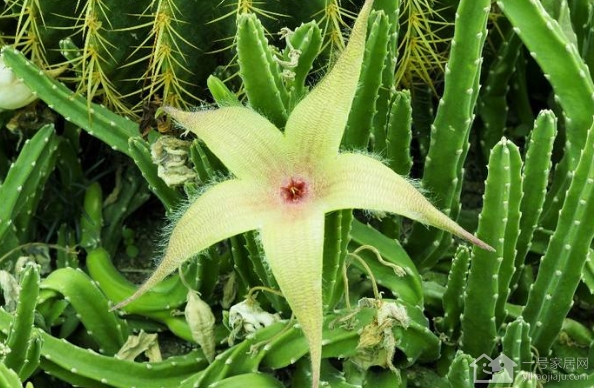
Many homeowners today want to grow some plants at home, and succulents have become the top choice. They are ornamental and relatively easy to care for. Today, let us introduce a succulent called Stapelia gigantea, which lures flies to pollinate it with a foul odor and is also known as the carrion flower. So how do you grow Stapelia gigantea?
1. Best propagation time: division is usually done in early spring together with repotting; cuttings can be taken at any time;
2. Best growing soil: Stapelia gigantea thrives in fertile, well-drained sandy soil;
3. Humidity requirements: Stapelia gigantea requires dry air, and ventilation should be increased in summer;
4. Best growing temperature: Stapelia gigantea likes warmth, and the most suitable temperature for growth is 12-22°C. It is not cold-hardy, and the overwintering temperature should be kept above 8°C. It is not very tolerant of intense heat; at high temperatures the plant grows slowly or stops growing, so in addition to increasing ventilation and shading, water should also be sprayed frequently on the plant and around it to lower the temperature;
5. Best growing light: Stapelia gigantea likes ample light and tolerates partial shade; it should be given plenty of sunlight in autumn, winter and spring. It dislikes intense exposure to strong light, otherwise the plant is easily scorched and shrivels. When the sunlight is strong, the fleshy stems turn red, and they can return to normal after being moved to a shady spot. From May to September, when temperatures are high and light is intense, shade should be provided, or the plant should be placed in a spot with ample diffused light.
6. Precautions for growing Stapelia gigantea:
1. Fertilizing:
Spring is the period of most vigorous growth for Stapelia gigantea, so fertilizer and water should be supplied generously; generally, a fertilizer combining nitrogen, phosphorus and potassium is applied once every half month. At high summer temperatures, stop fertilizing, or apply only a dilute fertilizer. After the beginning of autumn the plant enters another period of fairly rapid growth, and fertilizer should be applied once every half month, but nitrogen fertilizer should be stopped and only phosphorus and potassium fertilizer applied; this not only promotes flower bud differentiation and blooming, but also improves the plant's cold resistance. In winter the plant enters dormancy, and fertilizing should stop. When growing the monstrose form 'Cristata', fertilizer and water should not be too abundant, otherwise a "reversion" phenomenon occurs and columnar fleshy stems grow.
2. Key watering points:
Because its stems are succulent, Stapelia gigantea can withstand drought and prefers a dry soil environment. During the spring and autumn growing periods, watering should follow the principle of "alternating dry and wet, leaning toward dry" to prevent the potting soil from becoming too wet. However, it should not be too dry either, otherwise the stems will shrivel and lose their ornamental value. In summer, when temperatures are high, take care to avoid overwatering; high temperatures combined with overly wet potting soil very easily cause root rot, so the method of spraying instead of watering can be used to maintain suitable moisture. In winter, watering should be restricted, keeping the potting soil relatively dry.
3. Pruning essentials:
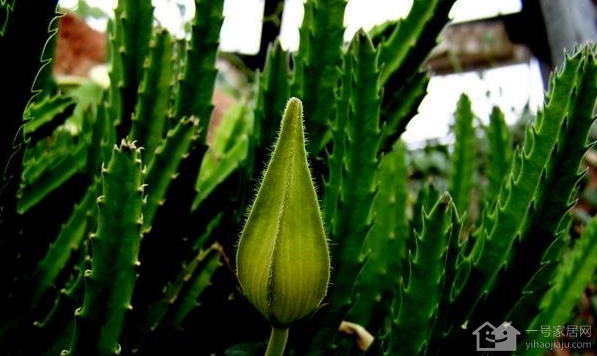
Although the flowers Stapelia gigantea produces are large and unusual, the blooms give off waves of foul odor; for plants kept indoors, the pot should be moved outdoors when it blooms, or the flower buds should be removed. Because the root system is relatively shallow, the plant easily topples over, so support should be provided during cultivation. If the monstrose form 'Cristata' shows a "reversion" phenomenon during growth and produces columnar fleshy stems, these should be cut off early to keep the plant's shape attractive.
4. Repotting:
Stapelia gigantea should be repotted once every 2-3 years, preferably in spring or autumn. The potting soil needs to be fertile, loose and well-drained, otherwise the roots rot easily. The growing medium can be prepared from materials such as leaf mold, garden soil, peat soil and coarse sand. Because the root system is shallow, a shallow pot can be used. Plants grown for many years will weaken in vigor and should be discarded and replaced.
5. Key propagation points:
The propagation methods for Stapelia gigantea include cuttings, sowing and division. Cuttings are the main method.
Cuttings: carried out in spring and autumn. Cut sturdy stems from the mother plant and make them into cuttings about 10 cm long. Place them in a ventilated spot for 2-3 days, and once the wounds are dry, insert them into the growing medium. After insertion, keep the temperature at 20-25°C, and roots form after 10-15 days. New plants grow very quickly and can form a fairly dense clump in the same year. The monstrose form 'Cristata' is also propagated by cuttings: divide the modified stems into several pieces, let them dry, and then take cuttings.
Sowing: carried out in April-May. Because the seeds are large, they should be sown in pots in individual spots. The optimum germination temperature is 25-28°C, and germination occurs 5-6 days after sowing.
Division: carried out together with spring repotting. Separate the clustered plants at the base; after letting them dry slightly, those with roots can be potted directly, while those without roots are propagated by cuttings.
6. Pest and disease control:
Stapelia gigantea suffers from pests and diseases such as stem rot, black spot and whitefly.
7. Common problems when growing Stapelia gigantea:
1. Root rot
Cause: overwatering, overly wet potting soil, which is even more likely when temperatures are high in summer and the potting soil is wet; poor drainage and aeration of the potting soil.
2. Fleshy stems turning red
Cause: usually due to light that is too intense.
3. Fleshy stems shriveling
Cause: caused by the potting soil being too dry.