How to grow the "Great Commander" cactus? A detailed guide to cultivation methods and its radiation-proof effect
We have all seen ball cacti, and today I want to tell you about a rather precious one among them called the Great Commander - quite an imposing name, isn't it? It is a relatively rare ball cactus variety, and its flowering process is also very slow, so let's now learn about how to grow the Great Commander.
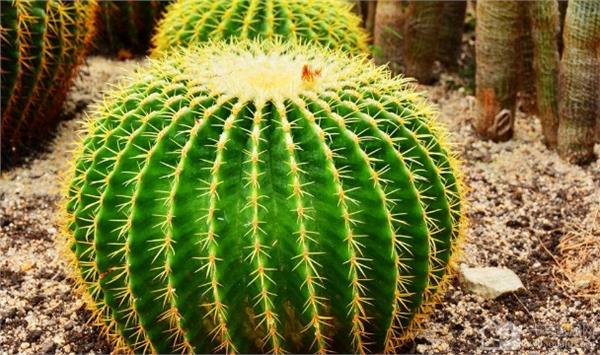
I. Cultivation methods for the Great Commander
1. Best propagation time: sowing can be done in autumn when the climate, soil and temperature difference are all suitable, sowing immediately after harvesting; cuttings should be taken in late April or mid-to-early May;
2. Best growing soil: the Great Commander is not strict about soil, but fertile, loose, neutral sandy soil is best;
3. Growing humidity requirements: growing the Great Commander requires keeping the soil moist;
4. Best growing temperature: the best growing temperature for the Great Commander is 20~30°C;
5. Best growing light: the Great Commander likes warmth and sunlight, and dislikes exposure to blazing sun.
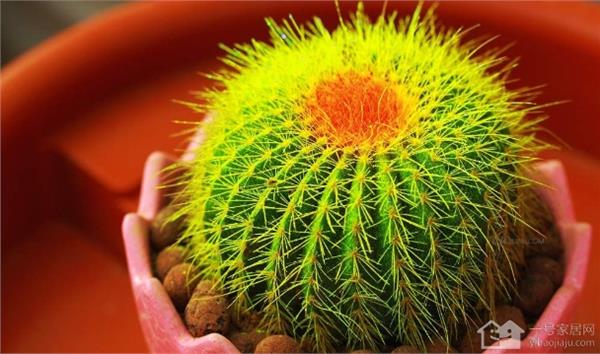
II. Points to note when growing the Great Commander:
1. Applying fertilizer:
For fertilizing the Great Commander, dry manure should be the main choice, with liquid fertilizer as a supplement. Because this flower is mostly grown on balconies and windowsills, top-dressing with organic liquid fertilizer easily gives off an unbearable odor, so it should be used as little as possible or not at all, to avoid polluting the environment. During the growing season, liquid fertilizer top-dressing is needed; a small amount of organic fertilizer can be used, with an appropriate amount of chemical fertilizer added, because chemical fertilizers have the advantages of being highly effective, fast, convenient and hygienic, and their use should be strongly encouraged. Commonly used chemical fertilizers include urea, potassium dihydrogen phosphate and other three-element fertilizers, as well as various compound fertilizer tablets. However, such fertilizers must be used according to the instructions, and the concentration generally does not exceed 0.1%; never increase the concentration at will, to avoid burning the root system, and follow the principle of applying dilute fertilizer frequently. At the same time, on the morning of the day after each fertilization, give one thorough watering, so that the soil is fertile and moist, which is better for the plant to absorb. In midsummer and severe cold, stop fertilizing, to help the plant get through summer and the jelly-like dormant period.
2. Key points for watering:
Because the environment is dry, the water in the potting soil evaporates quickly, especially during the growing season; in order to prevent the potting soil from becoming too dry and causing the plant to dehydrate, water must be replenished at any time, generally 2~3 times a week. In summer it enters a semi-dormant state, and watering should follow the principle of "water when wet, water when dry", that is, when the soil surface hardens and turns white, then water thoroughly. To avoid the situation of a large pot with excessive drainage, the potting soil should not be filled too full when put into the pot; the soil surface should be at least 2 cm from the pot rim, to facilitate loosening the soil and watering, and to increase soil permeability. Watering in summer should be determined according to the plant's growth condition and the climate. Generally, watering before 10 a.m. and after 5 p.m. is best. Watering in autumn is the same as in spring, and in winter watering 1~2 times a month is enough.
3. Changing the potting soil:
The Great Commander can be repotted and have its soil changed every year, to increase soil fertility.
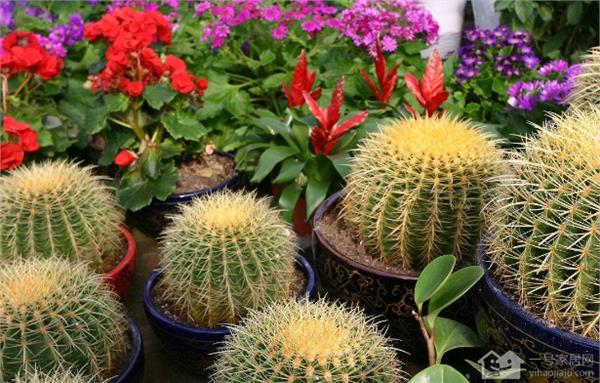
4. Key points for propagation:
The Great Commander is mainly propagated by sowing, cuttings and grafting, carrying out various conventional propagation methods.
Sowing: can be done in autumn when the climate, soil and temperature difference are all relatively suitable, sowing immediately after harvesting. At the same time, seed propagation can not only maintain the good shape of the mother plant and give strong stress resistance, but also produce a large number of seedlings to meet market demand.
Cuttings: for cuttings of the Great Commander, the first problem is to solve the source of the offsets. The Great Commander has a low ability to sprout new shoots, and mostly grows independently. In order to obtain offsets, growers can cut off the growing point at the top of the mother ball, to promote the sprouting of new shoots from the tubercles on the upper half of the stem. After such treatment, generally each mother ball can sprout dozens of offsets. At this time, the management of water, fertilizer, temperature and light should be strengthened, to promote the robust growth of the small balls. Generally after 1~2 years of growth, when the small balls reach 1.8~2 cm, they can be cut off from the mother ball for cutting propagation.
Grafting: for the grafting propagation or grafting cultivation of the Great Commander, the most fundamental issue is to combine the rootstock and the scion into a new body through grafting technique. But in actual operation, differences between the two in stem form, size, seedling age and other aspects are unavoidable. If these situations occur, before grafting they must be well compared, so as to make them as close as possible. When grafting, the central vascular bundles of the two must be accurately aligned; it is best if the central vascular bundles of the rootstock and scion are basically equal, and after flat grafting the two openings overlap and join, which is the key to successful grafting.
III. Pest and disease control:
The diseases of the Great Commander include stem rot, and the pests are red spiders and scale insects.