Turbot is Atlantic halibut-like flatfish; a guide to its farming techniques
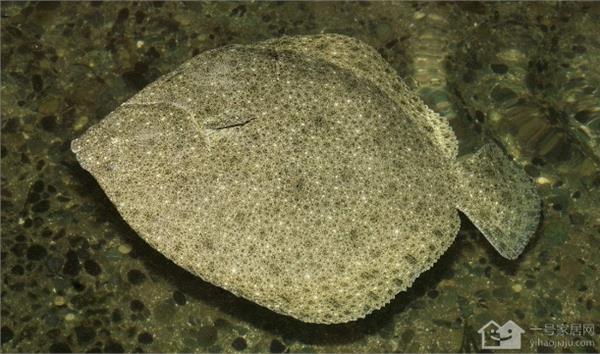
Turbot (Scophthalmus maximus) is a marine fish, commonly known as turbot. Most turbot nowadays are farmed artificially; this fish has relatively strong vitality, is suitable for artificial farming, and offers relatively high economic returns. Below, let us learn about turbot farming techniques and see what points need attention when farming turbot.
I. Farming facilities
These include the fish-rearing workshop, rearing ponds, oxygenation, temperature control, light control, water intake and drainage and water treatment facilities, and an analysis and testing laboratory, etc. The fish-rearing workshop should be built on a coastal section with excellent water quality, no pollution, and where seawater wells can be drilled; the workshop should be kept quiet and have good insulation performance. The area of the rearing pond is suitably 30-60 sq m, with an average pond depth of about 80 cm.
II. Environmental conditions
The main water-quality physicochemical factors should meet the following requirements:
1. Water quality: there should be no pollution sources in the sea area near the farming zone, no mud, low sand content, clear water quality, meeting the national Grade II fishery water quality standard (you may consult the local fishery administrative department). The well water should be of excellent quality, containing no sediment or dirt of any kind, transparent and clear, free of harmful heavy metal ions, with sulfides not exceeding 0.02mg/L, total coliform count less than 5000 per L, and salinity above 20. To test the quality of the well water, you may first try raising a small number of fry, and once the fry are normal, proceed with farming production.
2. Light: turbot is a bottom-dwelling fish, so the light should not be too strong; 500-1500Lux is suitable. The light should be even, soft, not glaring, and comfortable to the eye. The light rhythm should be the same as natural light.
3. Water temperature: turbot is a cold-water fish, with a tolerance range of 3-23 degrees C; the suitable farming temperature is 10-20 degrees C, growth is faster under 14-19 degrees C water temperature conditions, and the optimal farming water temperature is 15-18 degrees C.
4. Salinity: turbot farming has a relatively wide adaptable salinity range; the tolerated salinity range is 12-40, the suitable salinity is 20-32, and the most suitable salinity is 25-30; farming under the most suitable salinity conditions is advocated.
5. pH: the pH of the farming water body should be higher than 7.3, and is best maintained between 7.6-8.2.
6. Dissolved oxygen: greater than 6mg/L.
III. Fry selection
Fry is the most important link in production; fry above 5 cm should be purchased. Before buying fry, you should investigate the broodstock genetics, fry quality and technical level of the hatchery, and you must buy from a national-level improved variety farm or a government-designated hatchery. The fry are required to have a complete body shape, with no injuries, no deformities, no malformations and no albinism. The same batch of fry should be uniform in size, with both eyes on the left side of the body, the eyed side being blue-brown with dot-like black pigment, and the eyeless side smooth and white. The fry's body surface should be bright and smooth, with no scars, no darkening or reddening symptoms, strong activity, neat gill filaments, and no inflammation or parasites.
In fact, the farming method for turbot is very simple, but the selection of fry is very important; fry selection is the key to farming turbot. Generally, you should choose relatively superior fry, and choose somewhat livelier ones, otherwise they easily die. In addition, turbot is a marine fish that is very prone to fish diseases, so during ordinary farming you must strengthen management to prevent the occurrence of fish diseases.