The flower language and care methods of the Tongue Leaf Plant
The Tongue Leaf Plant is a succulent plant of the genus Glottiphyllum in the family Aizoaceae. It gets its name because its fleshy leaves are 6-12 cm long, with tips that are tongue-shaped and slightly curled, bright green in color, with smooth and translucent leaf surfaces, and the leaves tightly clasp the short stem in a rosette arrangement, closely resembling the shape of a Buddha's hand. So what is the flower language of the Tongue Leaf Plant? And what are its care methods?
Care methods for the Tongue Leaf Plant
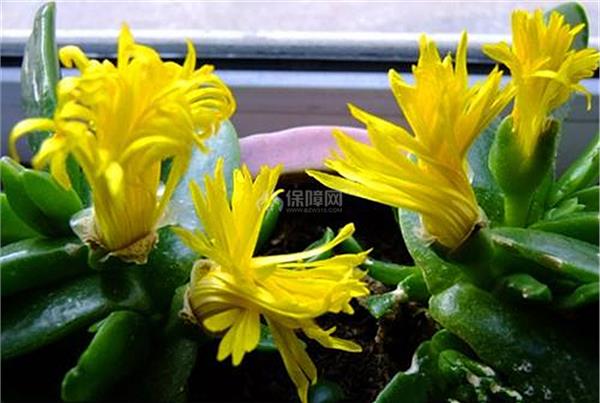
The Tongue Leaf Plant is a perennial herb. It opens in the afternoon when there is plenty of sunlight and closes at night. This cycle of opening by day and closing by night lasts about 7 days. If there is cloudy or rainy weather or the growing location has insufficient light, it is difficult for the flowers to open; artificial light can be used, and they will open normally. The plant is cross-pollinated.
Tongue Leaf Plant plants easily form clusters. Generally, after being grown into a very large cluster, the number of divisions from skin shedding in the following year will noticeably decrease. At this point, the plant can be divided, separating it into small clusters one by one, so that nutrients can be supplied adequately again, and division will gradually return to normal. It goes dormant in summer and grows in other seasons. The skin-shedding period of the Tongue Leaf Plant is a time of continuous new leaf growth, while old leaves slowly dry up and provide nutrients to the new plant. The leaves of the new plant and the old leaves can grow at the same time, and it grows 3 to 4 pairs of leaves year-round. New leaves begin to sprout in early spring, and old leaves slowly dry up.
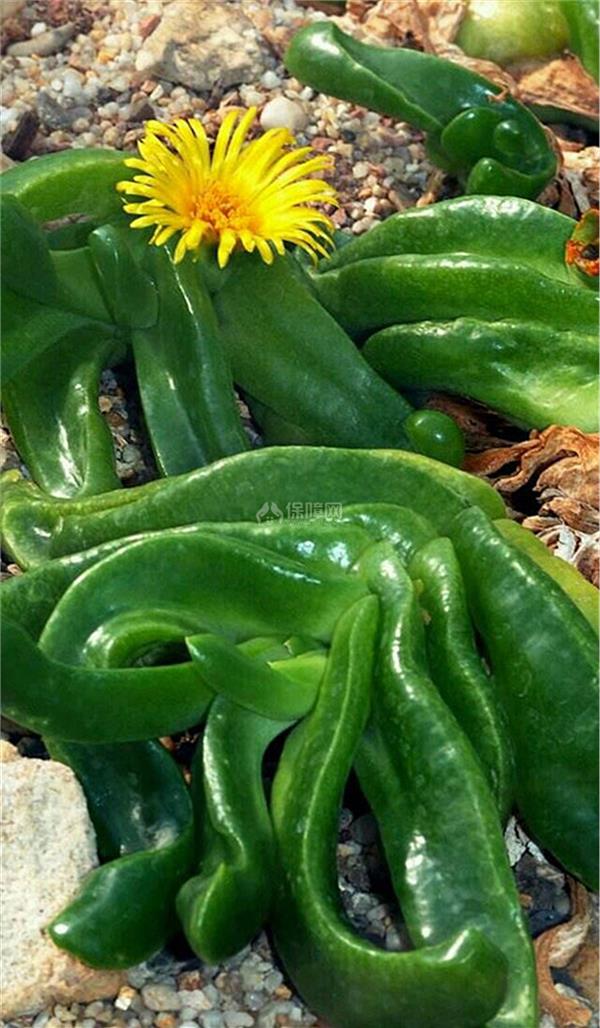
The growing medium for the Tongue Leaf Plant should mainly be permeable and well-aerated. This variety is not tolerant of strong sun, so shading is essential in summer. During the skin-shedding period of Lübao, appropriate water can be given. This variety should usually be watered only after the soil has dried out a bit, otherwise the roots rot easily. The semi-woody stem is relatively thick. During the growing season, water after the soil dries completely, and do not use the soaking method. Provide shade throughout the summer and place it in a bright, ventilated spot with scattered light. During the summer dormancy period, give as little water as possible, as too much will cause rot. After temperatures drop in autumn, watering can be resumed, gradually and step by step. If the plant is plump, it does not need water; if the opposite leaves look somewhat wilted, then it needs water. In winter, avoid frost damage from temperatures that are too low. When the potting soil is dry, minus 3 degrees is no problem at all. There are relatively large differences between north and south, so gardeners should grow it according to their own environment. The Tongue Leaf Plant can be propagated by sowing seeds or by division.
Home propagation is usually carried out by cuttings between September and October. Clean wet sand can be used as the cutting medium. After the cut surface has dried, insert it into the sand bed and maintain a suitable rooting temperature of about 20°C. Roots will form after one month. When the new roots have grown to 2-3 cm long, transplant and pot them up. It likes warmth and is relatively drought-tolerant, but fears high temperatures and is not cold-tolerant. The suitable growing temperature is 18-22 degrees; above 30 degrees, growth slows and it enters a semi-dormant state. During the growing season, apply a diluted organic liquid fertilizer once every 2-3 weeks. In winter, watering should be controlled; the potting soil should be moist but not waterlogged.
Repot every spring and remove dried leaves. During the growing season, fertilize the Tongue Leaf Plant once every half month. In summer when temperatures are high, watering must be done cautiously, and the potting soil should preferably be slightly dry. If it is hot and humid, the stems and leaves rot easily. At this time, shading and ventilation are needed, and a cool, semi-shaded location is best, so that it can safely pass the summer. Growth is most vigorous in autumn, so watering should be increased. After winter begins and temperatures drop, growth slows, and watering should be reduced accordingly. During the early spring flowering period, watering can be increased as appropriate. Generally, plants need to be renewed after 3-4 years of cultivation.
What is the flower language of the Tongue Leaf Plant?
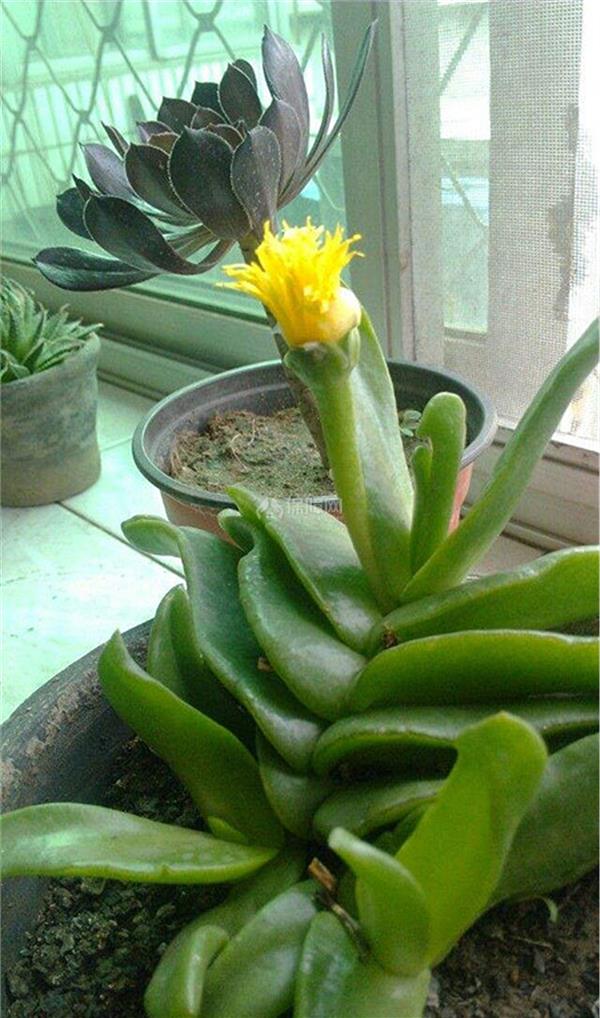
Tongue Leaf Plant flower language: strong, tolerant, kind
The Tongue Leaf Plant is a succulent plant of the genus Glottiphyllum in the family Aizoaceae, with the scientific name Glottiphyllum uncatum. It gets its name because its fleshy leaves are about 6 cm long, tongue-shaped and slightly curled, bright green in color, with smooth and translucent leaf surfaces, and the leaves tightly clasp the short stem in a rosette arrangement, closely resembling the shape of a Buddha's hand.
Well, that is all for the introduction to the care methods and flower language of the Tongue Leaf Plant. I believe everyone has some understanding of the Tongue Leaf Plant after reading this. To learn more, please continue to follow Baozhangwang.