Does Drinking Tea Make You Hungry Easily? A Look at Teaghrelin in Qingxin Oolong and Sijichun
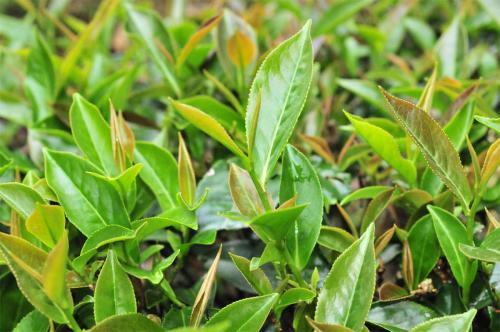
Sijichun is a tea tree cultivar widely planted in Taiwan, China with high yields, and it is also the main tea used in domestically produced canned tea and hand-shaken tea. Research led by Zeng Zhizheng, a professor at the Graduate Institute of Biotechnology at National Chung Hsing University, indicates that Sijichun contains a "teaghrelin" compound that can induce the brain to release hunger signals, increase appetite, and stimulate growth hormone secretion. This has been confirmed in animal experiments, and the research results were published in the journal Food Biochemistry.
Not only Qingxin Oolong, Sijichun also contains teaghrelin
Many people report that after drinking tea they often feel hungrier and want to eat more. Zeng Zhizheng's research team had previously found teaghrelin in Qingxin Oolong, and this time also discovered molecules with a very similar structure in Sijichun, with experiments confirming that they have the same effect. Therefore, the team also classified this type of compound in Sijichun as teaghrelin.
Zeng Zhizheng said that when the stomach is empty and there is an energy demand, cells at the base of the gastric fundus secrete ghrelin (growth hormone-releasing peptide) to transmit hunger messages. Animal experiments have confirmed that teaghrelin molecules can help trigger feelings of hunger, gastric emptying, and stimulate growth hormone secretion by mimicking ghrelin, and this has been confirmed in animal experiments, "which is also similar to what ordinary people feel."
Zeng Zhizheng pointed out that compared with Qingxin Oolong, Sijichun has higher yields, but after being made into oolong tea its bitterness and astringency are noticeably higher. In the past, producers often added sugar to mask its bitter and astringent taste, while in recent years low-sugar, sugar-free, and even sugar-free beverages have become more popular with consumers than sugary drinks. Therefore, through the Ministry of Science and Technology's "Taiwan Tea Processing Technology Industry-Academia Alliance," Zeng Zhizheng worked with producers to reduce the caffeine content of Sijichun oolong tea through repeated roasting and aging, increase its sweet aftertaste, remove bitterness and astringency, and increase the number of infusions it can withstand.