Experts predict that farmed saury is expected to reach the dining table next spring, priced at about two to three hundred yuan per jin
On the eve of Qingming, this year's saury catch fell to a historic low. Some experts had predicted that within ten years, the saury would face catastrophe. Fortunately, after 7 years of effort, technicians at the Shanghai Fisheries Research Institute have taken the national lead in breeding artificially farmed saury, which could reach consumers' dining tables as early as next spring. "Successfully breeding a single saury is only the beginning; there is still a long road ahead," said Shi Yonghai, director of the Seed Technology Center at the Shanghai Fisheries Research Institute.
The ideal price for farmed saury is two to three hundred yuan per jin
Recently, a reporter visited the Seed Technology Center inside the Wusi Farm in Fengxian District, where more than 50,000 ecologically farmed saury swam quietly in one pond after another.
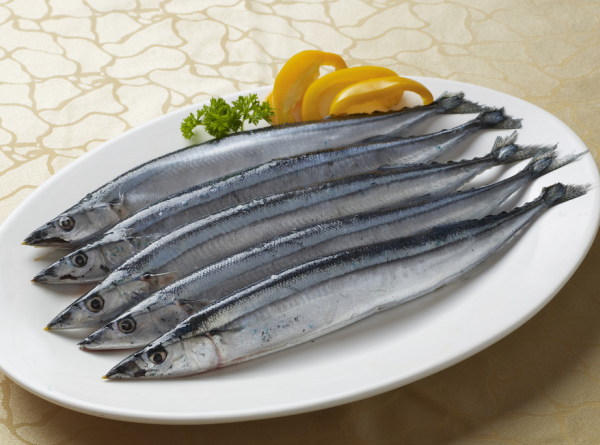
The artificial breeding of saury was once called a "world-class problem." As early as more than a decade ago, Jiangyin and other places began researching this subject one after another, but the saury's fierce temperament made them fail repeatedly. The Shanghai Fisheries Research Institute is the only place in the country to have successfully bred artificially farmed saury, and it took technicians 7 years to reach this point. Shi Yonghai explained: last year, the fisheries research institute and others carried out 4 batches of breeding on first-generation parent saury from the Yangtze River, producing 123,000 fry measuring 4-5 cm long. Of these fry, half were used for artificial release, while the other half will reach consumers' dining tables.
"The market period for wild saury is concentrated within the month or so before Qingming, but farmed saury can have its market time advanced or delayed by more than a month through appropriate adjustment of salinity, feed and temperature, and you can likewise eat saury with soft bones," Shi Yonghai said. They had tested the nutritional composition of ecologically farmed saury and found that the fat composition was very close to that of wild saury, while the protein composition was higher than that of wild saury.
It is understood that the saury that can reach the market next year will weigh between one and two liang, while growing to three liang is expected to require a growth cycle of about 4 years. According to forecasts, the amount of saury reaching the market for the first time will be very small, mainly supplied directly to restaurants, and it will basically not shake the sales pattern of wild saury.
"The price will also definitely be lower than that of wild saury," Shi Yonghai said. In their view, the ideal price is two to three hundred yuan per jin, which can both give farmers a certain profit margin and cause fishermen to lose interest in saury, whose catching difficulty is increasing day by day, thereby protecting the Yangtze River saury population in another form.
There is still a long road to true industrialization
From successful artificial breeding to truly reaching consumers' dining tables, a saury still has a long road ahead. "We raised 600 saury in one pond, but unexpectedly, for some reason, some sea bass were mixed into the pond. By the time we discovered it, only 50 saury were left, a heavy loss," Shi Yonghai said. On the other hand, ecological farming costs are also very high. Saury is picky about taste and only likes to eat small live fish and shrimp from the sea, turning up its nose at artificial feed. In addition, saury likes spacious living conditions; when the density is high, it is prone to illness. One mu of pond can only raise forty to fifty jin of saury, while although indoor farming can have a density dozens of times higher, the taste of the saury is vastly inferior.
"We do not want farmed saury to become the next farmed large yellow croaker, which, although sold for only twenty yuan per jin, is all big-bellied and has completely lost the deliciousness of wild large yellow croaker," Shi Yonghai said.
Even if large-scale farming succeeds, truly marketizing it will not be easy. The fate of Songjiang perch is clear proof. Back then, technicians spent a great deal of time and money to successfully breed Songjiang perch, which had already gone extinct in the wild. However, due to limited output, high cooking requirements, high prices and other reasons, the development of Songjiang perch faces an awkward situation.
[Link]
A look back at the fate of the "Three Fresh Delicacies of the Yangtze River"
Saury, hilsa herring and pufferfish are together known as the "Three Fresh Delicacies of the Yangtze River" and are world-famous delicacies, yet all three have had troubled fates.
For the Yangtze River hilsa herring, Jiangyin's annual catch in the mid-1950s was 474.7 tons, which plummeted to 2.5 tons in 1983, after which it vanished. It is said that the last time Jiangyin saw wild hilsa herring was 20 years ago.
For the Yangtze River pufferfish, the highest annual output was in 1958, when Jiangyin alone reached 132.9 tons that year, but with the deterioration of Yangtze River water quality and overfishing, it was nearly extinct by 1996. For more than a decade, cities along the Yangtze River have cumulatively released 8 million artificially bred pufferfish fry for stock enhancement, and in recent years some fishermen have caught pufferfish in the Yangtze River.
For the Yangtze River saury, Jiangyin's catch was 106 tons in 1987, only 0.82 tons in 2009, and this year it hit a historic low. Last year, the Shanghai Fisheries Research Institute released 9,000 artificially bred saury in the Yangtze River estuary for the first time, and this year it plans to release another 30,000. In the future, Shanghai will release saury every year.