Slumping Pig Prices Hurt Farmers: The Current Situation of an Ordinary Pig Farmer
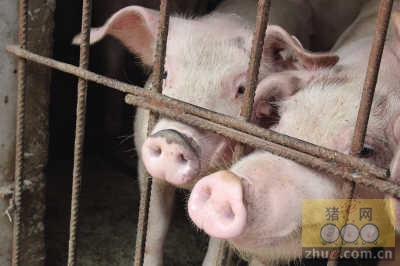
Wang Yun's farm covers an area of 1500 sq m and produces 1000 pigs a year. Every morning a little after 6, Wang Yun is woken by the ceaseless chorus of pig squeals and begins his day's work. Feeding fodder, taking temperatures, handling manure, assisting sows with farrowing, and so on, he never has a moment's leisure. Day after day like this, Wang Yun, only 45 this year, has already developed quite a few health problems, "all from exhaustion," he says.
Every pig that has received a vaccination gets a tag on its ear. On April 30, the live pig price was around 5.6 yuan/jin, and the price at which pigs could be sold was far below the cost of raising them. With no other option, the pigs became "leftover pigs," and even after growing to more than 300 jin, they stayed in the pen and continued to be fed.
Soybean meal is a by-product obtained after extracting soybean oil from soybeans and is used as a protein feed for pigs. Over the past two years, the prices of soybean meal and other feeds have risen to varying degrees, and the cost of raising pigs has kept climbing.
Dozens of bags of nutritional feed are stored in the warehouse. Feed accounts for more than 70% of the total cost of breeding, and a pig farm short of money is simply short of feed money. As the cheek depends on the lips, so does one thing on another. In recent years, quite a few feed companies have begun testing the waters by providing guarantee services for farmers.
Wang Yun holds a special syringe. For pig farmers, there is nothing more feared than swine disease and a sluggish market. Every day, Wang Yun checks the health of the pigs, and sick pigs must be treated as early and as quickly as possible to reduce unnecessary losses.
Last year, Wang Yun lost 200,000 yuan. This year, he applied for a loan and sold 270 pigs, but on average he lost 400 yuan on each pig sold, and the farm's decline continued. He discussed it with his family: if the live pig market showed no improvement, it would be time to change trades.
The village where the farm is located, Sangyuan Village, lies on the far outskirts of Shanghai, and its cultivated land, grain fields and vegetable fields all exceed its livestock and poultry farms, with scaled-up pig farmers being even rarer. Besides raising pigs, Wang Yun also grows some vegetables to support himself.
Wang Yun and his wife have two daughters and one son. The youngest son is only one year old, and both daughters are in university, one studying computer science and one studying teaching, which makes Wang Yun quite proud. He does not want his children to go into the breeding industry; it is simply too hard.
Wang Yun, a 45-year-old "veteran pig farmer," has recently begun to think about quitting. Twenty years ago, Wang Yun brought his family to Shanghai and put down roots in Sangyuan Village, Zhangyan Town, Jinshan District, and from then on lived a life with pigs for company. The income could not be called generous, but it was enough to support the family. It was not until last year that his comfortable life took a sharp turn for the worse, as live pig prices kept falling, the pig farm lost 200,000 yuan, and he suffered a major blow.
The fluctuations in the live pig market drew the attention of the central government. On March 27, the Ministry of Commerce, together with the National Development and Reform Commission, the Ministry of Finance and other departments, organized the electronic bidding and procurement work for the first batch of central frozen pork reserves for 2014. Although policies supporting agriculture have been strengthened somewhat, Wang Yun and his pig farmer friends remain pessimistic about the trend of the live pig market. "If I keep losing money like this, how can I go on raising pigs?" Wang Yun says.