Can the leech's tomorrow still be bright? Industry prospect analysis (Part 1)
Introduction
The bell of 2014 rang long ago, and the 2013 that we knew so well and will never forget has already become history, making one sigh at how time flies. The ancients said: "It passes like this, never resting day or night." Yet the days of yesterday cannot be kept, while the days of tomorrow can still be pursued. In 2013, the leech market rose all the way; in the Bozhou market, the price of leech (clean-water whole, relatively broad) rose from 680 yuan in January to 830 yuan in December, an increase of 22.06%; the price of leech (alum-water whole, relatively broad) rose from 480 yuan in January to 570 yuan in December, an increase of 18.75%. So will the leech market continue to rise afterward? Let us carefully examine and analyze the leech's "yesterday" and "today" together, and move toward the leech's "tomorrow."
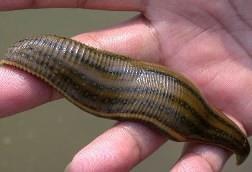
I. Variety introduction
Leech: According to the 2010 edition of the Chinese Pharmacopoeia, this product is the dried whole body of the leech family animals Whitmania pigra, Hirudo nipponica, and Whitmania acranulata. They are captured in the second and third seasons, summer and autumn, mainly around Qingming Festival and during the period from mid-August to September each year; they are killed with boiling water, then sun-dried or dried at low temperature. Leech has the effects of breaking stasis and unblocking menstruation, expelling blood stasis and dispersing masses, and mainly treats blood stasis amenorrhea, abdominal masses and lumps, post-stroke hemiplegia, and traumatic injuries. It is mainly produced in China's Shandong, Jiangsu, Anhui, Henan, Hebei, and other places.
II. The leech's "yesterday" From unnoticed to sought after
Opening the long historical scroll of the leech, it is not hard to find that the leech market's development has been truly magnificent, rising from a market price of 7-8 yuan to nearly 900 yuan, gradually transforming on the medicinal materials stage from an unknown minor player into a dazzling star, from being unnoticed to being sought after.
(1) Unnoticed: From the late 1980s to the early 1990s, leeches could be seen everywhere. Because research and development efforts were relatively weak and usage was small, no one paid attention to them, and the price remained silent between 7-8 yuan.
(2) Sought after: From the early 1990s to the present, after more than 20 years of development, the price of leech has advanced by leaps and bounds. From the historical price table of leech, four clear peaks appear, and it is precisely these peaks that pushed the leech to star status. The author below analyzes the four peaks specifically.
The first peak: The industrial development of the leech began in 1989, when the new drug "Naoxuekang Oral Liquid," developed using leech as a raw material, rose to fame due to its good efficacy. Consequently, pharmaceutical enterprises large and small across the country rushed to imitate it, and leech usage increased greatly. Finally, in 1991, due to the contradiction between supply and demand, the leech price reached its first peak of 150 yuan in March. From then on, the leech leaped up and began to enter everyone's sight. After the first peak, the leech price entered a stable state for the following reasons: starting in 1989, leeches were harvested in large quantities, especially because the high price in 1991 stimulated farmers' enthusiasm for harvesting; regardless of size, they were harvested frantically. In 1991, during the peak new-production period, output was between 100-120 tons, supply exceeded demand, and the price began to decline.
The second peak: After 1991, leeches were affected on the one hand by the price decline; on the other hand, due to the 1998 floods, in order to prevent schistosomiasis, during the dry season of 1999, large-scale molluscicide was applied to kill snails. River snails are the host of schistosomes and are also food for leeches, so leech output dropped sharply. Pulled by market demand, together with speculation by large players, the market finally broke out in 2000, and the price rose to a second peak of 210 yuan in July. After that, a nationwide craze for capturing them was set off, lakes everywhere were scraped clean, output increased, and as large players began to withdraw, the price gradually declined.
The third peak: Here the author must mention that leeches are hermaphroditic and cross-fertilize. Although their reproductive capacity is extremely strong, generally only leeches that have reached three years of age have reproductive capacity, and they reproduce in spring and autumn, which happens to coincide with the harvesting season. However, collectors seek quick success and instant benefits and capture indiscriminately, which has a devastating impact on leech reproduction, and the yearly decrease in leech resources is obvious. The contradiction of supply falling short of demand was exposed in the market, and in June 2004 the price soared to a third peak of 280 yuan. High prices stimulated enthusiasm for harvesting, and supply became abundant, but at the same time they also suppressed part of the demand; some manufacturers chose formulas that did not use leech, demand decreased, causing popularity to weaken, and afterward the price began to decline. It can be seen that leech demand is not rigid.
The fourth peak: First, wild leech resources began to dry up under the impact of overharvesting and water resource pollution, while cultivation technology was not strong enough; second, along with the intensification of China's population aging, cardiovascular and cerebrovascular diseases, hyperlipidemia, thrombosis, and other diseases created increasing demand for leeches. Again with supply falling short of demand, the leech price began to rise from 2007 and reached a fourth peak of 865 yuan in June 2011. Afterward, as new leech production came in, the price began to decline, but it soon began to recover in July 2012, and the upward trend has continued to this day.
Through the analysis of the leech's historical development, peaks and troughs follow each other closely, never parting or abandoning one another; each formation of a peak is compensation for the low price of a trough. Some say the leech is like an active volcano, no one knowing when it will erupt. Now that leech prices are firm, is it preparing for the arrival of the next peak?
III. Will the leech's "tomorrow" still be bright?
Before leech cultivation technology becomes fully mature, that is, before cultivated resources come onto the market in large quantities, supply falling short of demand is its inevitable development trend. From July 2012 to the present, the market has continued to rise. So where exactly is the leech's next peak? Will the leech's "tomorrow" still be bright? In the next issue, the author will conduct an all-round analysis of the leech's "today," and let us walk together into the leech's "tomorrow."
Can the leech's "tomorrow" still be bright (Part 2)
Source: Chinese Medicinal Materials World Network Author: Xie Yujia
Original link: http://www.zyctd.com/fenxi-item-636459-1-209.html
Submission: China Leech Network http://www.shuizhi360.com/