Machine substitution boosts the development of modern agriculture in Ningbo
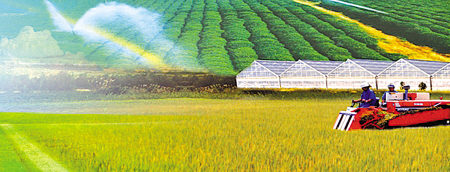
Full mechanization of grain production has freed farmers from the "three bends" of traditional farming; the spread of agricultural machinery in distinctive agricultural industries has transformed the productivity of farming, forestry, animal husbandry and fisheries; the vigorous rise of socialized agricultural machinery services has turned some farmers into large-scale "field bosses"; and facility agriculture has raised the economic returns of agricultural production, while the building of "smart agricultural machinery" is in full swing. Guided by "machine substitution," the Ningbo Municipal Agricultural Machinery Bureau has continuously advanced the transformation and upgrading of agricultural mechanization, bringing more advanced agricultural machinery and intelligent agricultural facilities and equipment into agricultural production. By the end of 2013, the city's total agricultural machinery power had reached 3.237 million kilowatts, it owned about 400,000 units (sets) of various types of agricultural machinery, and total revenue from agricultural machinery operation and services stood at 2.443 billion yuan, all leading the province and providing strong equipment support for Ningbo's development of modern agriculture and the improvement of overall agricultural production capacity.
Full mechanization of grain production:
It has changed the traditional mode of agricultural production and driven a large shift of agricultural labor and large-scale land management
During this year's "double summer" period, at "Liangqiao Rice Industry" Company in Yinzhou District, Ningbo's largest grain drying center, two grain-drying "giants" with a combined daily drying capacity of 1,000 tons operated around the clock. Wet grain unloaded from trucks went into the dryers, while already dried rice was quickly carried out along conveyor belts. Zhu Xiping, general manager of "Liangqiao Rice Industry," explained that in 2012 the company built an underground ventilation system in its warehouse, with cold air blowing into the grain piles through underground gaps, extending the storage time of wet grain by more than half a month and solving the problem of drying wet grain in one stroke.
In recent years, Ningbo's agricultural machinery departments have vigorously promoted mechanized rice seedling raising and transplanting technology and mechanized grain drying technology. The area of mechanized rice transplanting grew from 44,000 mu in 2007 to 724,000 mu this year, with a mechanized rice transplanting rate of 56%, leading the provincial average by more than 30 percentage points. The mechanization level of rice cultivation, planting and harvesting reached 86.8%, 20 percentage points above the national average, making Ningbo the first in the province to achieve full mechanization of mechanized cultivation, transplanting and harvesting in grain production. There are more than 50 grain drying centers, and the number of grain drying machines has reached 827, with a batch drying capacity of about 10,500 tons, ranking first in the province.
The realization of full mechanization in grain production has completely changed Ningbo's mode of grain production. It has not only stabilized the grain planting area and safeguarded food security, but also promoted large-scale land management and shifted a large amount of agricultural labor.
Mechanization of production in distinctive industries:
"Machine substitution" transforms agricultural productivity
In 2013, the Cixi Shishan Agricultural Machinery Professional Cooperative was the first in the province to introduce two fresh soybean harvesters, completing the harvest of 4,000 mu of edamame within 40 days, with an operating efficiency 120 times that of manual labor. "Field robots" have shone brightly in distinctive agriculture, not only letting pioneering enterprises taste the benefits, but also prompting the Municipal Agricultural Machinery Bureau to increase its efforts to promote mechanization in distinctive agricultural industries.
In the first half of this year, Ningbo issued a new municipal fiscal subsidy policy for the purchase of high-performance agricultural machinery for distinctive industries, and has already subsidized 28 units (sets) of distinctive and high-performance agricultural machinery, including fresh soybean harvesters, unmanned plant protection drones, and large-capacity, high-horsepower combine harvesters.
"In the past, there were very few domestically produced machines for planting and harvesting in distinctive industries, and within the national catalog of machinery promoted and supported, there were basically no agricultural machines suitable for Ningbo's cash crops," said a person in charge at the Municipal Agricultural Machinery Bureau. Including distinctive and high-performance agricultural machinery in purchase subsidies has stimulated the enthusiasm of cooperatives and enterprises to try "machine substitution."
With fresh soybean harvesters as a representative example, Ningbo is accelerating mechanization of the main production links for cash crops such as vegetables, tea and flowers, as well as livestock, poultry and aquaculture, and will further improve subsidy and support policies for distinctive agricultural machinery, testing and promoting new types of agricultural machinery for distinctive industries on farms and demonstration bases of a certain scale.
Socialization of agricultural machinery services:
Full coverage of operation services, upgrading toward enterprise-based, specialized and large-scale development
In June this year, the province's first specialized, joint-stock agricultural machinery operation service company, "Yushi Agricultural Machinery," was established in Ningbo. Registered by three large agricultural machinery households in accordance with the requirements for a joint-stock company, it owns agricultural machinery and tools valued at 1.73 million yuan and has achieved asset shareholding, institutionalized management, enterprise-based operation, high-tech machinery and tools, and large-scale services. According to estimates, the company's operation service scale this year can reach 35,000 mu-times, with agricultural machinery operation service revenue of more than 3 million yuan.
Socialized agricultural machinery service organizations are an important part of building a new type of agricultural management system and an important guarantee for an appropriate scale of agricultural operation. The total number of agricultural machinery professional cooperatives in Ningbo has reached 372, averaging 2.9 agricultural machinery cooperatives per township across the city, ranking among the top in the country. "Whether in number of development, service level or service benefits, Ningbo's agricultural machinery professional cooperatives rank first in the province," introduced a person in charge at the Municipal Agricultural Machinery Bureau.
At present, Ningbo's agricultural machinery professional cooperative organizations have moved from a stage of numerical growth to a stage of quality improvement. There are 118 with an operation service area of more than 5,000 mu, and 10 regional comprehensive agricultural machinery service centers have been built, integrating standardized service organizations, technology promotion and training centers, service and repair centers, and drying and processing centers into a "one standardization, three centers" model. The newly established agricultural machinery operation service companies have transformed the formerly loose cooperatives with agricultural machinery and tools as shares into tightly knit joint-stock companies with capital as shares and a modern enterprise system, with higher machinery use efficiency, more scientific and effective management, stronger socialized service capacity, and more obvious operational service benefits. They can achieve large-scale production and standardized operations and effectively raise labor productivity and resource utilization, making them an "upgraded version" of new agricultural machinery service organizations.
Facility-based agriculture:
Steel-frame greenhouses grow "ten-thousand-yuan fields"
Just how much can facility agriculture raise agricultural benefits? Hu Xinyan, owner of the Cixi Kandun Yulan Fruit and Vegetable Farm, which has 1,200 mu of open farmland and 100 mu of greenhouses, knows better than anyone. By growing off-season vegetables to exploit the "time gap," his greenhouses obtained early "iron rice bowl" orders from food processing plants, and the average output value per mu of vegetables soared from more than 2,000 yuan in the open field to 7,500 yuan. In addition to contract farming, the farm also grows leisure and sightseeing fruits such as strawberries and cherry tomatoes. Like many farm owners with greenhouses, Hu Xinyan has already set his sights on the next market: leisure sightseeing and pick-your-own agriculture.
Ningbo has a large population and little land, with insufficient per capita resources, and especially needs to vigorously develop facility agriculture featuring high input, high output, high efficiency, high technology and high quality. Starting in 2010, with the agreement of the Ministry of Agriculture and the Ministry of Finance, Ningbo, as a pilot, included facility agriculture construction in the scope of central agricultural machinery purchase subsidies, applying project management to subsidies for steel-frame greenhouses and glass greenhouses and focusing support on grain production functional zones, modern agricultural parks, agricultural industrialization bases and agricultural mechanization demonstration parks.