What is the current state of the Dendrobium officinale industry? The hundred-billion dream of a single "immortal herb"
“In others' eyes, Dendrobium officinale is just a plant, but in mine, it is my child.” For many years, Yu Qiaoxian, chairman of the board of Zhejiang Senyu Holding Group (hereinafter referred to as "Senyu"), has cared for this industry as if it were her own child.
Short hair, capable, and decisive - this is the first impression Yu Qiaoxian gives. As the Dendrobium officinale industry continues to heat up, this child in Yu Qiaoxian's eyes has become a golden treasure that capital from all sides is scrambling to chase.
“Back then, an expert said that Dendrobium officinale would become an industry worth 100 billion yuan in the future. At the time, we didn't quite believe it. Now it seems that this was indeed a correct judgment.” Yu Qiaoxian told reporters.
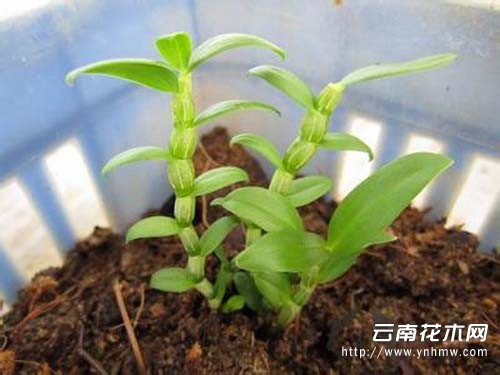
As the Dendrobium officinale industry heats up, listed companies such as Bright Food, CONBA, and Tianmushan have successively entered the Dendrobium officinale industry, and many places across the country have put forward the slogan of "building a ten-billion-yuan Dendrobium officinale industry."
The warming of the industry has created an atmosphere for Dendrobium officinale to expand beyond Jiangsu and Zhejiang, but it has also led to a proliferation of chaos in the industry. As more and more enterprises and individuals get involved, hybridization technology has also begun to become popular and even rampant in the Dendrobium planting industry.
“However, for us, this is actually an opportunity.” Having lived through the 2006 wave of skepticism about the Dendrobium officinale industry, Yu Qiaoxian is full of confidence in the development of the Dendrobium officinale industry in Yiwu. In her view, those who survive the chaos will inevitably be enterprises that have mastered mature cultivation techniques and are good at saving costs and improving quality.
The past and present life of the "immortal herb"
In the past, during interviews, reporters often encountered some "incongruous" phenomena: at enterprises that perform myopia eye surgery, one-third of the employees wear glasses; at enterprises that sell tea, the employees all drink tea of other brands; transportation experts who strongly oppose ride-hailing apps immediately start using Didi after work...
This interview broke that "incongruity": whether it was entrepreneurs such as Yu Qiaoxian and Wang Zhengrong, general manager of Hubei Pharmaceutical Industry Research Institute Co., Ltd. (hereinafter referred to as Hubei Medical Engineering Institute), or scholars such as Si Jinping, professor at the School of Forestry and Biotechnology of Zhejiang A&F University, and Sun Daihua, director of the research center of Hubei Medical Engineering Institute, they are all "fans" of Dendrobium officinale.
Sun Daihua likes to eat it fresh, Wang Zhengrong likes to soak it in liquor, and Si Jinping's favorite is brewing tea with dried Dendrobium officinale flowers... They not only take it themselves but also recommend it to relatives and friends.
The reason lies in the efficacy of Dendrobium officinale in nourishing yin, nurturing the stomach, and benefiting the throat.
Si Jinping introduced that there are a total of 74 species and 2 varieties of Dendrobium in China, among which Dendrobium officinale is named for its iron-green epidermis and is also the rarest and most precious. From the Han Dynasty's Shennong Bencao Jing to Li Shizhen's Bencao Gangmu in the Ming Dynasty, there are records of Dendrobium officinale's effects in strengthening yin and benefiting essence, supplementing internal deficiencies, and lightening the body and extending life.
“Our ancestors' descriptions have not changed for thousands of years, which is enough to prove the authenticity of its effects.” Si Jinping, who began researching Dendrobium officinale in the mid-1990s, told reporters.
Modern pharmacological research has found that the dendrobium polysaccharides in Dendrobium officinale are a type of immune enhancer and have a clear effect on increasing white blood cells. Clinical experiments have also proven that dendrobium polysaccharides have a significant effect on regulating the body's immunity.
However, reporters found that although professionals highly praise it, many people, including some traditional Chinese medicine practitioners, have never even heard of the name Dendrobium officinale.
Yang Mingzhi, director of the Dendrobium Professional Committee of the China Association of Traditional Chinese Medicine, told reporters that wild Dendrobium officinale has a low pollination success rate, so its yield is very small. “In ancient times, it was an 'imperial medicinal material,' and ordinary people could not access it at all.”
Therefore, it was not until the late 1990s, after the technical bottleneck of artificial cultivation of Dendrobium officinale was solved, that the Yangtze River Delta region with stronger consumer spending power "got a taste" and became the main region consuming this product today.
Yu Qiaoxian was the earliest entrepreneur in the country to cultivate Dendrobium officinale. In her early years, she had sold preserved eggs and acted as an agent for health products. Before entering the Dendrobium officinale business, she was already Yiwu's largest health product agent. In 1997, on Si Jinping's recommendation, she invested 5 million yuan to begin artificially cultivating Dendrobium officinale.
The difficulty of cultivation exceeded imagination: at 12 months the roots rotted, at 15 months it suffered contamination again, and a single pest and disease outbreak destroyed all 10 mu of Dendrobium officinale. After finally getting through that, a heavy snowfall crushed all the experimental sheds...
“People without a certain industrial foundation really cannot do this Dendrobium officinale business!” After expending enormous effort, Yu Qiaoxian finally had a harvest. In 2002, sales of Dendrobium officinale and Dendrobium officinale Fengdou (the dried product after processing) reached more than 50 million yuan, and by 2014 sales had reached more than 1 billion yuan.
In step with Senyu's development, by 2014 the total output value of artificially cultivated Dendrobium officinale nationwide had reached nearly 10 billion yuan. Among this, Zhejiang Province alone contributed more than 3 billion yuan in output value.
Authentic origin does not equal "local"
The ups and downs of business in her early years gave Yu Qiaoxian first-class marketing ability.
At present, there are two enterprises in China whose Dendrobium officinale output value has exceeded 1 billion yuan: one is Tianhuang Pharmaceutical in Hangzhou, and the other is Senyu. The former basically relies on word-of-mouth spread and its market is mainly concentrated in Hangzhou. The latter has extended advertising and channels across the country and participates almost every year in the most authoritative brand selection activities in China's health industry.
Yu Qiaoxian has a sense of responsibility that many grassroots private entrepreneurs lack, which is specifically reflected in her insistence on "authentic origin."
Traditional Chinese medicine emphasizes authentic medicinal material production areas and native seedlings. According to classical records, the 30th parallel north region, including Yiwu, belongs to the authentic production area of Dendrobium officinale, and Senyu's Dendrobium officinale cultivation base is located here.
Starting in 1997, Senyu experts conducted sterile propagation in the base of wild strains they had collected, and then carried out various experiments including comparative, stress resistance, and disease resistance tests.
This seedling, entrusted with heavy responsibilities by the people of Senyu, was eventually named "Senshan No. 1." In 2008, recognized by the Zhejiang Provincial Committee for the Recognition of Non-Major Crop Varieties, Senshan No. 1 was rated "excellent among its peers" in terms of shape, dendrobium polysaccharide content, and active ingredients.
“However, authentic medicinal materials do not equal 'local medicinal materials.' The quality control of Dendrobium officinale cannot stop at variety and region, but is a comprehensive consideration of variety, production area, and cultivation method.” Yu Qiaoxian said.
Therefore, when some people, purely in pursuit of special gimmicks, came up with various planting methods based on "high mountain regions" or "dense mountain forests," Yu Qiaoxian insisted on restoring the growing environment of wild Dendrobium officinale to the greatest extent possible.
In the base, a timed irrigation and sprinkler system simulates the misty humidity environment of the wild; a mixed substrate structure of small stones and pine bark simulates wild soil; semi-shade sun shading simulates the shading effect of towering ancient trees, while no artificial fertilizer is added and no pesticides are applied.
Today, Si Jinping, who also serves as technical guidance for Senyu, has jointly developed with Senyu a new technology for growing Dendrobium officinale on trees - the living-tree epiphytic original ecological cultivation model.
“We wrap straw rope around trees with a diameter of more than 10 cm and tie Dendrobium officinale seedlings between the straw rope and the large tree for cultivation.” Si Jinping introduced that Dendrobium officinale grown on trees in this way has strong stress resistance and does not require additional substrate or nutrients, and can grow well by absorbing nutrients from the bark and the large tree.
This planting method neither competes with agriculture for farmland nor with forestry for forest land, and can generate enormous economic benefits: on a tree with a diameter of 25 cm, more than 2.5 kg of fresh Dendrobium officinale can be harvested annually. Calculated at 2,400 yuan/kg for fresh stems, a single large tree can generate nearly 10,000 yuan in annual income at its highest.
“This method is called the 'most profitable' channel by many ordinary people, and it has already been promoted in the Wenzhou and Lishui areas.” Si Jinping said.
The rampancy of "fake goods" becomes a good development opportunity instead
Around 2005, the income from one mu of Dendrobium cultivation could even reach 200,000 yuan. Stimulated by high returns, capital from all sides rushed into the Dendrobium industry, pushing it forward all the way.
Statistics from the Dendrobium Professional Committee of the China Association of Traditional Chinese Medicine show that as of July 2013, the national planting area of various types of Dendrobium was 125,600 mu, and the planting area of various types of Dendrobium in Yunnan Province had already exceeded 80,000 mu.
However, overall market prices are heading downward. In 2009, the market price of fresh Yunnan Dendrobium officinale was around 1,200 yuan/kg. In recent years, it has fallen to only a fraction of the high price, and growers have suffered serious losses.
The reason is that "fake goods" disrupt market order. Numerous products with unclear origins, inauthenticity, undefined quality grades, impure quality, and uneven content flood the market, becoming the biggest obstacle to industrial development.
The normal height of Dendrobium officinale should be about 5-30 cm, while in some places the hybridized Dendrobium is thick and long, with the longest even exceeding 1 m. “This is not growing Dendrobium, this is clearly growing vegetables!” Si Jinping sighed.
Although the domestic Dendrobium officinale market currently has mixed brands and low concentration, Si Jinping is not very worried: after survival of the fittest, small and medium-sized enterprises and "retail investors" in the Dendrobium officinale industry will be eliminated, and those that remain will be enterprises that have mastered mature cultivation techniques and are good at saving costs and improving quality.
As early as 2006, CCTV's "Weekly Quality Report" program, under the title "The Mystery of the Immortal Herb," disclosed problems involving suspected counterfeit and inferior Dendrobium officinale and Dendrobium officinale Fengdou in Hangzhou, Yueqing, Jiashan, and other places in Zhejiang, directly leading to the bankruptcy of some enterprises operating Dendrobium officinale.
But Senyu treated that wave as an opportunity. In April 2006, an expert team led by academicians of the Chinese Academy of Sciences accepted the scientific and technological research project undertaken by Senyu, and five indicators - pest and disease prevention of Dendrobium officinale, breeding, fruiting and preservation, optimal formulation, and harvesting - all reached internationally advanced levels.
In May 2012, the State Forestry Administration entrusted Senyu and Zhejiang A&F University to jointly formulate the "Technical Regulations for Dendrobium officinale Cultivation," which was the first national industry standard for Dendrobium officinale cultivation.
The formulation of this standard took two years and was officially released in November 2014. It is of milestone significance for Dendrobium officinale.
An expert in the traditional Chinese medicinal materials industry told reporters that there are three types of standards for traditional Chinese medicinal materials: the lowest standard is the "Chinese Pharmacopoeia" standard; the next is industry standards, applicable to industry associations, industrial alliances, and medicinal material markets; and the next is standards formulated by local governments for medicinal materials circulating locally.
“The industry standard formulated by Senyu is not only conducive to the development of the overall industry, but can also form a threshold to isolate some substandard products from the market, which is conducive to Senyu's further development.” the above expert said.
Offering advice to Hubei
Si Jinping has a habit: every time he finishes a lecture on Dendrobium officinale somewhere, he is happy to copy PPT materials including introductions to Dendrobium officinale and cultivation techniques for the audience.
“A national scale of 10 billion yuan is still far from enough. Only when enterprises in more regions participate in accordance with industry norms can more people eat high-quality, affordable Dendrobium officinale.” When reporters told him that Hubei had begun developing the Dendrobium officinale industry, he was also very pleased.
Yingshan County in Hubei Province, located at the same 30th parallel north as Yiwu, is one of the few places in the country where wild Dendrobium officinale has been found, and it was recorded long ago in the Yingshan County Annals.
Yingshan County is a paired assistance area of Hubei Hongtai State-owned Capital Management Company. As a controlling unit of Hongtai Company, Hubei Medical Engineering Institute conducted a survey of local Dendrobium planting in late October last year. At the foot of the main peak of the Dabie Mountains within Wujiashan in Yingshan County, an expert group led by Wang Zhengrong found 70-year-old veteran herb farmer Liu Zhengyan in an ordinary farmyard.
After the old herb farmer learned the purpose of the expert group's visit to investigate wild Dendrobium officinale, he readily agreed to lead the expert group into the mountains. On the shady side of an inconspicuous century-old poplar tree, Liu Zhengyan found a cluster of wild Dendrobium officinale that he had protected for 30 years. He discovered it in 1983, and it now has more than a dozen branches.
This discovery made Wang Zhengrong very happy - the per-mu output value of Dendrobium officinale is much higher than that of the Poria cocos widely planted locally, and can greatly increase local people's income. However, at that time, the planting scale of Dendrobium officinale in Yingshan was only more than 20 mu, and the planting was relatively scattered, with product development still in the primary processing stage, almost entirely relying on purchases by medicinal merchants.
“This has a lot to do with the characteristics of Dendrobium officinale, such as high investment cost and long output time. The investment in intensive cultivation of Dendrobium per mu reaches nearly 100,000 yuan, which individual farmers cannot afford.” Wang Zhengrong said.
After returning to Wuhan, Wang Zhengrong began conducting industry surveys nationwide, with Zhejiang and Yunnan as key areas of investigation. Ultimately, with technical support provided by Hubei Medical Engineering Institute and investment introduced from Wuhan Hite Biopharmaceutical Co., Ltd., the first phase invested 10 million yuan, with a planting area of 115 mu.
During the interview, several experts offered advice for Yingshan County.
Yang Mingzhi introduced that Chinese medicinal materials for consumption are divided into three categories: the first is medicine-food homology, the second is those that can only be used in health foods, and the third is those prohibited in foods. Dendrobium officinale belongs to the second category, so it cannot enter supermarkets in fresh form and can only be sold through pharmacies. “Only after being made into health products can it be conveniently promoted widely.”
However, each health product (such as capsules, granules, medicinal liquor, toothpaste, eye cream) requires an investment of about 500,000 yuan in research and development funds and takes two to three years for approval before it can be officially brought to market.
This is precisely the strength of Hubei Medical Engineering Institute: its predecessor was the Hubei Provincial Pharmaceutical Industry Research Institute established in 1958, and it has accumulated many years of experience in drug research and development, enabling it to "develop health foods using the ideas, technologies, and methods of making drugs."
“If an enterprise only develops the planting segment of Dendrobium officinale, it will be constrained by purchasers: if purchasers lower prices to buy, the enterprise loses money; if they do not buy the crop, it may go to waste. But if Hubei can build a complete industrial chain of Dendrobium officinale breeding, planting, deep processing, and sales, it will greatly strengthen enterprises' ability to resist risks.” Si Jinping gave an example: Senyu Group, with the advantage of a full industrial chain, has kept the price of fresh Dendrobium officinale stems stable at around 2,400 yuan/kg for three years, safeguarding the interests of growers.
In addition, Si Jinping also offered suggestions from a marketing perspective: “The purchasing power of consumers in Central China, as well as their product awareness of Dendrobium officinale, are weaker than those in coastal areas. After reasonable and effective promotion, word-of-mouth spread of Dendrobium officinale will form the best marketing.”