What happened after the chance encounter with the mudskipper in the black mud
Highlights: Hidden in the black mud is a little money-making sprite: black, dirty, able to jump and crawl, and very interesting. But catching it is not so easy. One fisherman, one chance encounter, changed the course of his wealth. Ji Xianyong of Shishi, Fujian, dug a jumping fortune out of the black mud.
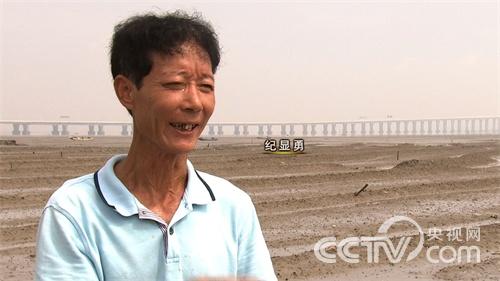
At four o'clock this afternoon, the tide had just receded, and Ji Xianyong took us to the tidal flats to look for a treasure that has made many fishermen rich--the mudskipper.
Fisherman from Hanjiang Town, Shishi City, Fujian Province: It is very hard to catch one, very hard to catch even one mudskipper.
Reporter: Very hard? Didn't you say you have been catching them for decades?
Fisherman from Hanjiang Town, Shishi City, Fujian Province: Even after decades it is still hard, it is hard at any time.
The mudskipper, which the fishermen say is hard to catch, is also called the mudskipper. Whenever the tide goes out, the mudskippers lurking in the black mud holes will come out to play on the surface of the mud, then burrow back into the holes, and this is the best chance for fishermen to catch them.
Ji Xianyong: This is the trail the mudskipper made.
Reporter: Is this it?
Ji Xianyong: This trail is the trail the mudskipper made.
Reporter: The path the mudskipper took, right?
Fisherman from Hanjiang Town, Shishi City, Fujian Province: That hole is the mudskipper's hole.
Ji Xianyong: This is the mudskipper's hole.
Reporter: That is it, so can I dig it out now?
Ji Xianyong: Not necessarily.
The fisherman said that even following the trail, you may not find a mudskipper, and sure enough, when the reporter dug in, it did not seem right.
Ji Xianyong: Do you want to try? You can try, it is very deep.
Reporter: I see it.
Ji Xianyong: This is a small crab.
Reporter: How can you tell it is a crab's hole? There really is a crab. Do you have to dig this deep when you dig?
Ji Xianyong: Very deep, 70 or 80 cm, just like this.
Reporter: I dug to here, all the way?
Fisherman from Hanjiang Town, Shishi City, Fujian Province: Keep digging to here.
Reporter: A lot of crabs seem to be scraping my hand. Look, from catching them every day, there is a lot of blood, it has already broken the skin, right?
Fisherman from Hanjiang Town, Shishi City, Fujian Province: Mm, it is broken, get up quickly! In a moment you won't be able to get out.
Reporter: Nothing at all?
Fisherman from Hanjiang Town, Shishi City, Fujian Province: No.
The mudskipper had long since heard the sound and fled, and all we felt were other fish. But soon the fishermen became excited.
Reporter: Caught some again?
Fisherman from Hanjiang Town, Shishi City, Fujian Province: I will put them here for you to see.
Reporter: Show me now.
Fisherman from Hanjiang Town, Shishi City, Fujian Province: I will put them here, take a look.
Reporter: This one is very big. How did you catch four at once?
With quick eyes and fast feet, find the mudskipper's hole and scoop down in one go. It looks like a very simple action, but it takes several years of skill. After more than an hour of work, the three of us caught only a few mudskippers. Even the most skilled fisherman can catch at most 2 jin a day. By this time the reporter was sinking deeper and deeper into the tidal flat and could no longer walk out.
Fisherman from Hanjiang Town, Shishi City, Fujian Province: Keep walking and in a moment you won't be able to move.
In China, mudskippers are mainly distributed in the East China Sea and the South China Sea. They are an ancient fish animal with a relatively low level of evolution. Some people call the mudskipper a genius among fish. They can spend much of their lives out of water. They rely on well-developed pectoral fins to jump across the tidal flats. Back then, it was precisely in the hard-to-catch mudskipper that Ji Xianyong saw a business opportunity.
Ji Xianyong: There are relatively few mudskippers now, relatively few wild ones.
Fisherman: This is more than 100 yuan per jin, and now there is none of this in the sea.
Reporter: Too few.
Fisherman: Too few. Many people buy them generally for the elderly and children to eat.
Ji Xianyong: This kind is better, has more meat, and tastes better. It is called huitiao, in our local dialect we call it huitiao.
Wild mudskippers are becoming more and more rare. In local Fujian, farmed mudskippers are equally popular. At 8 in the morning, there was not much mudskipper left in the market.
Aquatic products dealer in Shishi City, Fujian Province: Sold out.
Reporter: Sold out this early?
Aquatic products dealer in Shishi City, Fujian Province: Yes, they probably will not catch more until after four in the afternoon. They sell well all year round.
Reporter: Right, available all year round.
Aquatic products dealer in Shishi City, Fujian Province: Many buy them to make soup for children, and many buy them for pregnant women too. I sell dozens of jin a day.
Now, Ji Xianyong's artificial breeding area for mudskippers has reached 60 mu, and through dealers he can sell more than 10,000 jin of mudskippers a year. Not only did he make money himself, he also led many fishermen to wealth together. But farming mudskippers is only one of Ji Xianyong's ways of making money. Born into a fisherman's family, he had only a junior high school education, and for more than ten years he never left the seaside. Yet he is full of passion for entrepreneurship, switching into several industries, and not only did he make money in every one, he was almost always among the first in Shishi to do them. And when it comes to the secret of Ji Xianyong's money-making, we have to start from a chance encounter one morning.
On an evening in the autumn of 2006, Ji Xianyong, who had been missing all day, came home and mysteriously told his wife that he had discovered a money-making treasure.
Ji Xianyong's son Ji Haoxiao: I thought it was still quite incredible, very exciting.
Ji Xianyong: This is the opportunity to make money, so we just put in more effort.
Ji Xianyong's wife Ouyang Shouhong: As he spoke, he looked very happy.
The words that surprised his wife and child at night were because of a chance encounter Ji Xianyong had that morning.
In 2006, Ji Xianyong was already somewhat well known in Hanjiang Town, because he was the first person locally to raise crabs. He not only participated in publishing two books on crab farming, but also led more than 100 households to farm together. The whole family relied on crabs, and although it was hard work, life was not bad. Every morning, Ji Xianyong had to go inspect the ponds.
That morning at around 5 o'clock, just after dawn, Ji Xianyong was riding his motorcycle past the edge of a tidal flat when he was suddenly attracted by two small black shadows that flashed by.
Ji Xianyong: A little fatter than a loach, a little shorter, with eyes on top of the head, both eyes very bright, bouncing around in the mud. There was not much water, so I could see them very clearly.