South African Muscovy ducks pave the way to prosperity
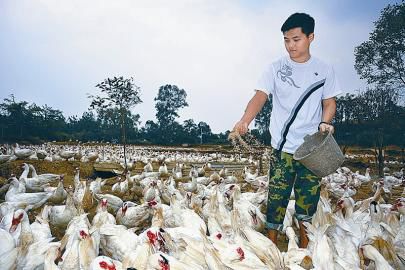
Qu Hao is feeding the Muscovy ducks.
On October 13, a young man from Jiangyou named Chen Chao came to Group 12 of Ma'an Village, Huagai Town, Anxian County, to inspect a type of Muscovy duck introduced from South Africa that looks similar to a duck. The farm's manager, 22-year-old Qu Hao, warmly received him. "If you want to raise them, you first need to choose a good site. We'll take care of the technical issues."
In 2014, while traveling in Cape Town, South Africa, Qu Hao ate a type of meat that was extremely delicious. Only after asking around did he learn that this was a domesticated Muscovy duck with very high nutritional value.
Could this kind of duck be raised back home in Anxian County? After preliminary research, Qu Hao learned that very few people in China raise this duck, and its market potential is enormous. So Qu Hao brought along several veteran comrades and, together with his girlfriend, transferred nearly 100 mu of mountain forest land in his hometown. Then at the end of March this year, he introduced 5,000 breeding eggs at 35 yuan each.
During the incubation period, Qu Hao stayed by the incubator every day, and during the days when they were hatching, he even watched through the night. However, after more than 2,700 goslings hatched, the other eggs showed no movement. Qu Hao took the eggs to a veterinarian and only then learned that these eggs had not been fertilized, "which was equivalent to paying more than 80,000 yuan in tuition."
For this batch of hatched chicks, Qu Hao cared for them meticulously, humbly seeking advice from veterinarians, technicians from the county animal husbandry and veterinary bureau, and poultry farmers, "recharging" his marketing knowledge online, and carefully summarizing and recording the details of raising them. Finally, he gradually became familiar with the Muscovy duck's living habits: it likes warmth and fears cold, loves cleanliness, has omnivorous feeding habits, and has very strong disease resistance.
After half a year of careful raising, these more than 2,000 Muscovy ducks had grown to weigh five or six jin. "Although they are not yet on the market, we have already received many expressions of intent to order from restaurants," Qu Hao said. Neighboring people have also expressed their desire to raise them. "In more than a month, the female ducks will begin laying eggs. By then we will give the hatched chicks to the surrounding people to raise, driving everyone to get rich together," Qu Hao said.
Beside the farm, a farmhouse restaurant is about to be completed. "After tourists come, they can not only fish and swim, but also enjoy the delicious taste of Muscovy duck," Qu Hao said. Next, he will also invite chefs to develop dishes, so that Muscovy duck truly makes it onto the public's dining table, and use a "rural Taobao store" to sell Muscovy duck eggs and duck meat online.