Sound Can Also Be Fertilizer, Helping Plants Grow Better
Original title: A Sharp Tool for Developing Modern Agriculture
-- Inventor Qiu Jinming Talks About the Application of Plant Acoustic Frequency Processing Technology
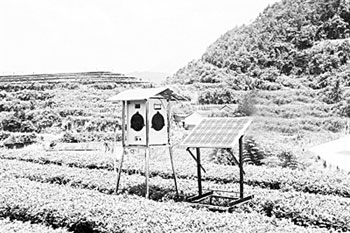
Recently, the Fifth Plenary Session of the 18th Central Committee of the Communist Party of China closed in Beijing. The meeting explicitly proposed vigorously advancing agricultural modernization, accelerating the transformation of agricultural development modes, and taking the path of agricultural modernization featuring high output, safe products, resource conservation and environmental friendliness. Previously, the Ministry of Agriculture had formulated and implemented the "Action Plan for Zero Growth in Chemical Fertilizer Use by 2020" and the "Action Plan for Zero Growth in Pesticide Use by 2020", vigorously promoting fertilizer reduction and efficiency improvement and pesticide reduction and pest control, striving to achieve zero growth in chemical fertilizer and pesticide use by 2020.
The realization of the above goals cannot be separated from the support of science and technology, among which developing physical agriculture is an important way to achieve agricultural modernization. Compared with chemical agriculture, which is dominated by chemical fertilizers, pesticides and hormones, physical agriculture mainly uses basic physics knowledge such as electricity, magnetism, sound, light, gas, heat and nuclear, as well as high and new technologies in related fields, to promote the sustainable development of modern agriculture. Plant acoustic frequency processing technology (commonly known as "sound fertilizer") is an emerging green agricultural science and technology developed in recent years. It is an important component and core technology of the development of physical agricultural science and technology. It conforms to the development direction of environmental protection and green ecological agriculture, and is one of the important means for the transition from traditional chemical agriculture to sustainable agriculture. To gain an in-depth understanding of the innovative development of "sound fertilizer", a reporter from Science and Technology Daily recently interviewed the holder of multiple national patents -- Qiu Jinming, president of the Beijing Yujiaming Three-State Ion Science Research Institute and inventor.
The Phenomenon That Plants Respond to Music Was Discovered by Humans Long Ago
Qiu Jinming worked in national defense scientific research for more than 30 years. After retirement, he served as a technical consulting service adviser in relevant units such as the Ministry of Science and Technology and the Ministry of Agriculture, and has consistently engaged in the inventive and creative work he loves. Multiple technologies he developed have been granted national patents. Recently, more and more people have come to him to learn about the "sound fertilizer" patent in physical agriculture. This invention patent, titled "Multifunctional Acoustic Wave Generator with the Effect of Promoting Plant Growth and Plant Protection", has attracted much attention because it closely aligns with relevant agricultural policies issued by the state and the spirit of "mass entrepreneurship and innovation" advocated by the state.
Qiu Jinming said that all things in heaven and earth are mutually generative and interconnected. The phenomenon that plants respond to music was discovered by humans long ago. Beautiful piano music can increase the milk production of dairy cows, and music can cultivate people's sentiments and treat many diseases. Animals and plants are both products of nature, and the influence of sound on plants is gradually being understood and applied by humans.
He introduced that, according to the comprehensive multidisciplinary theory of acoustic wave biological effects based on biophysics, biomolecular electronics, cytology, bioelectromagnetics, computational electromagnetics, applied acoustics and other disciplines, and especially the principles of the energetic and informational effects of acoustic waves on plant bodies, an acoustic wave instrument is designed to emit intermittent acoustic waves with an extremely wide frequency spectrum toward plant bodies. This can cause changes in plant cell membrane potential, generate action potentials, and then control the opening and closing of plant cell membrane channels, promoting the orderly and organized activities of matter, energy and information in plant bodies. While producing positive biological effects, it affects their life processes, achieving the application goals of acoustic wave agricultural engineering technology such as increased yield, high quality and resistance to pests and diseases.
Studies have shown that audio stimulation can prolong the development period of pests, increase their chances of being preyed upon by natural enemies, or make them unable to live in suitable seasons, thereby increasing pest mortality and reducing pest outbreaks. Qiu Jinming believes that a specific acoustic frequency causes the stomata on the underside of plant leaves to open, enhancing nutrient absorption capacity, greatly increasing the energy substance ATP provided to plant cells, and significantly increasing the substances contained in plants that pests fear, such as "rutin", and substances that suppress pest nerves, which can reduce pest reproduction rates. It has been confirmed by experiments that acoustic waves can effectively control Chinese cabbage aphids, cotton bollworms and other pests.
At present, plant acoustic frequency control technology has been demonstrated and promoted in experiments on more than 30 kinds of plants, including rice, cotton, vegetables, fruit trees and flowers. The application of "sound fertilizer" technology has good effects in increasing crop yields, improving quality, reducing pests and diseases, advancing maturity, enhancing resistance and promoting seed germination.
However, plant acoustic frequency control technology has not yet been promoted and applied on a large scale in China. This is caused by many reasons, one important reason being that traditional acoustic frequency control technology and acoustic wave generators are not sufficiently perfected.
Exploratory Work Advanced One Step Further
With a truth-seeking and pragmatic scientific attitude, using his many years of experience in electronic technology and special process research as well as his continuously accumulated foundation in the field of agricultural technology, and after years of research, Qiu Jinming proposed a new principle of acoustic wave biological effects in acoustic wave agricultural engineering and a product design plan. This technology is named "Multifunctional Acoustic Wave Generator with the Effect of Promoting Plant Growth and Plant Protection", and the related invention has obtained national invention patent authorization. It advances the exploratory work of acoustic wave agricultural engineering technology development from theoretical research to product design one step further, breaking the stagnant state of research in this field. Compared with traditional technology and equipment, this technology has multiple innovations and occupies a leading position in China.
Qiu Jinming introduced that the new acoustic wave agricultural engineering technology can meet the needs of small-area farmland, greenhouses or hundred-mu farmland, and can also realize the needs of more than hundred-mu farmland, forest land and multi-point group control. The emitted acoustic waves further innovatively adopt pulse acoustic frequency signals and frequency sweep technology. It not only greatly reduces the fundamental frequency range of acoustic waves, but also truly realizes the combined-frequency acoustic wave function, greatly expanding the frequency domain range for stimulating plants. The patented design reduces cost while simplifying the circuit, effectively improves the effect of acoustic waves, and can optimize and combine to produce a multi-purpose series of products to meet the needs of users in various regions and with different crop types.
The new acoustic wave generator manufactured using this technology has achieved remarkable effects in increasing yield, improving quality and plant protection on many crops such as cotton, corn, tomatoes, spinach, grapes, strawberries, pear trees and mushrooms. After treatment with this new acoustic wave generator, tomato yield can increase by up to 20%; cotton yield increases in different regions range from 15.5% to 71.62%; and multiple pests and diseases of pear trees, such as black heart disease, blight and pear rust, have been effectively controlled.
Looking Forward to New Miracles and Opportunities
Since the 1930s, the successive emergence of chemical fertilizers and pesticides and their application in agricultural production have marked the arrival of the modern agriculture era. Traditional chemical agriculture has led to large inputs of agricultural chemicals such as chemical fertilizers, pesticides and herbicides. The continuous expansion of irrigated area, the continuous increase in the intensity of soil mechanical operations, the continuous introduction of fertilizer-tolerant crop varieties and the continuous innovation of cultivation techniques have jointly driven the rapid increase in global agricultural product output and ensured human food supply. However, problems brought by modern agriculture, such as environmental pollution, have posed serious threats to the sustainable development of agriculture.
The new "Multifunctional Acoustic Wave Generator with the Effect of Promoting Plant Growth and Plant Protection" invented by Qiu Jinming overcomes the limitations of traditional technology and provides a good technical guarantee for the promotion and application of "sound fertilizer". The promotion and application of this technology, while greatly increasing yield and efficiency, can also effectively reduce the occurrence of agricultural pests and diseases, thereby effectively reducing the use of chemical fertilizers and pesticides. It is of great significance for the production of pollution-free green food, the protection of the agricultural ecological environment including soil, water and air, and the construction of green, environmentally friendly and sustainable ecological agriculture.