Terrace-Grown Grapes Yield High Added Value: European Farms Come to China to Learn
Original title: European farms learn Chinese terracing techniques to grow grapes; the "smallholder model" brings high added value
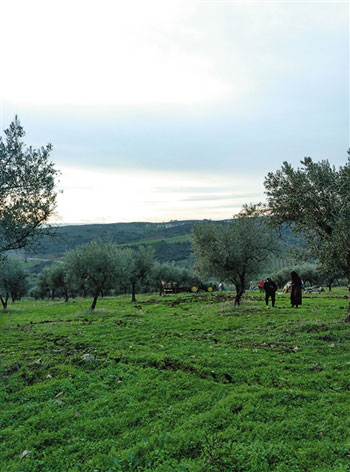
The olive groves of the Romeu estate cover thousands of hectares. Photo by Li Dong, The Beijing News
The Scotch Whisky Association introduces its main production regions. Photo by Sheng Sheng
Grapes in the Douro Valley are still harvested by hand. Photo courtesy of Taylor's Port
Taylor's Port displays its origin-designated product "Port wine." Photo courtesy of Taylor's Port
Good wine comes from good grapes. To grow good grapes, Europeans actually "stole" terracing techniques from China.
In Portugal's Douro Valley, a Beijing News reporter saw terraces stretching across 30-degree slopes, as if standing in a mountainous vineyard in China. This is where Europe's most famous "Port wine" is produced - remote yet modern, both European and Chinese.
From October 20 to 25, at the invitation of the European Commission's Directorate-General for Agriculture and Rural Development, a Beijing News reporter visited a series of farms in the UK and Portugal. Here, with its geographical indication certification system and a mindset that upholds tradition while constantly innovating, the modern agricultural paradigm is continually renewing itself. Vlandas, a representative of the Directorate-General for Agriculture and Rural Development, introduced that the EU currently has more than 3,000 agricultural products that have passed certification, with an average selling price 2.33 times higher than comparable products. "It not only protects the authenticity of origin products, but the market value also mobilizes the enthusiasm of agricultural producers." For rural China, where land is constantly being transferred and new agricultural capital is continually entering, this provides a reference model.
A Family Olive Estate
Growing, production and sales all handled on their own
Olive oil, called "God's nectar," has a cultivation history of more than 200 years in Portugal. In the mountainous area north of the Douro Valley lies Romeu, Portugal's oldest olive-growing estate. The family estate, covering thousands of hectares, was founded in 1874, has been passed down for more than 5 generations, and has successfully become a World Cultural Heritage site.
Joao Bravo, the fifth-generation heir of the Romeu estate, inherited the vast business after graduating from university and owns about 60 branch companies. Bravo told a Beijing News reporter that the estate uses organic farming methods for all cultivation and production, uses no chemicals whatsoever, employs conservation tillage methods, and has introduced a pest and disease control system. "Obtaining the protected designation of origin means we must produce organic olive oil within an approved scope and cannot add chemical elements during the cultivation or extraction process."
Portugal's olive oil industry mostly follows a cultivation - processing plant - brand company industrial chain model, in which more than 500 processing plants in Portugal purchase olives from more than 1,000 cultivation estates for de-bittering, then commission more than 100 olive oil sales companies for distribution.
But on the Bravo family estate, the origin-certified olive oil follows an integrated industrial chain model combining cultivation - production - sales. The olives are sent to different processing plants under the family's ownership for pressing, bottling and packaging, then sold nationwide. "We are looking for import-export partners to sell organic olive oil to the Chinese market," Bravo said.
Scotch Whisky
Peat and oak barrels determine the distinctive taste
Scotch whisky is a pillar industry of UK beverage consumption, with 90% of its products sold to more than 200 countries and regions, contributing more than 38 billion yuan in export value each year.
LinedesayLow, an adviser to the UK's Scotch Whisky Association, told a Beijing News reporter that authentic Scotch whisky is produced only in Scotland itself, uses only water, yeast and grain as raw materials, and is extracted through a unique distillation process. It must be aged in oak barrels for more than 3 years to ensure its original taste and an alcohol content of more than 40%. The secret to Scotch whisky's distinctiveness lies in peat and oak barrels.
When roasting germinated barley, peat from Scottish bogs is usually used. Smoking with peat from different regions gives the whisky different flavors. The barrels used in brewing are second-hand barrels imported from the United States, Canada and elsewhere. "North America generally uses new oak barrels to add sweetness to the liquor, so they are not reused, but the whisky brewing process precisely needs this kind of barrel without off-flavors," LinedesayLow explained.
Since 2008, the EU has stipulated that Scotch whisky is a geographical indication product in EU countries, but in recent years it has been plagued by counterfeits. In 2014, 150 samples of Scotch whisky were taken globally for testing, and 75% were found to be fake. According to the introduction, when authentic Scotch whisky is bottled, part of the neck is left empty, and the label is applied relatively neatly. If whisky is found to be filled especially full or the label is not aligned, it is rather suspicious.
Port Wine Base
Human treading controls the sweetness of the grape juice
The Douro Valley in the mountainous area of northern Portugal is the world's oldest vineyard production region, with a winemaking history of more than 2,000 years. It is the only place of origin for the most representative origin product, "Port wine," and this single item alone generates annual sales of as much as 370 million euros.
On October 30, a Beijing News reporter, together with representatives of the EU agriculture department and the management of Taylor's Port, came to this river valley, which has been purchased and contracted by numerous wineries. On the steep slopes, cultivation bases and terraces bearing logos can be seen everywhere, and the mountain viticulture techniques here were introduced from China.
Antonio, chief viticulturist at Taylor's Port, introduced that the soil base of the Douro Valley is mostly full of shale, and grape yields have always been low. Several years ago, when they went to California in the United States for an inspection, they found that a Chinese businessman's vineyard had adopted a terraced planting model, so they introduced it to the Douro Valley. "Most of the Douro Valley consists of slopes with a 30% gradient, and currently more than 80% of the vineyards have adopted terraced planting."