Sleeping fish are good money-makers, and the farming returns are very substantial
Program highlights: This is a campaign to move southern fish north. This is a factory that creates a dream journey for fish. He is the dream-maker for fish. In 2014, he transported live fish from Guangdong to more than 50 cities across the country, with sales of nearly 2 billion yuan.
Foshan, Guangdong, is one of the most developed freshwater fish farming regions in China.
This is the moment of harvest. A 6-mu fish pond will yield 50,000 jin of sea bass. This is the return for 8 months of hard work, and the purchase price for the whole pond of fish reaches 1 million yuan.
Chen Jing, an aquaculture farmer in Foshan, Guangdong: There is money to be made. These past few years, farming fish has been profitable, and farmers are all doing well.
Bai Junjie, a researcher at the Chinese Academy of Fishery Sciences: For sea bass, or California sea bass, the current national farming output is about 340,000 tons, but Guangdong alone accounts for 230,000 tons, and Guangdong is mainly concentrated in the two areas of Shunde and Nanhai, both in Foshan, so the output here equals two-thirds of the national total.
The delicacy in front of you may well come from a thousand miles away. Of every three sea bass you eat, two come from Foshan. Yet who raises these fish, and who carries this ordinary delicacy across all of China to the dining tables of the Chinese people?
In China's aquaculture industry, one person's actions steer the direction of the entire industry.
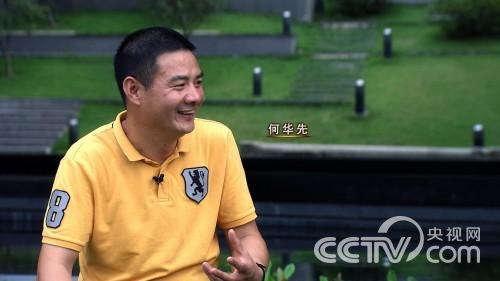
In 2014, He Huaxian transported live freshwater fish from Guangdong all the way north to more than 50 cities across the country, with the longest transport time exceeding 50 hours and a survival rate of over 99%. This record is the record of the entire industry. In 2014, his company's transaction volume approached nearly 2 billion yuan.
The prelude to moving southern fish north has only just begun. A journey of a thousand miles begins with this bucket. From this moment on, the fate of these fish is closely tied to this bucket.
He Huaxian: Do you see that? He is using a bucket now, and he still needs to add some water.
Reporter: Still need to add more water, right.
From the pond edge to the shore is no more than 10 m. People first add water to the bucket, then strain the water out when weighing.
Reporter: Is it heavy?
Fishing worker: This? Heavy.
Reporter: Can you carry it alone?
Fishing worker: No.
Reporter: Why not pour out the water inside, so it would be easier to carry?
Fishing worker: No way.
No matter how heavy it is, people still insist on carrying fish in buckets with water. This is a rule passed down by word of mouth in Foshan's aquaculture industry.
The moment fish leave the water is like a person suddenly being startled. After a chaotic struggle, many fish end up bruised and battered.
He Huaxian: If you do not bring water up, its tail turns very red, red from being banged, and when it jumps up like this, the spines stand up, and the fish stab each other.
Reporter: The scales have all fallen off this fish.
He Huaxian: The scales have all fallen off, yes.
A fish with wounds on its body cannot travel far. Add water to the bucket, and the fish calm down, and the friction between them becomes smoother.
He Huaxian: This first step is the most important. If this step is not done well, it is impossible for the fish to last 50 or 60 hours, unless you only sell in nearby markets and cannot transport them far away to sell.
Reporter: Where will these fish be sent?
He Huaxian: These go to Beijing and Xi'an.
Reporter: Then roughly when will they arrive in Beijing?
He Huaxian: The night after next.
Reporter: The night after next?
He Huaxian: Yes.
Reporter: How long does the drive take, equivalently?
He Huaxian: 36 hours on the road.
Many years ago, people were used to carrying fish in baskets that let water drain out, and fish handled this way could only be sold nearby. Even today, many aquaculture areas in China still feel there is no need to carry fish together with water. Yet how far a fish can travel is already decided from the moment it leaves the water. If southern fish are to be moved north, every step must link together perfectly. He Huaxian requires workers to handle the fish with water throughout the entire process. Under He Huaxian's lead, "water-assisted handling" is now a rule strictly followed by Foshan's aquaculture industry. A shift in people's thinking in one region has thus driven the development of an entire local industry.
This place is about to enter the busiest moment of the day. More than a dozen kinds of fish collected from various pond edges in the morning arrive one after another, lining up to enter.
Yet the fish that were still lively in the morning have already undergone a wondrous change after an hour or two of driving.
Reporter: This fish, as soon as you grab it.
He Huaxian: Be careful, it can prick your hand.
Reporter: This fish, as soon as you grab it, stays very obediently in your hand.
He Huaxian: Yes.
The fish that were still jumping around in the morning can now be grabbed in your hand with ease.
Not only that, after a few hours, these fish will also gradually enter a dream state, and at the same time begin their journey north. After a sleep lasting up to 50 hours, they will wake up at their destination a thousand miles away, and then hop off the truck lively and jumping, as if time had never passed over them.
This is a factory that does not stop work 365 days a year. By creating a dream journey for fish, in 2014 this place generated a transaction volume of nearly 2 billion yuan.
This is also a beautiful dream that a young man from Fujian, He Huaxian, would not have dared to imagine 20 years ago.
He Huaxian: Before coming to Guangdong, we basically had no money.
He Huaxian's wife, Lin Fang: Before, we could not even come up with 100 yuan.
In 1996, 28-year-old He Huaxian from Fujian sold the ring his wife had brought as part of her dowry to scrape together the travel fare to Guangzhou. On that trip to Guangzhou, he discovered a business opportunity. Back in Fujian, He Huaxian sold the last valuable item his wife had brought as part of her dowry.
He Huaxian: I told her like this, I said take out that bracelet and sell it, and after selling it, I said we would gather some money to go to Guangdong.
He Huaxian's wife, Lin Fang: At the time, I actually did not dare tell my own family that I had sold the ring and sold the bracelet. I did not dare say it. If you went back and told your family, the folks back home would look down on you.
Reporter: Would your parents also feel heartache, thinking you married poorly?
He Huaxian's wife, Lin Fang: They would.
If selling her dowry to support her husband's business venture is compared to an investment, then time bears witness that this was the most richly rewarding transaction in Mrs. He's life.
He Huaxian: I seem to have said something before. I said before that I wanted to buy three jin of gold for her.