Super Rice at 20: Yuan Longping Rests Beneath the Rice
Original title: Looking back at super rice after 20 years
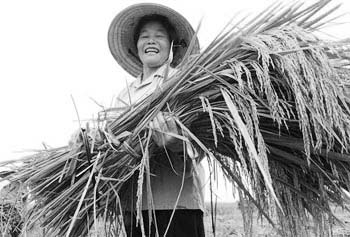
Super Rice
In 1996, the Ministry of Agriculture launched the "China Super Rice Breeding Program," and in 2005 began implementing the Super Rice New Variety Selection, Breeding and Demonstration Promotion Project. Over 20 years, super rice has repeatedly set rice yield records and made major contributions to safeguarding our country's food security. However, last year's rice crop failure in Anhui triggered some public doubts about super rice.
In the course of their investigation, reporters found that while the public pays keen attention to "super rice," there are also misconceptions. To this end, reporters conducted in-depth interviews to fully decode China's super rice.
Doubts
Is high-yield rice the same as super rice? Was the failed rice crop in Anhui a super rice variety?
Response: High yield does not equal super; super rice is the "top student" among rice varieties, and cannot bear the name without Ministry of Agriculture certification
Super rice, super hybrid rice, super rice - there are various ways of saying it. Which one is actually the most accurate?
"Super rice varieties refer to new rice varieties bred through special technical routes and other approaches. They show substantial yield increases over ordinary rice varieties while also taking quality and resistance into account." Cheng Shihua, director of the China National Rice Research Institute, explained it this way: "Terms like 'super rice' and 'super hybrid rice' are all inaccurate. The only proper name is 'super rice.'"
Cheng Shihua told reporters that the failed rice crop in Anhui last year was not a super rice variety. "High-yield rice does not equal super rice. Only those that meet the requirements for high yield, good quality, resistance and wide adaptability, and have been certified by the Ministry of Agriculture, have the 'title' of super rice. All other rice labeled with the name 'super' is not authentic. The rice variety that failed in Anhui was never reviewed and certified by the Ministry of Agriculture."
To become a super rice variety, there is a strict procedure. First, a certified rice variety undergoes actual harvest yield measurement on a 100-mu plot, then the Ministry of Agriculture organizes experts to conduct review. Only after meeting all the indicators for yield, quality, resistance and others stipulated in the "Measures for the Confirmation of Super Rice Varieties," and after being announced by the Ministry of Agriculture, can it be called super rice.
Since 2005, the Ministry of Agriculture has launched the "Super Rice New Variety Selection, Breeding and Demonstration" project. After 10 years of cultivation, China has confirmed a total of 146 super rice varieties, of which 28 have had their title withdrawn, and 118 varieties are currently being promoted and applied in actual production.
In many people's minds, super rice seems to be just high-yield hybrid rice, and this understanding is also wrong. Super rice varieties include both indica rice and japonica rice; both conventional rice and hybrid rice. As long as they meet the various requirements of super rice review, no rice type is excluded. Among China's existing super rice varieties, conventional rice accounts for 45% and hybrid rice accounts for 55%.
Wang Cailin, director of the Institute of Food Crops at the Jiangsu Academy of Agricultural Sciences, has been engaged in super rice breeding for many years. He describes super rice as the "top student" among rice varieties, and the certification of super rice varieties as equivalent to the "college entrance examination" of the rice variety world.
Doubts
Is super rice not environmentally friendly because it requires high water, high fertilizer and high pesticide inputs? Is the investment in growing super rice very large?
Response: Based on the input-output ratio, super rice differs little from ordinary rice in water, fertilizer and pesticide inputs
Compared with ordinary rice, super rice has an astonishing yield, which has also drawn public doubts: Is the high yield the result of heavy irrigation, heavy fertilizer and heavy pesticide use? Han Hongchang, a 52-year-old farmer from Heheng Village, Sheng'ao Town, Jiangyan District, Taizhou City, Jiangsu, is an "old hand" at growing rice, and he does not agree with this view.
"If the inputs really were that high, we would have stopped growing it long ago." More than 400 mu of land that Han Hongchang contracted and transferred is basically all planted with super rice. He explained to reporters that in terms of the growing period, the super rice variety he grows is sown in May and harvested in October, which is a suitable time; in terms of technology, there is no difference from ordinary rice; and in terms of inputs, it is about the same.
The Yingtai Agricultural Machinery Farmers' Professional Cooperative in Datun Town, Zhenlai County, Baicheng City, Jilin, has planted 3,000 mu of super rice. This year is already the 6th year, with an average yield of 700 kg per mu. Chairman Ren Zhiguo told reporters: "Super rice has high yield, good disease resistance, supporting technology, low inputs, and is very easy to grow."
"Saying that super rice is grown with high water and high fertilizer is unscientific." Zhu Defeng, a researcher at the China National Rice Research Institute, believes that due to differences in the growth and yield formation characteristics of super rice varieties, super rice cultivated in different types and different regions has different requirements for supporting technologies. Therefore, there will be differences in inputs such as water use, fertilizer application and pesticide application, and it cannot be generalized.
"To calculate the water, fertilizer and pesticide inputs of super rice, scientifically speaking, we need to calculate unit efficiency and the input-output ratio." Cheng Shihua gave an example: for two rice varieties with yields of 500 kg and 800 kg, the water, fertilizer and pesticide inputs required will certainly differ. In absolute input terms, rice yielding 800 kg will certainly be higher than rice yielding 500 kg. "We should calculate the water, fertilizer and pesticide inputs required per 100 kg of output and compare among varieties. The water, fertilizer and pesticide inputs of super rice varieties are not much different from ordinary rice, and some are even less." Cheng Shihua said.
Doubts
Does super rice pursue only high yield and not quality? Do farmers increase production without increasing income?
Response: Super rice varieties are not only high-yield but also high-quality, helping farmers increase both production and income
"What can become super rice is basically high-quality rice that meets mass-market requirements. It is just that the rice grades differ and the palatability differs." Xie Hua'an, an academician of the Chinese Academy of Sciences and former president of the Fujian Academy of Agricultural Sciences, told reporters that it is unscientific to think that super rice has only high yield and no quality.
Since the 1990s, China began breeding super rice varieties. To ensure national food security, high yield was taken as the primary characteristic at that time. In recent years, as people's requirements for rice quality have increased, breeders have placed quality and high yield on equally important footing, greatly improving the quality of conventional japonica super rice. At present, more than 50% of China's super rice varieties meet high-quality requirements, and the rest are also at above-average levels.
"Nanjing 9108," bred by Wang Cailin, is a high-yield, high-quality super rice variety. As soon as it came out in 2013, it won first prize at the National Excellent Eating Quality Japonica Rice Evaluation Conference. Today, its planting area in Jiangsu has reached 200,000 mu.
In the 600 mu of rice fields of farmer Li Dejian in Diaoyu Town, Xinghua City, Jiangsu, "Nanjing 9108" is the main variety. Old Li said that "Nanjing 9108" can yield up to 800 kg per mu, and after the paddy is processed into rice, it can sell for 6 yuan per jin. "Growing super rice not only produces more grain than ordinary rice, but the milling yield is also higher than ordinary varieties, and the rice quality is good too."
High-yield, high-quality super rice has also gained market recognition. This year grain prices fell, and many farmers worried that grain purchasing departments would not buy, but Han Hongchang, who grows "Nanjing 9108," was not worried at all, and even sold at a higher price. A rice enterprise from Shanghai came to Yancheng to purchase "Nanjing 9108" at 3 to 5 fen above the protective price, and an enterprise in Lianyungang even offered a purchase price of 2 yuan per jin.
People generally believe that Northeast rice tastes good. In fact, a lot of Northeast rice is also processed from super rice. At present, super rice accounts for nearly 1/3 of rice planting in Northeast China, among which the super rice variety "Longjing 31" has a planting area exceeding 17 million mu, setting the highest application record for a single rice variety. "Requirements for the taste of rice differ from place to place, and personal preferences also differ, but overall, the quality of super rice can meet mass consumer demand." Cheng Shihua said.