Jingmen farmer teaches himself chicken farming techniques and leads villagers to prosperity
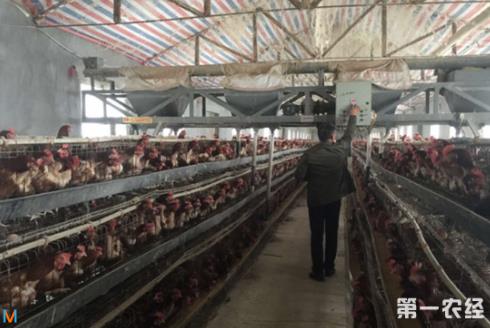
Photo: Chicken farm in Suiwan Village, Dongqiao Town
Suiwan Village, Dongqiao Town, Zhongxiang City, Jingmen, Hubei, is located in a remote hilly area with inconvenient transportation, and is a well-known poverty-stricken village. Of the more than 200 farming households in the village, most go out to work to earn money. Since 2006, Hu Xiangping, Party branch secretary of Suiwan Village, Dongqiao Town, Zhongxiang City, has led the villagers in raising chickens, helping many impoverished households in the village shed their "poverty caps" and embark on the road to prosperity.
On the afternoon of November 13, a reporter from Jingmen Evening News and companions drove to Suiwan Village, and at the Lvyuan Livestock and Poultry Breeding Professional Cooperative not far from the village committee, they met Hu Xiangping, who was inspecting the growth of laying hens in the greenhouse.
Hu Xiangping, now 44 years old, began household farming at the age of 18. At first, he asked local experienced specialized pig farmers for advice on pig-raising techniques, but unexpectedly met with repeated rejections. In a fit of pique, he went to Xinhua Bookstore and spent 200 yuan on a batch of books about household farming, and began studying on his own at home. Three years later, he had basically mastered pig-raising and chicken-raising techniques and had developed a set of farming experience. Now he often passes on the farming techniques he has mastered to villagers through training classes. Over 26 years in farming, the pigs and chickens he raised have almost never suffered from epidemics, which is also the main reason he has kept choosing this industry for so many years. In 2003, he specially established the Zhongxiang City Lvyuan Livestock and Poultry Breeding Professional Cooperative, absorbing more than 200 local members engaged in pig farming, fish farming and chicken farming, spread across several surrounding villages, leading the villagers to prosperity. In 2006, because pig farming carried relatively high risks, Hu Xiangping began to focus on chicken farming. At the beginning, he purchased 7,000 red-shell laying hens from other places, and in that same year made a net profit of 7,000 yuan. Because the village is located in a hilly area and is suitable for free-range chickens, he then purchased white-feathered broilers and began free-range raising. Because of their tender meat and good taste, these chickens were in short supply on the market. Last year, Hu Xiangping's laying hen flock reached 50,000, and by the end of the year he earned 500,000 yuan. Under his leadership, 94 of the village's 200 households were raising chickens, and the village's total chicken flock reached more than 100,000. Because of the good market conditions last year, villagers raising chickens in the village made profits ranging from 500,000 yuan at most to 20,000 yuan at least. Over the past two years, villagers who had been working elsewhere have returned home one after another to join the cooperative and raise chickens with Hu Xiangping. By the end of last year, more than half of the households in the village had bought cars, many poor households had escaped poverty, and their lives had greatly improved.
At the beginning of last year, through market research, Hu Xiangping learned that laying hens hatched by a poultry company in Ningxia had a high egg production rate, good disease resistance, and a low mortality and culling rate, so he purchased 11,000 of them to raise. Judging from a year of raising and sales, although these chicks cost 1 yuan more per bird than other laying hens, based on sales, each bird could earn 4 yuan more. This year, villagers in the village introduced 53,000 of this type of laying hen for breeding.
Through years of accumulated contacts, Hu Xiangping, with good reputation and high-quality breeds, seized the market. The cooperative has established long-term cooperative relations with merchants in nearby Shayang, Jingshan, Yicheng and other places, so villagers do not worry about selling their laying hens and eggs. At present, Hu Xiangping's and the cooperative's eggs and the laying hens to be culled each year have almost all long since been reserved by merchants.
Speaking of the future development of the laying hen industry, Hu Xiangping is full of confidence. He said: "Next, the village will guide more villagers to raise chickens and prosper. At the same time, we will plant oil tea trees on wasteland such as the village's sandy and gravel fields, to fundamentally solve the problem of insufficient woodland for free-range chickens. In terms of sales, in the future we will create our own brand for the laying hens and eggs we produce, register trademarks, and expand sales through online sales."