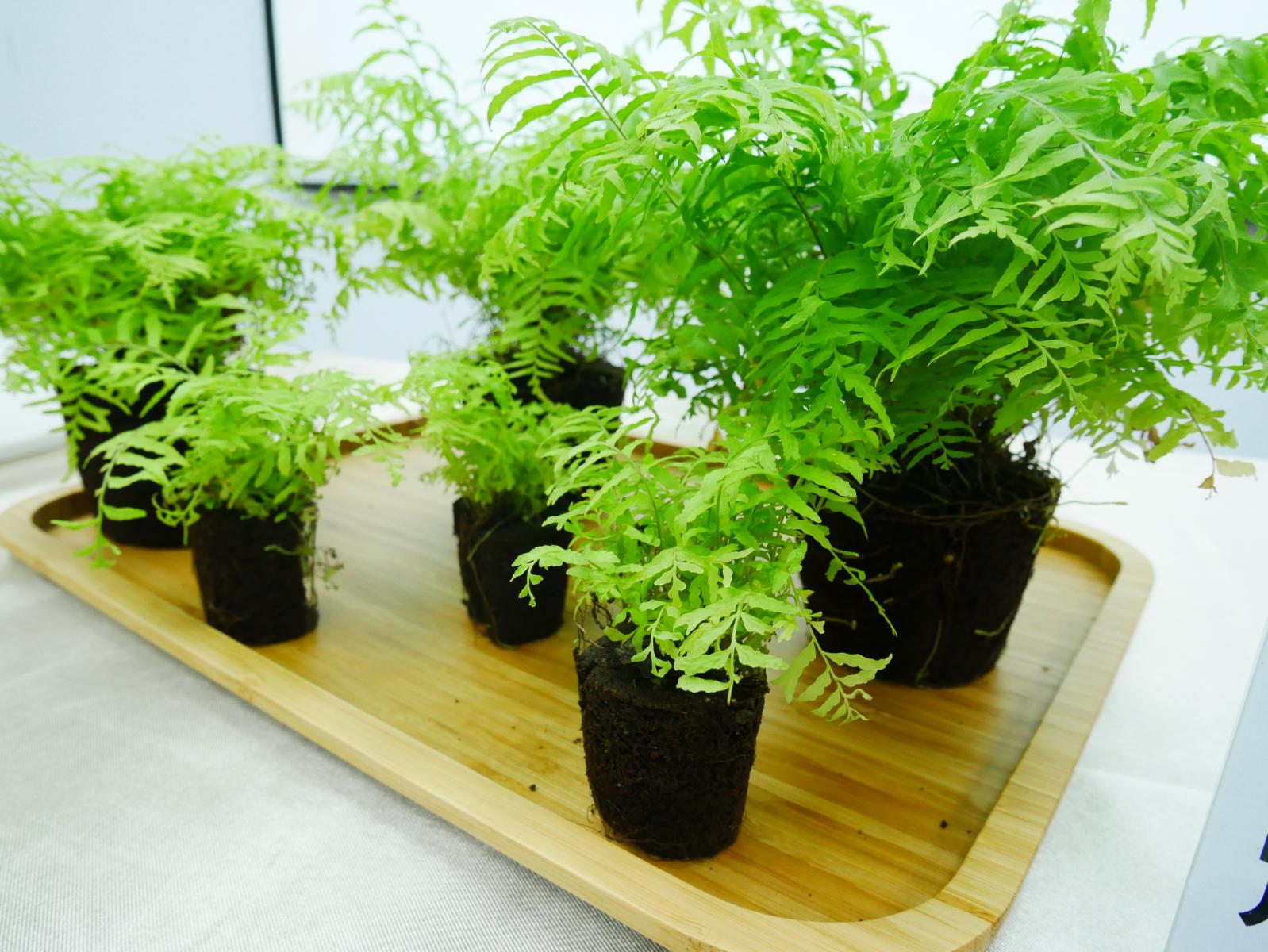
Nephrolepis 'Taitung No. 1' was bred by the Taitung District Agricultural Research and Extension Station. What are the characteristics of this new cultivar?
In recent years many people grow plants indoors to relieve stress, but sometimes if they are not cared for well the plants may wither and die. On the 23rd, the Taitung District Agricultural Research and Extension Station released Nephrolepis 'Taitung No. 1'. The plant tips have antler-like branching, the fronds are fine and delicate, and it has good weather tolerance and can be produced year-round, making it suitable for
In recent years many people grow plants indoors to relieve stress, but sometimes if they are not cared for well the plants may wither and die. On the 23rd, the Taitung District Agricultural Research and Extension Station released Nephrolepis 'Taitung No. 1'. The plant tips have antler-like branching, the fronds are fine and delicate, and it has good weather tolerance and can be produced year-round. It is suitable for indoor potted-flower viewing, or for growing as a green globular body into a plant in a bottle.
'Taitung No. 1' was selected from a bud sport of the fishtail fern
Chen Hsin-yen, director of the Taitung Station, said that Nephrolepis 'Taitung No. 1' was bred and cultivated by selecting from a bud-sport individual of the fishtail fern (Nephrolepis biserrata 'Furcans'), and was assessed using DUS (Distinctness, Uniformity and Stability) testing. Last year scholars and experts were invited to review it and it passed.
Li Wen-nan, assistant researcher at the Taitung Station, said that besides having the same antler-like branching of the fronds as the fishtail fern, 'Taitung No. 1' is shorter, stockier and more compact than the fishtail fern, with a height of about 30 cm, making it suitable for potted-flower viewing. After the old fronds dry out they do not readily fall off, and no spores have been found so far in cultivation, making it relatively easier to keep the environment clean compared with the fishtail fern. He also said that when grown as a potted flower, it only needs a commercially available slow-release fertilizer and a maintained moist environment, and it can grow well even indoors.
Not only potted flowers, but also plants in bottles and terrariums
Chen Hsin-yen pointed out that besides being usable as potted flowers, combination plantings and indoor-plant green walls, the Taitung Station has also developed commercial application models, including terrariums and plants in bottles. Li Wen-nan explained that by simply inducing its green globular body to grow and placing it in a sterile culture medium, no care, watering or fertilizing is needed, and it is estimated that after being made into a plant in a bottle it can grow for at least 3 months or more.
Li Wen-nan said that the current domestic market for fern potted flowers is not large, and he hopes that through the establishment of new cultivars more people will be willing to appreciate the beauty of ferns. Besides contacting potted-flower businesses about technology transfer, the Taitung Station is currently also in contact with terrarium businesses, hoping that by releasing new cultivars it can expand the fern market at home and abroad.