Why grow wood ear mushrooms in greenhouses? They thrive even better in rice paddies
Original headline: Seven post-90s young people from Heilongjiang innovate wood ear mushroom cultivation technology, giving people a "fresh new look"
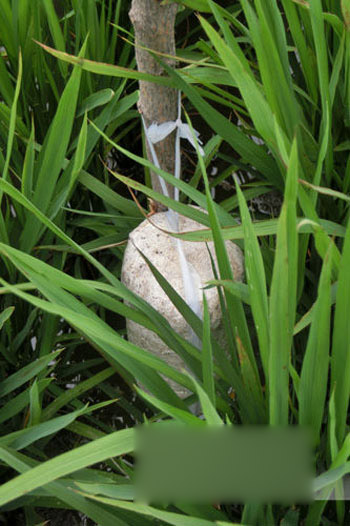
Fungus bags set up in the rice paddy.
Setting up wood ear mushroom fungus racks in the field.
Wood ear mushroom fungus bags.
Team members practicing in the field.
If you still think wood ear mushrooms are only produced in bulk in greenhouses or factory buildings, then you are "out" of touch. Nowadays, seven post-90s college students from Northeast Agricultural University have developed a new technology for cultivating wood ear mushrooms in rice paddies, achieving diversified planting of the land while using the mutually beneficial and symbiotic relationships between plants to return wood ear mushroom cultivation to nature.
"The oxygen released by the rice can promote the growth of wood ear mushrooms, and the carbon dioxide released by the wood ear mushrooms is exactly what the rice needs." Jia Qi, a sophomore in the College of Food Science and one of the seven team members, brought up their innovative wood ear mushroom "cultivation formula" as soon as he met the reporter.
Jia Qi told the reporter that the idea of cultivating wood ear mushrooms in rice paddies came from a rice farmer at the grassroots level. One day in the summer of 2012, students from the College of Food Science went to the off-campus practice base in Wuchang for an internship. During that time, a rice farmer asked the accompanying teacher how to use the idle space in the paddy field to grow something else and increase income. After returning to school, the accompanying teacher came up with the idea of using the furrows of rice paddies to cultivate wood ear mushrooms, and assigned this "task" to seven people including Jia Qi, a freshman who had just enrolled in 2013.
Jia Qi said that when they first took on the "task," they were very confused. The oldest among them was 22 years old, and the youngest was only 20. Every day, under the teacher's guidance, they busied themselves with one thing after another, not knowing what they truly wanted. Later, he joined the school's Enactus club and came into contact with students from some other domestic institutions. He found that everyone in this club, which brings together innovation, public welfare and entrepreneurship, was looking for their own path to entrepreneurship, and some had even already received returns from their innovative ideas.
"Developing a handmade essential oil soap can bring in 10,000 to 20,000 yuan a year, which is a huge amount of wealth for a college student still in school." Jia Qi said that using the knowledge they have learned to find a path to entrepreneurship should be the dream of every college student.
After that, the seven post-90s students from different majors would gather on campus after class and meals to study together the method of cultivating wood ear mushrooms in the furrows of rice paddies. After many rounds of practice and field research in wood ear mushroom-growing areas within the province, they finally, under the teacher's guidance, developed a wood ear mushroom cultivation technology in which wood ear mushroom fungus substrate is combined with suitable nutrients, wrapped in plastic bags, and hung in the furrows of rice paddies. Jia Qi explained that although this kind of wood ear mushroom, which grows similarly to those in the wild, has a yield of about 600 jin per mu, about 300 jin less per mu than wood ear mushrooms cultivated in greenhouses or factory buildings, its flesh is thick and it is rich in nutrients. The price can reach more than 90 yuan per jin at its highest, about double that of ordinary wood ear mushrooms.
At present, these seven post-90s students are thinking about establishing a company, with the tentative name "Fresh New Look." Jia Qi said that two venture capital companies are now interested in their wood ear mushroom cultivation technology and have expressed a willingness to invest. Jia Qi said that at present, they want to get the company established, improve all the systems, and then discuss major development plans. (Reporter Sun Yingxin)