IoT Moves into the Fields, Agriculture Ushers in a Technological Revolution
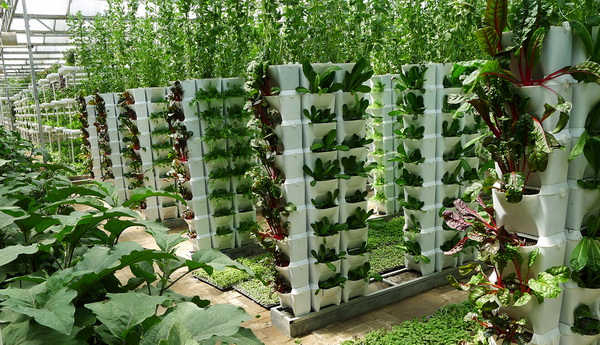
Install a tiny sensor, and the vegetables in the greenhouse will start talking: humidity is too low, temperature is too high, nitrogen, phosphorus, and potassium are deficient. No matter where you are, with a click of the mouse or on your phone, a greenhouse thousands of miles away can automatically water and fertilize the fruits and vegetables. Scan a QR code, and you can know everything about the "past and present life" of vegetables and fruits from greenhouse to dining table... This is not an imaginary scene, but what is actually happening at the Dezhou Longteng Vegetable Planting Cooperative.
The technology is being researched by the Institute of Science and Technology Information of the Shandong Academy of Agricultural Sciences. By grafting IoT onto agriculture, they are changing the traditional mode of agricultural production in the fields and enabling people to enjoy safer agricultural products on their plates. "Using the IoT data system to detect in real time physical parameters such as temperature, humidity, pH value, light, soil nutrients, and carbon dioxide concentration in the crop production environment, and to carry out remote monitoring and precise measures, not only saves resources and labor, but also improves product quality and increases economic returns." The project being built by the team of institute director Ruan Huaijun has already turned the above scenarios into reality, but that is not all.
Old Wu's New Weapon
Having raised kelp for half his life, Old Wu, a technician at Weihai Changqing Ocean Science and Technology Company, has had his habits changed by IoT.
Kelp seedlings growing in low-temperature seawater are sensitive to sunlight, and light intensity has become one of the key factors determining the yield and quality of seedling cultivation. For many years, Old Wu followed the traditional method of light intensity monitoring, relying mainly on his own sensory experience and supplemented by on-site measurement with a handheld light meter. Every day, he and his colleagues would from time to time go into the kelp seedling workshop to monitor light intensity. Even with experience, problems such as inaccurate judgment, untimely measurement, and incomplete monitoring points still sometimes led to production accidents such as scorched kelp seedlings or poor growth.
The turning point came in 2013. That year, the Institute of Science and Technology Information of the Shandong Academy of Agricultural Sciences designed an IoT system solution for kelp seedling cultivation.
Now, Old Wu only needs to turn on the computer in his office, or use the large display screen on the wall, to grasp the real-time changes in daily light intensity inside the seedling workshop. Even when traveling on business, he can learn the latest data changes at any time through the mobile phone client and can view on-site video. When light conditions become abnormal, the system automatically raises an alarm, reminding seedling workers to take timely measures.
"IoT is a good thing." The stubborn Old Wu is truly convinced. In fact, who benefits is not limited to Old Wu. At the Dezhou Longteng Vegetable Planting Cooperative, staff members only need to sit in front of a computer to easily handle vegetable greenhouse cultivation. "It can comprehensively measure nearly ten parameters such as air humidity and soil temperature in the greenhouse, and can also control these indicators." Person in charge Huo Chunliang said that through IoT, one person can simultaneously monitor and manage several thousand mu of land in real time.
IoT Is All-Encompassing, and the R&D Is "All-Encompassing"
Whether it is Old Wu's new weapon or Huo Chunliang's "mouse farming," these are not enough to constitute the whole promise of the project "Research and Construction of a Comprehensive Technical Support System for the Entire Agricultural Production Process Based on IoT."
In the plan of project leader Ruan Huaijun, this internet project centers on advantageous industries such as fruits and vegetables, livestock and poultry, and aquatic products, integrating and applying key technologies such as IoT, cloud computing, big data, and the mobile internet, to "promote the transformation and upgrading of advantageous agricultural industries and achieve intelligent production, information-based management, transparent products, and maximized benefits."
Therefore, the project includes not only physical measurement and control equipment and remote video, but also virtual apps, remote roaming, and agricultural IoT systems such as the "Smart Agriculture Cloud Platform," "Smart Agriculture WeChat Platform," and "Smart Agriculture Traceability Platform."
But IoT is all-encompassing. Even for a single specific industry, different devices must be designed and developed, and devices with different standards must be connected. Developing these is not easy. In terms of measurement and control equipment alone, in order to enable the "invisible hand" to control crops and aquatic products, Ruan Huaijun's research group needs to develop sensor acquisition nodes, transmitting equipment, and control equipment. These must also be deployed at production sites and used in the fields to intelligently collect and monitor various types of agricultural production information such as farmland soil, crop growth, pest and disease disasters, and near-surface meteorology, and to transmit data in real time to the central platform through multiple channels such as GPRS, 3G, WiFi, and wired networks. This enables all-round, multi-angle perception of pre-production, mid-production, and post-production agricultural information, and provides a reliable source of information for agricultural production, operation, management, decision-making, and services.
What reassures this institute director is that the "brain" formed by the institute's team of PhDs and master's graduates in software and hardware from different fields can develop the equipment needed at any time according to project progress.
China's First Customized Leisure Agriculture E-commerce Platform
In recent years, among urban white-collar workers, phenomena such as "contracting planting," "claiming," and "contracting raising" of agricultural products such as vegetables, fruits, livestock, and poultry have continued to emerge. After analysis, Ruan Huaijun's team believed that the pain point behind this is still the issue of agricultural product safety. Therefore, the team designed a customized leisure agriculture e-commerce platform solution based on IoT, whose core concept lies in the three words "private," "enjoy," and "+."
"'Private' represents autonomy, exclusivity, and customization on demand; 'enjoy' represents green, health, and joyful experience; '+' represents integration, infinity, and value-added services. Relying on the 'Private Enjoy+' platform, the effects of 'small-scale precision management, controllable and trustworthy, exchanging quality for quantity, and combining harvest with recreation' can be achieved. The application of IoT makes 'what you see is what you get' in agricultural production a reality. The 'Private Enjoy+' platform is in fact a reconstruction and re-creation of the traditional agricultural industry chain and value chain, and this is precisely a typical application of 'Internet + Agriculture.'" Ruan Huaijun said.
At enterprises such as Jinan Jiahe Tea Industry Co., Ltd., Shandong Chuangxinyuan Agricultural Technology Development Co., Ltd., and Shandong Chuying Ecological Agriculture Co., Ltd., leisure agriculture operation templates such as "Private Enjoy Tea Garden," "Private Enjoy Vegetable Garden," "Private Enjoy Orchard," and "Private Enjoy Free-Range Chickens" are being built, which is the implementation of the "Private Enjoy+" concept.
"Our goal is to realize the four '100%' guarantees of the 'Private Enjoy+' platform: 100% independent customized planting and breeding, 100% agricultural products belonging to their owners, 100% full-process traceability of agricultural products, and 100% green and healthy agricultural products." Ruan Huaijun said.