What new changes are there in agricultural subsidies next year?
Original title: Four major changes in agricultural subsidies next year
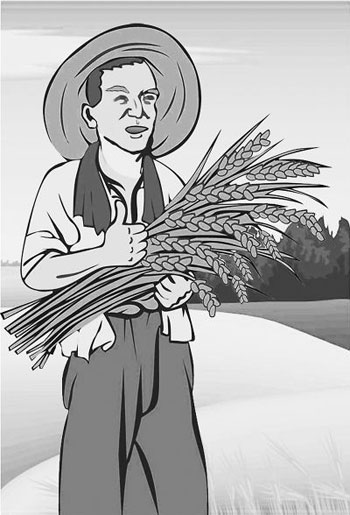
Illustration by Cheng Siyao
The Notice on Adjusting and Improving Policies Related to Agricultural Comprehensive Development Supporting Agricultural Industrialization Development, issued by the National Agricultural Comprehensive Development Office, explained the changes in agricultural subsidies for 2016. Among them, what changes are there in the application for agricultural subsidies? What benefits are there for agricultural business entities?
Change One
Large agricultural households can also apply for projects
No longer required to be an independent legal person
The new policy stipulates that new types of agricultural business entities such as specialized large households, family farms, and socialized service organizations recognized or registered by relevant departments can all be included in the scope of support for industrialized operation projects, and are no longer subject to the restriction of independent legal person qualification.
Interpretation:
The threshold for applying for agricultural subsidies has been further relaxed. For example, it does not matter if you have not registered with the industrial and commercial department; as long as you are registered with the relevant department, it is fine. Large agricultural households and family farms can all apply for projects, and the state's support for new types of agricultural business entities will increase more and more.
Change Two
Applicants no longer need to have "two consecutive years of profitability"
For farmers' cooperatives and leading enterprises, as long as they have been registered with the industrial and commercial department for more than 1 year and have sustainable operating capacity, they can apply for industrialized operation projects. But in the past, many people reported that preparing the materials was indeed a troublesome matter.
This policy stipulates that the following requirements are removed from application materials: "more than 70% from the enterprise's place of registration, two consecutive years of profitability, asset-liability ratio, bank credit rating, 'three no-debts', net value of fixed assets", etc. In other words, the application materials are simpler, and agricultural business entities can free up more energy to make their projects more refined and solid.
Change Three
Regarding the investment of fiscal funds
Farmers can also hold shares
This policy makes it clear: part of the investment of fiscal funds is encouraged, with farmers, or farmers through cooperatives, holding shares in leading enterprises.
Generally speaking, the country's agricultural industrialization operations adopt organizational forms such as "leading enterprise + farmers" and "leading enterprise + specialized cooperative economic organization + farmers". Now farmers and enterprises are integrated, but the roles of holding shares and not holding shares are very different. If farmers can hold shares in the invested funds, it means they can enjoy dividends. If the enterprise is run well, farmers can both receive wages and dividends, and the returns will certainly be much better than just working for the enterprise.
Change Four
Encourage all provinces to implement "build first, subsidize later" for funds
The new policy proposes that all provinces may implement "build first, subsidize later": after the project is approved, it is implemented first and reimbursed later, and reimbursement is made only after the project is fully completed and passes inspection by the county-level fiscal department and agricultural development agency.
Agricultural economic organizations do not need to wait for money before building. After a successful application, project construction can begin immediately; as long as all kinds of receipts are kept, they will all be reimbursed when the project is settled. However, early-stage costs such as project feasibility studies, preliminary design, and environmental assessment cannot be reimbursed.
Agricultural industrialization projects are generally organized, managed, and implemented specifically by the agriculture (agricultural economics) departments of each city and county or by relevant provincial-level units, and the agriculture departments of each province (city, district) shall do a good job in supervision and inspection. (Yang Simeng)