Three shortages in beef cattle farming, and the agricultural hub faces four constraints
Original title: Beef cattle: the "hub" of agricultural production is ailing
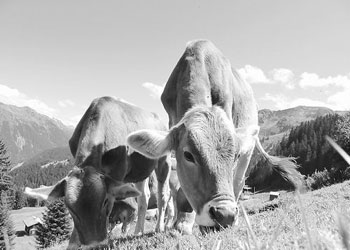
Beef cattle farming (file photo)
China's beef cattle production has grown from nothing, and beef output has increased by 34% since 2000. Although beef consumption accounts for a relatively low share of meat consumption, as people's living standards continue to improve, beef, as a "semi-luxury," has been increasing its share in residents' meat consumption in recent years. The net income per head of beef cattle sold has risen rapidly, while breeding costs have also increased very quickly.
At present, what prominent difficulties does China's beef cattle production face? What are the future trends, and how should they be addressed? Our reporter interviewed Wang Mingli, a researcher at the Institute of Agricultural Economics and Development of the Chinese Academy of Agricultural Sciences, to look ahead at the development path of China's beef cattle industry and even the livestock industry.
Three shortages and four constraints
Reporter: What difficulties does China's livestock industry face in its development?
Wang Mingli: They are prominently manifested in "three shortages and four constraints." That is, shortages of feed, labor, and capital, and constraints from production costs, breeding land, the ecological environment, and feeding management levels.
The first is the shortage of feed. The security of forage and feed resources, especially feed grain, will continue to plague the development of the livestock industry for a long time. In 2005 and 2007, China's total feed grain consumption was 196 million tons and 205 million tons respectively, accounting for 40.54% and 40.82% of total grain output respectively, and feed demand shows a clear increasing trend. It is predicted that by 2020 and 2030, China's feed grain share of grain will reach 45% and 50% respectively.
The feed grain issue will become the main issue for China's food security. Forage is even more scarce. In recent years, China's imports of alfalfa have grown rapidly, from 0.21 million tons in 2007 and 1.96 million tons in 2008 to more than 880,000 tons in 2014.
The second is the shortage of labor. The impact of the rural labor shortage on the livestock industry has already become widespread.
The livestock industry is a labor-intensive industry with very high labor intensity, and machinery cannot replace it in many aspects. But in recent years, the rapid development of China's urban economy has absorbed a large amount of rural labor into the secondary and tertiary industries, and fewer and fewer laborers are engaged in breeding, with lower and lower quality. Not only that, but hiring costs are also getting higher and higher. In 2014, the monthly income level of migrant workers was 2,864 yuan, an increase of 255 yuan over the previous year.
The third is the shortage of capital. The expansion of breeding scale faces difficulties such as difficult loans, high interest rates, and a large funding gap.
As resource constraints intensify, the prices of various input factors such as feed and energy and labor costs continue to rise, greatly increasing breeding costs and making it a high-investment, capital-intensive industry.
To build a cattle farm, an average of 10,000 yuan in fixed assets is needed per head of cattle, and buying cattle costs another 15,000 to 18,000 yuan per head. Building a 10,000-head cattle farm requires upfront investment of more than 10 million yuan; building a moderate-scale farm with an annual output of 300 to 500 head of fattening cattle also requires upfront investment of more than 500,000 yuan.
At present, there are few loan channels for the breeding industry, a lack of collateral, and great practical difficulties in obtaining loans, with high thresholds and high interest rates. Farmers cannot obtain loans, which directly affects the expansion of beef cattle reproduction.
Reporter: Have production costs constrained the development of the livestock industry?
Wang Mingli: With the accelerated development of urbanization, rising agricultural labor costs, and continuously high feed prices, China's livestock industry has entered an era of comprehensively high costs.
From the end of 2008 to the end of 2014, the prices of compound feed for fattening pigs, broilers, and laying hens rose by 37.5%, 22.7%, and 25.1% respectively. From 2010 to 2012, for each head of live pig sold, the total cost rose by 39.1%, of which labor cost rose by 66%.
Reporter: Can the demand for breeding land be met?
Wang Mingli: The difficulty of obtaining land for livestock and poultry breeding has become an important constraint on standardized scale breeding.
Many regions have begun to restrict the development of the livestock and poultry breeding industry, and approval of breeding land is difficult. The cost of land transfer is high, mostly 500 to 600 yuan per mu per year, and in some areas it has already reached more than 1,000 yuan. In the eastern coastal areas and the Central Plains region, where there are many people and little land, it is even more difficult to transfer a contiguous piece of land.
Affected by the accelerated advancement of urbanization, land use gives priority to meeting the needs of urban construction, and the demand for breeding land cannot be guaranteed. It is very difficult for large-scale farms to lease large areas of land, and lease prices are also climbing steadily, causing livestock and poultry breeding in many areas to have to move to deep mountains and ravines, and models such as raising pigs upstairs and raising chickens underground are also common.
Reporter: What is the relationship between the ecological environment and the development of the livestock industry?
Wang Mingli: The restrictive effect of the ecological environment on the livestock industry is becoming increasingly prominent.
The area of "three degradations" of grassland continues to increase, and the livestock carrying capacity of pastoral areas has surged by more than 3 times compared with the early days of the founding of the People's Republic of China, and the grassland ecology has been severely damaged. In some areas with concentrated breeding, especially in the suburbs of large cities, the Central Plains region, and water network areas, blind development of large-scale farms beyond the carrying capacity of the surrounding environment has caused environmental pollution problems.
Reporter: Has the level of feeding management also affected the development of the livestock industry?
Wang Mingli: China's typical beef cattle production models mainly include traditional grassland grazing and breeding, small-scale farms in agricultural areas, large-scale farms, and fattening of dairy bull calves. Compared with developed countries, there is a large gap in the level of feeding management technology. In particular, persistent efforts should be made in aspects such as grouped feeding, fine management, attention to animal comfort and health, attention to ensuring the supply of high-quality forage and feed, and attention to the promotion and full coverage of advanced and applicable technologies.
Prospects
Reporter: What is the future trend of China's beef cattle farming?
Wang Mingli: It is still difficult for beef cattle farming to change its downward trend. In the future, beef cattle inventories will continue to remain low, it will be difficult for the inventory of fertile cows to recover quickly in the short term, and the supply of feeder cattle will remain tight.
From 2009 to 2014, the benefits of beef cattle farming were relatively optimistic, but the scale of beef cattle farming showed a downward trend. There are two main reasons. First, China's beef cattle farming is mainly based on small household farmers, and expanding scale is constrained by factors such as capital, land, and breeding costs. Second, large-scale farmers are highly motivated, but affected by factors such as the shortage of cattle sources, high calf prices, and the long growth cycle of beef cattle, rapid development is difficult in the short term.
Reporter: How will beef imports and processing develop?
Wang Mingli: Beef imports have grown substantially, and slaughtering and processing enterprises have increased their dependence on foreign sources. From January to August this year, China had already imported 271,200 tons of beef, a year-on-year increase of 27.6%. With the growth of domestic demand, China's beef cattle imports will increase substantially for some time in the future.
Surveys show that when beef cattle slaughtering and processing enterprises purchase domestic fattening cattle, processing at current market prices will result in losses, but beef product prices in foreign countries such as Australia, Uruguay, and Brazil are lower than the domestic market, so enterprises are gradually tending to import foreign beef products for processing, and their dependence on foreign sources is increasing.
Reporter: What other new developments are there in other aspects?
Wang Mingli: Breeding costs continue to rise, and prices continue to rise. Driven by continuously rising breeding costs and beef demand, China's beef cattle sale prices and beef prices will maintain a sustained upward trend.
In addition, the high-end beef cattle industry is gradually developing, which will drive industrial transformation and upgrading. With the acceleration of urbanization and the growth of urban population, the improvement of residents' income levels and consumption levels will promote the continued increase in China's beef consumption, and demand for high-end beef will increase sharply, showing a situation of supply falling short of demand. This will also promote the upgrading, replacement, and transformational development of China's beef cattle industry.