To gain an edge in agricultural operations, it is worth looking at the ten most profitable models
Original title: The ten most profitable operating models in agriculture
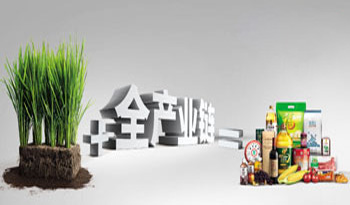
The operating model you choose determines the path of survival and development you take, and agricultural enterprises are no exception. With the loosening of agricultural land transfer policies, the state's continued investment in agricultural projects, and the true meaning behind Document No. 1, for agricultural enterprises this is a challenge and even more an opportunity.
How can you break out of the encirclement and gain a competitive advantage? How can you successfully transform and build your own brand? In-depth research on currently advanced agricultural development models yields the following ten most profitable operating models.
Model one: the COFCO model - mastering the industry chain
As a leading domestic agricultural industry group, COFCO Group has expanded from a single grain and oil trading business to the entire industry chain. By investing in and integrating all fields involved in agriculture, including technology, information, seeds, financial services, networks, channels, and terminals, it enables every link in the industry chain to receive comprehensive investment and service development. Rice, flour, oil, sugar, meat, milk, feed, deep-processed corn products, tomato paste, wine and others have all achieved a certain market scale and influence in China.
Interpretation: Integrating the industry chain is the foundation, but mastering every major link of the industry chain is the real key. Many agricultural enterprises are involved in major fields such as rice, flour, grain and oil, eggs, and pickled mustard tuber. Although they are involved in only one segmented industry, they have taken that industry to the extreme.
Model two: the Evian model - occupying scarce origin resources
Evian, the most ordinary mineral water in France, why can it sell for more than twenty yuan in Chinese supermarkets? Not only because it comes from the Alps, but also because of the key words behind it - rare in the world, a pollution-free region, at an altitude above 2000 m, with an average annual temperature below 0°C. It is precisely the uniqueness and distinctiveness of the region that creates the uniqueness and distinctiveness of the product, making it the most expensive water in the world.
Interpretation: Learn to use origin advantages to form strong competitiveness. Not all mineral water is called "Evian." Many agricultural enterprises do not lack resources behind them; what they lack is the method of learning how to graft resources. For example, with the Wujiang pickled mustard tuber enterprise, the phrase "For Chinese pickled mustard tuber, look to Fuling; for Fuling pickled mustard tuber, look to Wujiang" immediately made it famous across the country and quickly drove local enterprises to form industrialized development, greatly stimulating the rapid development of the local economy.
Model three: the Shuanghui model - taking the deep processing path
As a long-established meat food enterprise, Shuanghui does not simply sell ham; instead, by leveraging the scale advantages of Henan's local pig-farming raw material resources, it introduces advanced technology and continuously explores deep processing, gearing up to build a "livestock and poultry - slaughtering and processing - deeply processed meat product chain," strengthening the construction of livestock and poultry breeding bases and industrial belts, and increasing the concentration of industrial slaughtering. Relying on deep processing, processing and selling fresh meat has become a new strategic focus for Shuanghui's development. With one hand Shuanghui pushed open the door to the market, and with the other it linked arms with farmers to pursue prosperity together.
Interpretation: Based on one's own resources, introduce advanced technology, take the deep processing path, continuously tap the value contained in deep processing links, greatly transform high added value, and tighten the entire industry chain. This is the key to victory for agricultural product processing enterprises and is becoming the choice of more and more agriculture-related enterprises.
Model four: the Yangcheng Lake model - blooming inside the wall while fragrance spreads outside
Why is it that Yangcheng Lake hairy crabs, before they even reach the table each year, can be hyped as "famous across the globe"? The core is changing the marketing model. Before Yangcheng Lake hairy crabs were even launched, Weibo was used to hype them online, and group-buy reservations were implemented. In order to meet customers' diverse consumption needs, and relying on channels, the crab cards in directly operated stores adopted magnetic strip memory technology, enabling the convenience of multiple card swipes and repeated top-ups. "Hunger marketing + online marketing + membership card system" kept a tiny crab booming even during an economic downturn.
Interpretation: How can an old tree blossom anew? Traditional agricultural brands need bold innovation in marketing thinking. Change the inherent traditional marketing model. A product blooming inside the wall is only the first step; only when its fragrance spreads outside the wall into the depths of consumers' hearts can it become a true brand.
Model five: the Jicao 5X model - using the scarcity effect
Jicao 5X is even jokingly called "Jicao X5." Its annual sales reached 1.8 billion yuan. It is understood that currently, in the Beijing market alone, the monthly sales of a single store are basically around 1 million yuan. Even under the severe market conditions of this year, its market performance remains strong. Why is a tiny "Jicao" so powerful? Jicao 5X uses the uniqueness of the origin and the scarcity of the product, selling scarcity to create a hundred-million-level gift market.
Interpretation: By using the scarce attributes of the product itself, combined with a marketing method that sells scarcity, Jicao 5X made a fortune. Only by standing at a strategic height, through novel marketing thinking, and tapping the scarce qualities behind the product, can it form a clear differentiation from other competing products.
Model six: the Bairuiyuan model - grafting tourism resources
Ningxia goji berries, once consistently regarded by outsiders as "street-stall goods," were sometimes truly too embarrassing to give as gifts, yet there was nothing better to give, leaving people in an awkward position of pride mixed with shame. But Bairuiyuan is an exception. This enterprise created a miracle: daily sales of 1 million yuan, and annual sales of a single store exceeding 100 million yuan. How did it do it? Cultural elements + tourism integration created an unprecedented industry miracle.
Bairuiyuan vigorously tapped the cultural elements behind goji berries and built the Bairuiyuan Goji Wellness Hall and Museum. With the brand personality of "noble, elegant, refined," the Bairuiyuan Goji Wellness Hall integrates goji wellness culture, a series of goji products, and brand culture; it lets customers savor an elegant lifestyle and experience wellness culture while experiencing and purchasing products.
Interpretation: Behind the product, it is also necessary to deeply explore the culture behind it. A storytelling approach can be combined to extend the cultural connotation of the brand, so that consumers can not only feel the quality of the product but also associate it with the profound cultural heritage represented by the product. At the same time, skillfully leveraging local resource advantages to achieve product sales can produce unexpected results.
Model seven: the Tuotuo Gongshel model - mastering e-commerce
As food safety problems occurred frequently, many small and medium-sized food enterprises went bankrupt, but some enterprises seized this opportunity. The very popular online shopping platform Tuotuo Gongshel, relying on its own industrial base and using consumers' panic over food safety issues, founded China's first B2C online shopping platform specializing in organic food. It grasped the root problem of the food supply system, and selling organic made it the first choice for white-collar workers buying organic products.
Interpretation: Traditional channels have gradually shown a "zombified" trend. The e-commerce wars of Tmall, JD.com and others have already revealed the signs. For current agricultural enterprises, with the rapid development of information technology and mobile internet technology, people's consumption environment and consumption methods are changing. At this moment, for many agricultural enterprises, it is essential to learn to use the power of emerging channels to sell their products.
Model eight: the Smoothie model - direct community membership supply
If you are a beverage company, and someone asks, where do you sell your products? Most people would probably first think of supermarkets or other distribution channels. But Smoothie tells us that these methods have already been "played out."