Crab Brother builds crab farming greenhouses to help crab farmers increase income and become rich
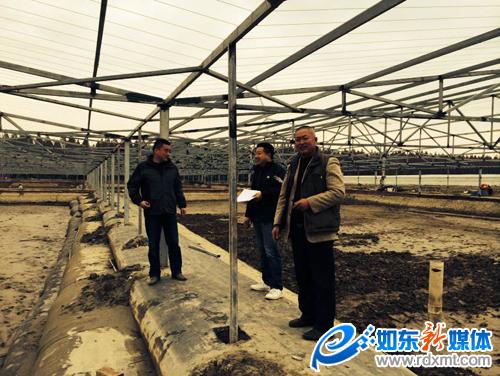
At the crab seedling base of Bingling Aquatic Products Co., Ltd. in the Circular Economy Industrial Park, Lu Weibing, known by crab farmers nationwide as "Crab Brother", invested 3 million yuan to build 200 mu of steel-frame bean crab seedling greenhouses here. Today, the reporter came to the seedling base and saw the 200 mu of steel-frame greenhouses lined up in a row, with more than 20 workers cleaning the ponds and organizing the water supply and drainage pipes, making preliminary preparations for cultivating bean crabs.
Lu Weibing, who was organizing pipes together with the workers, put down the work in his hands and told the reporter that in the past two years, with the development of the river crab industry nationwide, crab farmers have had increasingly high requirements for crab seed. According to his observation, in addition to requiring the parent crabs to be authentic Chinese mitten crabs of the Yangtze River water system, customers also require the juvenile crab specification to reach 160 per kg. Last year, he carried out small-scale 20 mu bean crab greenhouse seedling cultivation at the seedling base, and sold the 2,000 jin of bean crabs produced to more than 100 crab farmers in Anhui, Taihu, Baoying, Tangshan and other places. Practice has shown that among the same batch that year, those juvenile crabs that grew quickly also grew quickly the following year, reaching about 250 g each. Gu Jiemin, a large-scale farmer in Wuwei County, Anhui, bought 200 jin of his bean crabs and stocked them in a 400 mu pond. That year, the income per mu of juvenile crabs reached 13,000 yuan, causing a sensation locally.
"Now that the greenhouses are built, in the next couple of days, drain the water from the holding ponds, plow the pond bottom and let it dry in the sun for several more days, then wrap the surroundings of the ponds with mesh netting to prevent the bean crabs from burrowing and living in holes. After adding water, disinfect with bleaching powder to kill all harmful organisms and overwintering juvenile crabs, and lay flat tiles on the pond bottom for the bean crabs to live in holes and avoid mutual cannibalism. At the same time, cultivate biological bait well, use 50 kg per mu of decomposed livestock manure to make the pond water slightly green, with microorganisms swimming in the water, providing high-quality bait and a growth environment for the megalopa." When talking about the preparation process for cultivation, Lu Weibing spoke endlessly. He said that in a few more days they will plant aquatic plants, and about 15 days before releasing the seedlings, put water peanut and other aquatic plants into the ponds, let them grow rapidly, with the water grass coverage accounting for about one third of the water area, providing habitats and molting sites for the bean crabs. At present, the parent crabs to be used have already been selected. The 200 mu of greenhouses can produce about 20,000 jin of bean crab seedlings, which can meet the needs of more than 1,000 crab farmers in China. Next year, if the juvenile crab specification reaches 160 per kg, he will buy them all back and raise Chinese mitten crabs in high-quality lakes in China.