Disrupting the traditional agricultural model to make money differently
After graduating with a master's degree, he refused to go to a company paying over 10,000 yuan a month and insisted on joining a website paying just over 2,000 yuan a month. Within a year he became a company executive, then chose to start his own business, only to fail twice. Starting over, he set out to disrupt the traditional circulation of agricultural products. He went to the places of origin to integrate the supply chain, and his business model became a representative of agricultural e-commerce in Dalian. See how Zhang Jie of Dalian lets producers sell for more money and consumers spend less.
That night, this purchasing vessel set off from the Shidao fishing port wharf in the Shidao Management Zone of Rongcheng City, Shandong Province. After sailing all night, when the sun just peeked above the horizon the next day, they reached fishing grounds more than 100 nautical miles away.
This is Zhang Jie. This is the third time in his life he has gone to sea, but he still cannot adapt to life on the water.
Crew member: Want breakfast?
Zhang Jie: I'm not eating, I'm not hungry. I can't get it down.
Reporter: Still feeling dizzy? Are you seasick?
Zhang Jie: It's all right, just a little.
Crew member: Just give him a small bite.
On the crew member's suggestion, Zhang Jie forced down a little breakfast, then chatted with a crew member from Dalian about life on the boat.
Crew member: How could it not be hard? It's too hard.
Zhang Jie: Dalian boat, Zhuanghe boat.
Crew member: Zhuanghe.
Zhang Jie: I'm from Dalian too. I came from Dalian.
Reporter: How does it feel?
Zhang Jie: Very hard. At first the seasickness was severe, but after two hours it got better.
And Zhang Jie went to all this trouble, traveling from Dalian to Shandong, and insisted on going out to sea with the boat on this trip.
Zhang Jie: We must go to the front line to take a look. This is a fairly important standard for us when verifying a base. Mainly to observe the operation process, to learn about its recent output, and this way we also get to know the market price, and learn about the fishing situation at the place of origin.
At around eight in the morning, the purchasing vessel Zhang Jie was on finally found a fishing boat, and Zhang Jie hurried aboard to take a look.
Zhang Jie: It's fine. One, two, OK. This is today's catch, the fish brought up today. Mainly Spanish mackerel? How long does this trip take?
Crew member: About ten days or so.
Zhang Jie: What's the price at the wharf now?
Crew member: A bit over five yuan.
Zhang Jie: A bit over five yuan, per jin or per two jin? Over five yuan per jin, that seems a bit better than last year.
Crew member: It was the same price last year. What time of year is it now? It's already Start of Winter.
Zhang Jie: This Spanish mackerel does all right on the market.
Crew member: Although the price is no lower than last year, the catch from this trip's first net was not ideal.
Reporter: How many fish did you bring up?
Crew member: About seventy or eighty jin.
Reporter: What fish is that in your hand?
Crew member: Spanish mackerel. Japanese Spanish mackerel.
Reporter: Lift it up and let me see.
Crew member: Is this the first net? What's in this first net? Let me see.
Crew member: Very few, not much of a catch.
Reporter: Why?
Crew member: Bad luck this year.
Zhang Jie: About twenty jin of chub mackerel?
Crew member: Just about twenty jin. You can't catch that much with every net. On a good day you can catch a bit more.
To catch more fish, that fishing boat continued onward toward the waters ahead, and this time it would be gone at least half a month. Zhang Jie rode the purchasing vessel back to the wharf, and he had a great deal of feeling about this trip out to sea.
Zhang Jie: I feel we absolutely must do e-commerce to sell the fish at a good price.
Reporter: Why?
Zhang Jie: It's too hard. Fishing really is too hard. Only the people in this process can truly understand it. Our simplest idea is to make the price at the place of origin a bit higher and the price consumers pay a bit lower. Let the people who truly work hard earn a bit more, and let ordinary people eat good fish at a lower price. This can absolutely be done.
So how does Zhang Jie sell these seafood products? He raises the purchasing price at the place of origin while lowering the price consumers pay. How does he do all this?
In 1999, Zhang Jie graduated with a master's degree in computer science from Dalian University of Technology. At the time, Zhang Jie held two job offers. One was a large enterprise paying over 10,000 yuan a month, and the other was a website paying just over 2,000 yuan a month. In the end, Zhang Jie chose to go to that website as a programmer, and his reason was very simple.
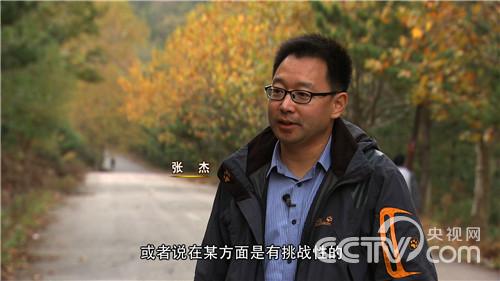
Zhang Jie: It's fun. It was completely new to us, or in some way it was a job that was challenging for us. Perhaps the pleasure we got from the internet outweighed the financial support.
A year later, Zhang Jie went from being a programmer at that well-known website to a company executive, with an annual salary of nearly 200,000 yuan, and he also received company shares. Then in 2003, Zhang Jie resigned and partnered with two friends to found a software company in Dalian, but due to the impact of the economic crisis at the end of 2008, the company lost more than 7 million yuan. With no other choice, Zhang Jie sold his two apartments in the urban area of Dalian to pay the employees' wages, and then started over.
At the end of 2008, Zhang Jie and three friends passed by a plot of more than 200 mu of land in Jinzhou District, Dalian. Zhang Jie thought that if cherries could be planted on this land, it would be very profitable. In the end, Zhang Jie and those three friends each put in 2 million yuan, pooling a total of 8 million yuan to contract that more than 200 mu of land and begin planting cherries.
Zhang Jie: Now I'd call it impulse. At the time I just felt agriculture seemed like a lot of fun, and I saw that other people growing cherries were making pretty good money. I actually just wanted to grow some cherries and make a bit of a fortune.
In early 2009, Zhang Jie planted more than 10,000 cherry trees. But by early 2011, Zhang Jie saw that more than 5,000 cherry trees had died. Zhang Jie brought in experts to ask, and it turned out the cherry variety had been planted wrong. In March 2011, Zhang Jie this time carefully selected cherry varieties suited to local growing conditions and planted more than 3,000 more cherry trees. But unexpectedly, nearly 2,000 more died. Zhang Jie once again invited professional technicians to look, and found that this time the base's drainage ditch had been dug in the wrong direction. In just over two years, nearly 7,000 cherry trees had died, and the painful cost of the four people losing more than 7 million yuan in total made Zhang Jie feel they were simply not suited to growing cherries.
Zhang Jie: As the old saying goes, cherries are delicious but the trees are hard to grow, and that saying really holds true. We previously worked in the internet industry, and we felt the internet industry seemed like an industry with a very high technical content. In fact, we saw that agriculture is a truly deeply technical industry. Actually, for city people to go to the countryside and then take up farming and learn it, we don't really recommend doing that process. Leave professional matters to professional agricultural technicians, and let them achieve better cultivation. Me growing cherries myself would definitely not be a good thing. To dig out those excellent varieties of high-quality agricultural products, let them grow better, and get a good performance in this market. This, I think, is something we can do better. I am more suited to being the bridge between the two.